
Muji released its famous wall-mounted CD player in 1999. The device resembles a garden-variety bathroom ventilation fan—the very thing that inspired its design—and a marginally revised version remains on sale to this day.
Although inconspicuous, it is not unspectacular. To operate it, one simply pulls a cord from the bottom of the unit, an intuitive action learnt from utilising other products at home. A fine marriage of form and function, it earned critical acclaim and is now part of the permanent collection at MoMA in New York.
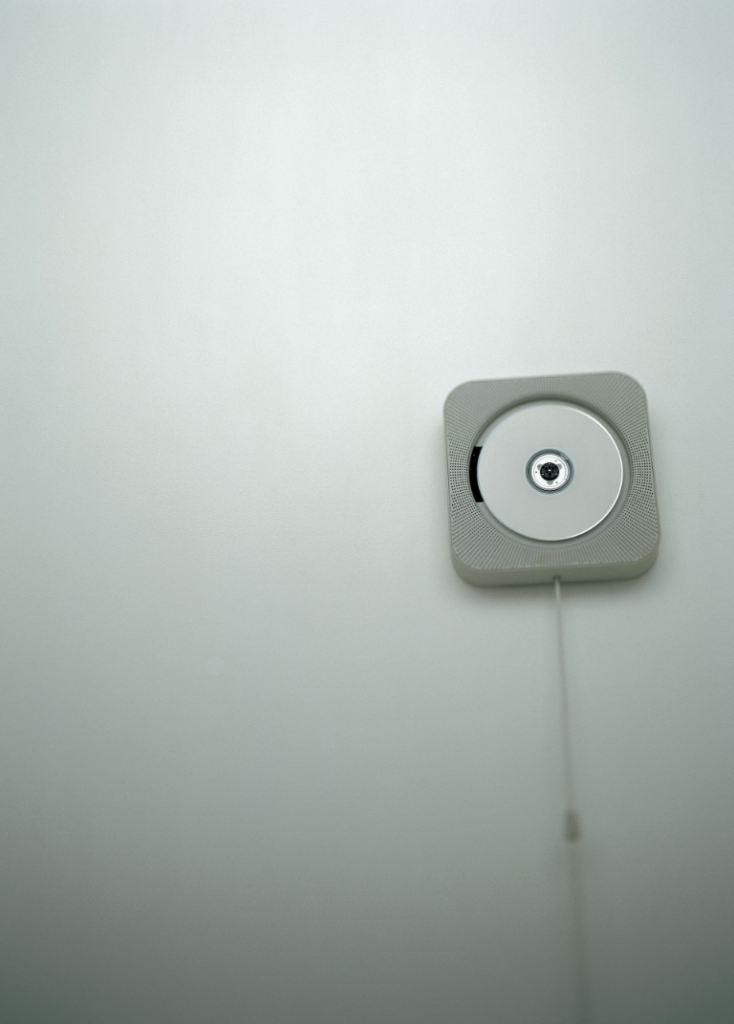
Naoto Fukasawa designed it to evoke an instinctive reaction. Products, he has argued, should not require an instruction manual. “Some people might not have understood what I wanted to achieve, but others have told me that it brought tears to their eyes,” he says.
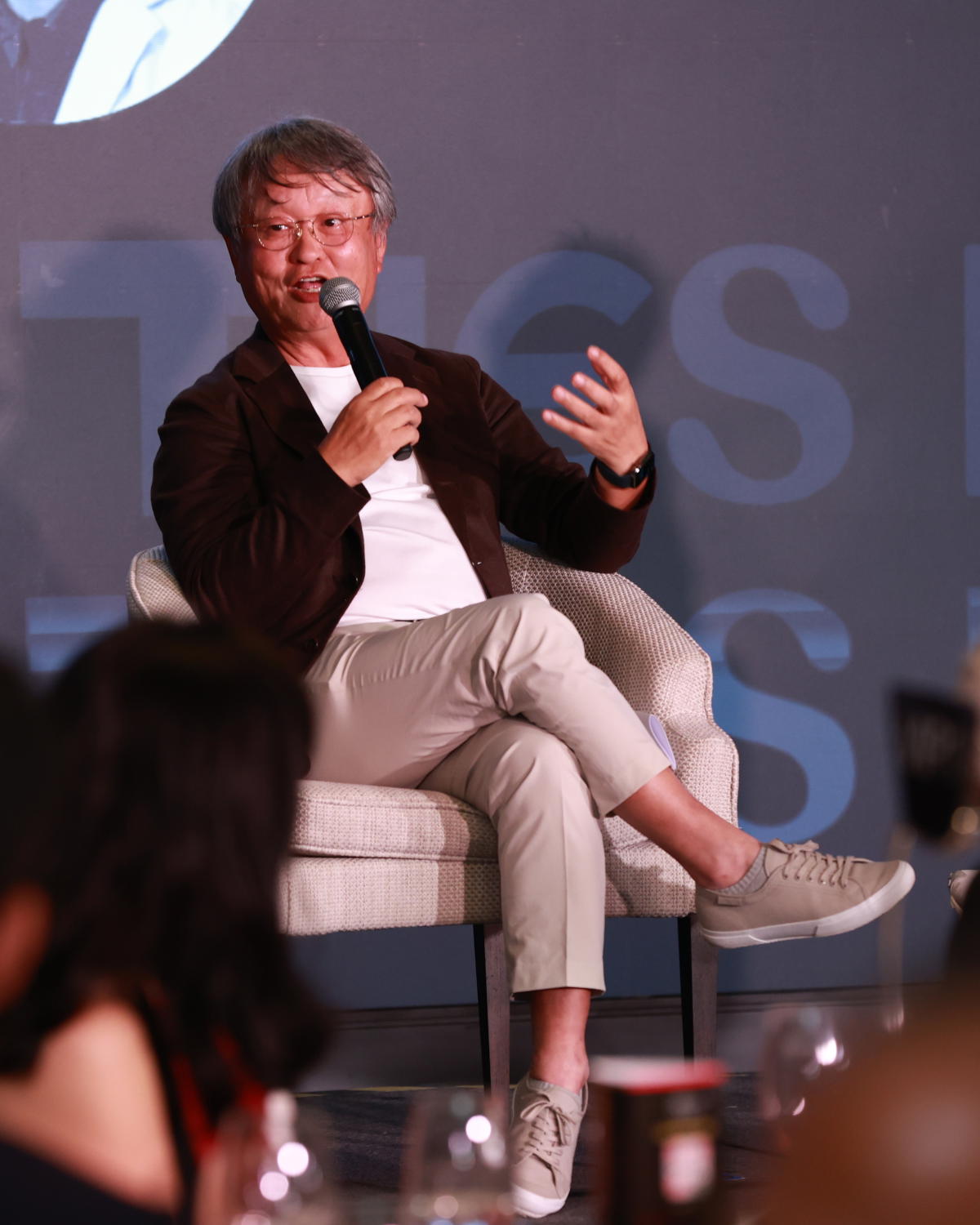
At the time of writing, the celebrated product and furniture designer is in town as a guest of honour at the 11th Singapore Good Design Awards (SG Mark). Although his Muji CD player is his most iconic work— it is splashed across the front and back covers of one of his monographs by Phaidon Press—its design is just one of the many he is recognised for.
Among his other gadget designs in the MoMA permanent collection are a neon cellular phone and an infobar cellular phone for KDDI Corporation. He has also designed furniture, interior, and architecture in his signature style, which is ultra-sculptural, sleek, and softly curvy.
Since launching his firm Naoto Fukasawa Design in 2003, the 68-year-old has collaborated with brands as distinguished as B&B Italia, Driade, Magis, Artemide, Danese, Boffi, and Herman Miller to produce a wide range of products, including beds, tables, chairs, bathtubs, lamps, cutlery, thermos flasks, and kettles. Bloomberg Businessweek has described him as one of the world’s most influential designers.
But while Fukasawa puts profound thought into his designs, he believes that the hallmark of good design is when a product can be used without having to think. “Humans absorb information about their surroundings in an unconscious state and interact with them naturally,” he says. “In other words, the body relates to good design.”
The seamless assimilation of a product into our daily lives is a concept he calls “design dissolving in behaviour”. He neologised “without thought” as a design philosophy to characterise his belief that the impetus for design is found in people’s unconscious behaviour.
To emphasise his point, he worked with industrial designer Jasper Morrison to curate 204 everyday objects of super normal design for the “Super Normal” exhibition in 2006. The collection included a Swiss Rex vegetable peeler, Bialetti espresso maker, tubular steel side table by Marcel Breuer, 606 shelving system by Dieter Rams, and Optic alarm clock by Joe Colombo. Even if seemingly unremarkable, they are functional.
“We should be able to participate in design without recognising its good and bad aspects. We live in harmony because of good design without realising it.”
Naoto Fukasawa on the chief features of good design
Fukasawa expounds on this in his monograph Naoto Fukasawa: Embodiment, wherein he says that he doesn’t design to create something new, but to help people realise what they already know.
He compares his design process to making umami soup; just as umami has a pleasant savory taste, his designs, which use minimal ‘seasoning’, are natural, simple, and easy to understand.
Among the many chairs and chaise lounges he has designed for luxury furniture houses are Asari by Herman Miller, Cinnamon by Molteni&C, and Land by Plank. But despite always coming up with fresh ideas, he reckons the fundamentals of a well-designed chair always remain the same. “I don’t think much has changed. When it comes to chairs, it is important to incorporate both comfort and design at a high level.”
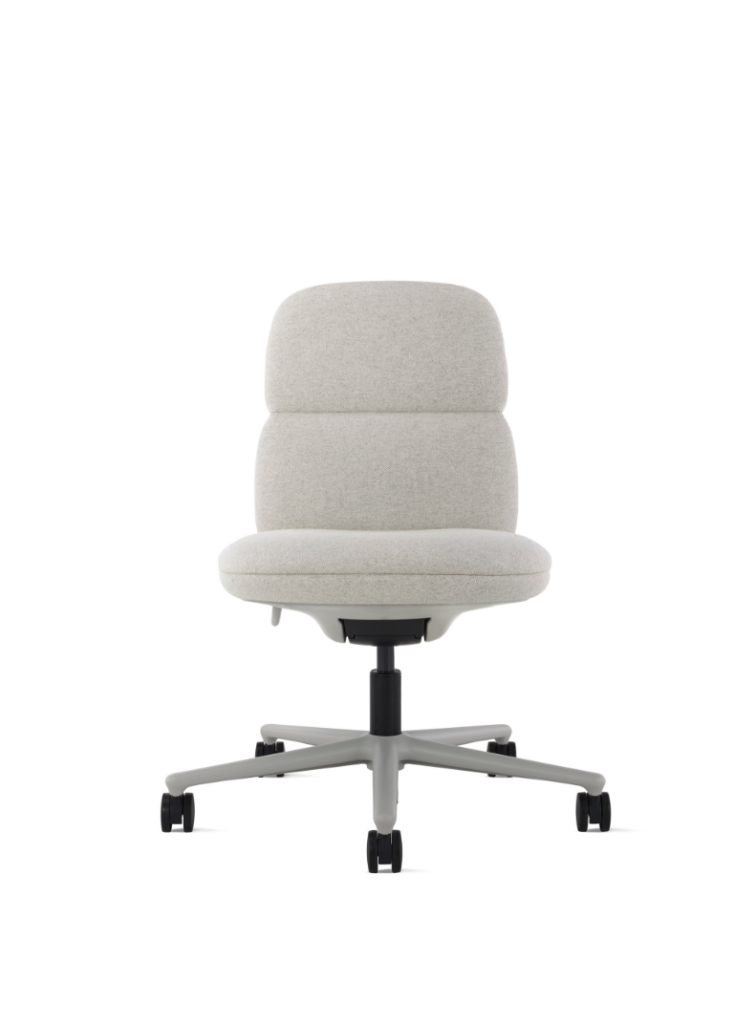
Fukasawa adds that it is also natural that we find ourselves drawn to natural materials. In his opinion, a design with too many exciting elements “can be torture on the [artist].”
Having won over 50 prestigious awards and been a member of several distinguished design award panels, Fukasawa is in a good position to speak on Singapore design. In his opinion, our government and people are highly motivated to work together to improve our lives, and initiatives like the Singapore Good Design Awards (SG Mark) help our service delivery stand out. “It’s the power of thinking and doing, making the idea concrete,” he says.
His advice to designers suffering from creative burnout? Stick to what you are familiar with. “The most important thing is to [be mindful of] your daily routine and not focus too much on the future. We must first maintain our well-being by feeling the richness of everyday life.”
It also pays to remember that design involves objective observation and good design arouses the mind. “[Making an observation is not to stare at something deliberately], but to savour it as naturally as breathing. The awareness it requires can be exercised at any time and in any situation.”