Marrakech is a city that hums in shades of ochre. Sunbaked walls in dusky rose and terracotta line the narrow alleyways, creating a warm red-pink backdrop that has earned it the moniker “The Red City”.
You’ll encounter locals, tourists, motorcycles, and donkeys carrying baskets of goods as you weave through the medina (historic walled city). The scent of neroli permeates the air from the orange blossom trees that thrive in this semi-desert climate.
Throughout the souks, shopkeepers display their wares like treasures: intricately woven carpets, hand-tooled leather babouche slippers, filigree jewellery, and pyramids of turmeric and saffron, all vying for customer attention and dirhams (although many now also accept credit cards).
Overhead, mashrabiya windows—projecting oriel balconies enclosed in delicately carved wooden lattice—cast patterned shadows that dance across the ground. Arched doors punctuate the high walls, their carved cedar surfaces adorned with ornate brass knockers in the shape of stars or hands that are prominent design motifs in Morocco.
Behind these quiet facades lie Marrakech’s iconic riads, inward-facing courtyard homes designed for serenity and the climate. Rooms open onto a central courtyard, often anchored by a fountain or lush garden, where the symmetry of square layouts and the presence of greenery offer a calming (and cooling) antidote to the hustle beyond the walls.
Riad refinement in Marrakech
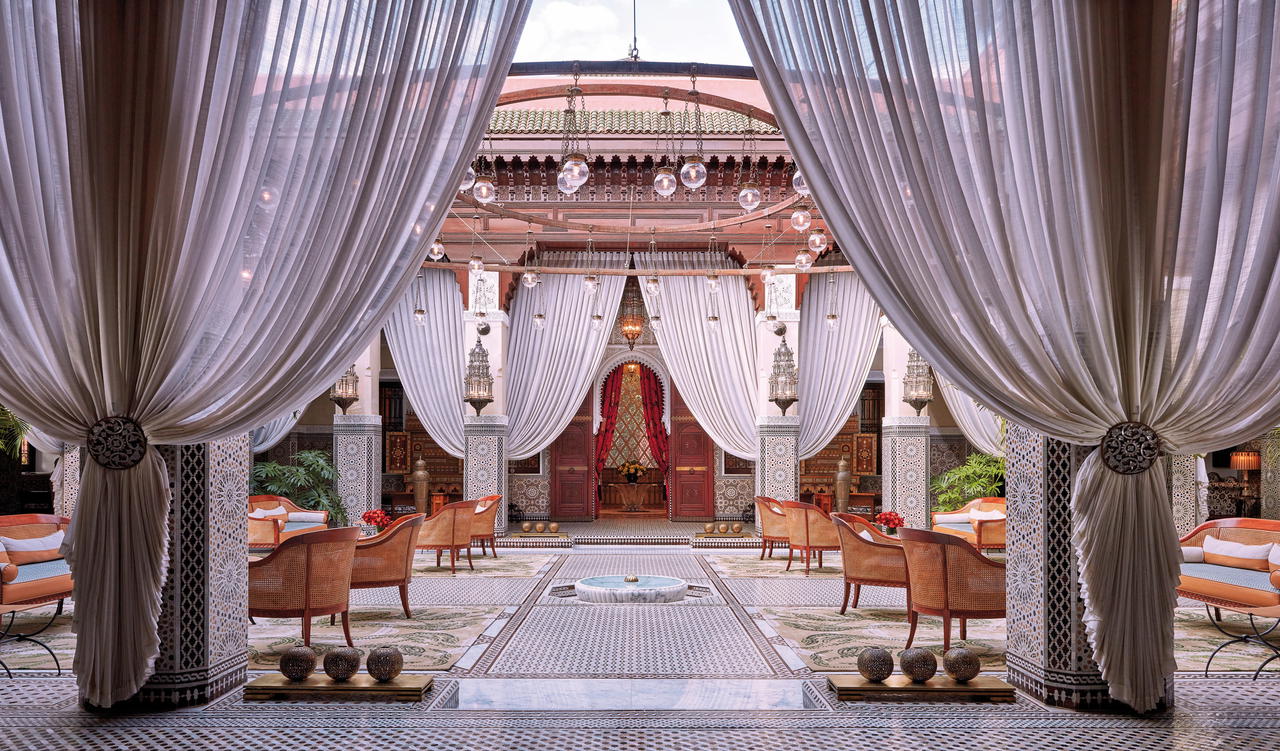
Nowhere is this iconic Moroccan architectural tradition more exquisitely interpreted than at Royal Mansour Marrakech, the creme de la creme of the city’s many luxury stays. This singular property, ranked 38 on The World’s 50 Best Hotels 2024 list, was conceived and is owned by King Mohammed VI himself.
Beyond royal provenance, what truly sets it apart is the intention behind it. The king imagined the hotel as a “medina within a medina” and Parisian firm 3 BIS Interior Architects delivered exactly that—a lush, exclusive world in the style of Arabo-Andalusian architecture that unfolds behind pink ochre walls.
The courtyards and public spaces ooze elegance, complete with singing fountains, intricate upholstered banquettes, silk carpets, swaying date palms and lanterns that glow like fireflies by night. Meandering garden paths lead to 53 standalone riads. A traditional residence usually houses several families under one roof, but at the Royal Mansour Marrakech, guests have their own apartment, complete with a salon, bedroom suite, and rooftop terrace.
“Riad architecture remains a cornerstone of Moroccan identity, not just aesthetically, but philosophically. Its inwards-facing structure, focus on intimacy, and use of natural light offer timeless lessons in how to create spaces that feel both private and warm,” says Jean-Claude Messant, Group Managing Director of Royal Mansour Collection.
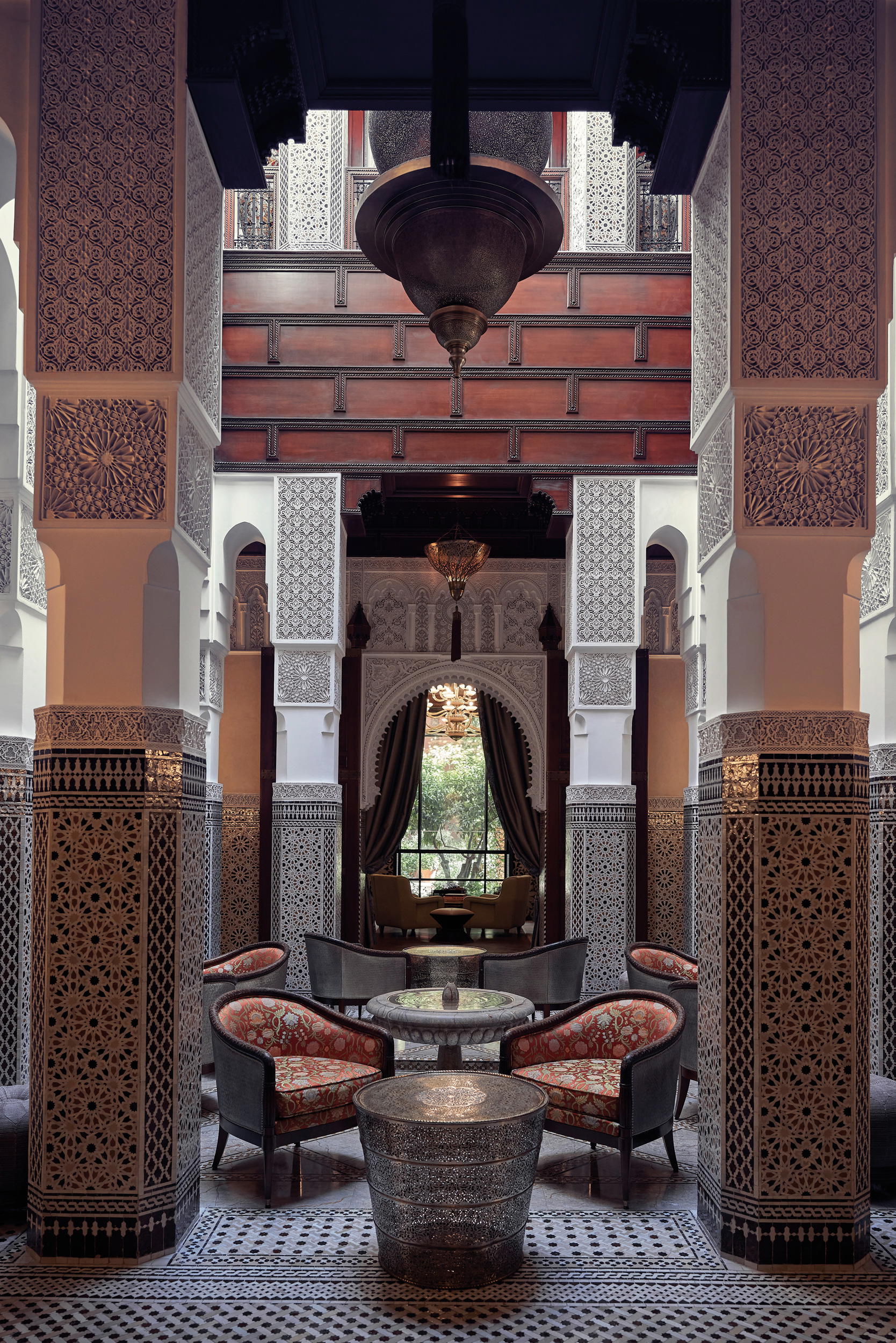
The artistry on display is an extraordinary triumph of craftsmanship by some 1,500 artisans from across the kingdom. The monumental seven-tonne carved copper door at the entrance offers a powerful introduction to the decorative language of the hotel, showcasing intricate plasterwork, hand-laid zellige mosaics, carved wood panels and glazed bejmat tiles.
Slow down, let your eyes adjust to the aesthetic of these traditional motifs and suddenly the entire property reveals itself as a gallery of living design rich with detail and layered with meaning.
“The soul of each region is a starting point to guide our design choices.”
Jean-Claude Messant, Group Managing Director, Royal Mansour Collection
Find escape in the lushness of nature, too. Just as the famed Jardin Majorelle offers respite in the city, Royal Mansour’s gardens provide a tranquil counterpoint to the medina’s maze. Designed by Spanish landscape maestro Luis Vallejo, the sprawling gardens are resplendent with hundred-year-old palm and olive trees with hidden groves and velvet grass lawns.
The 2,500-sq-m spa is a hidden jewel, its main interior courtyard marked by a mashrabiya-inspired lattice evoking a glowing lantern. For a truly Moroccan indulgence, the hammam is unmissable. Here, an expert attendant scrubs, exfoliates and cleanses you from head to toe in a ritual that leaves you not just polished but feeling profoundly renewed.
Mediterranean minimalism in Tamuda Bay
When it is time to trade the terracotta maze for the Mediterranean breeze, head north to Tamuda Bay, a lesser-known jewel along the Moroccan Riviera. Opened in October 2024, Royal Mansour Tamuda Bay brings a fresh coastal sensibility to the brand’s signature opulence.
Just as the Marrakech property echoes its surroundings, Tamuda Bay draws stylistic parallels to nearby Tetouan, known as the White City for its gleaming Andalusian architecture and whitewashed facades. Spain, after all, lies just across the Strait of Gibraltar.
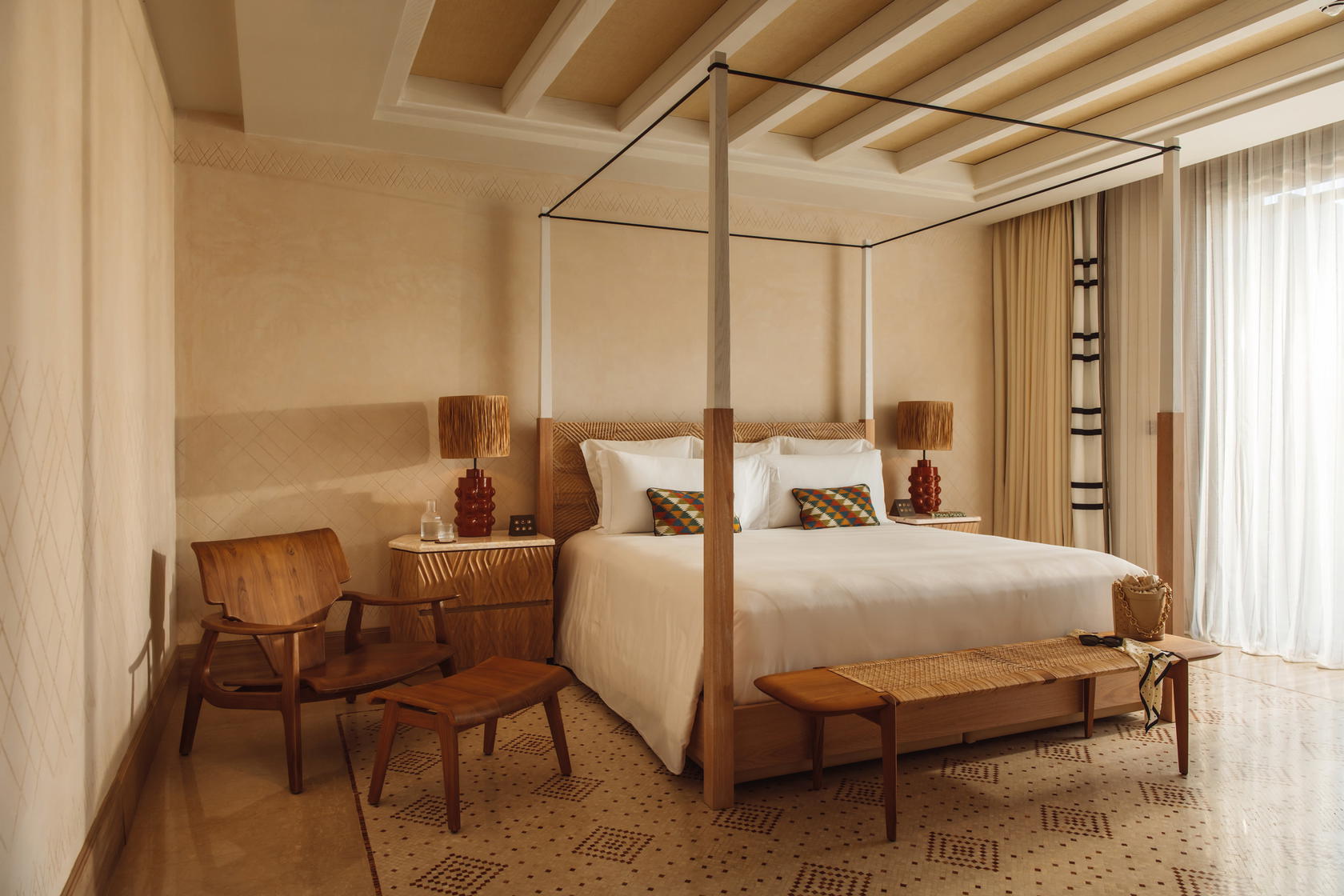
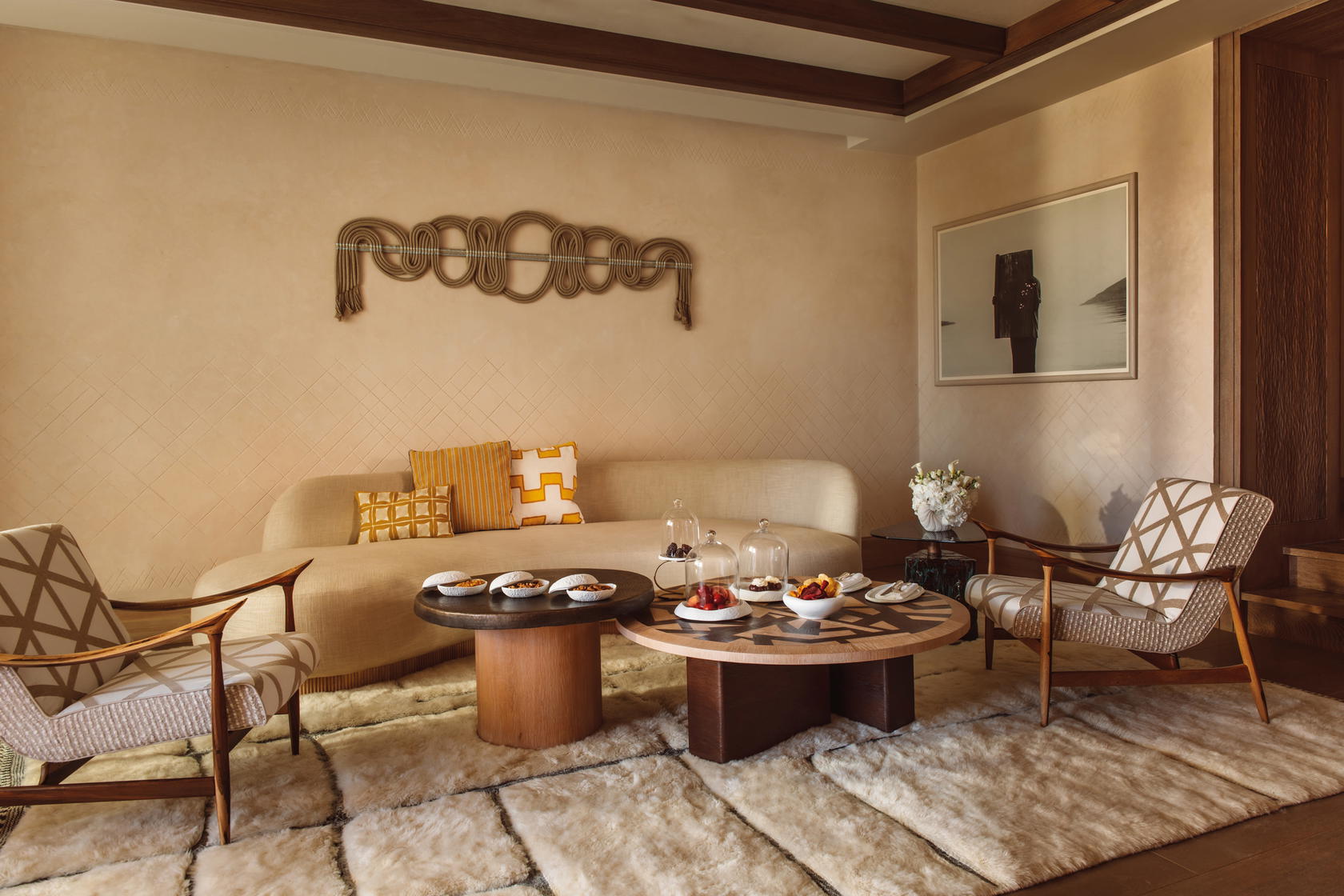
“The soul of each region is a starting point to guide our design choices. We wanted to reflect the calm, luminous quality of the Mediterranean coast, with soft palettes, open volumes and natural materials. The minimalist language allows for deeper contemplation and connection to nature, which many guests describe as deeply restorative,” says Messant.
Designed by London-based Muza Lab, this resort embraces light and serenity with 55 spacious sun-drenched stucco villas and suites in soft tones of white and sand. Textural details abound, from custom-made furniture draped in lush textiles to a sweeping seashell mosaic that ripples across the lobby, echoing the landscape of the azure beachfront.
A Unesco World Heritage Site, Tetouan’s medina is one of the best-preserved in Morocco, with its layout and design reflecting Andalusian influences of graceful arches and interior courtyards. Unlike the souks of larger cities, Tetouan’s medina is populated with fishmongers, weavers, and spice sellers serving the local community, offering a more grounded glimpse into daily life in the Mediterranean.
This laidback charm continues back at the hotel. A must-try is La Méditerranée, the elevated beach restaurant helmed by Spanish chef Quique Dacosta, whose restaurants have garnered a total of seven Michelin stars. At Tamuda Bay, the menu showcases the sun-drenched bounty of the region, from a hearty pan con tomate to kick off a meal to an utterly indulgent lobster paella.
For deeper restoration, the resort boasts a medi-spa with advanced therapies designed to offer an integrative well-being experience. Yet, its most priceless indulgence might just be its simplest: savouring every minute of a precious afternoon spent frolicking in the sea along the resort’s private beach. As the sun sinks beyond the horizon at sunset, painting the sky in hues of apricot and tangerine, there is little else to do but to stop and soak in the moment.
Revel in art deco splendour in Casablanca
From Tetouan, we head to Casablanca, Morocco’s largest and most cosmopolitan city, where Royal Mansour’s third property launched in April 2024. The Royal Mansour Casablanca stands on the former site of El Mansour, the city’s first five-star hotel built in 1953. Back then, it was Casablanca’s most exclusive address, a magnet for celebrities and dignitaries passing through North Africa’s busiest port city.
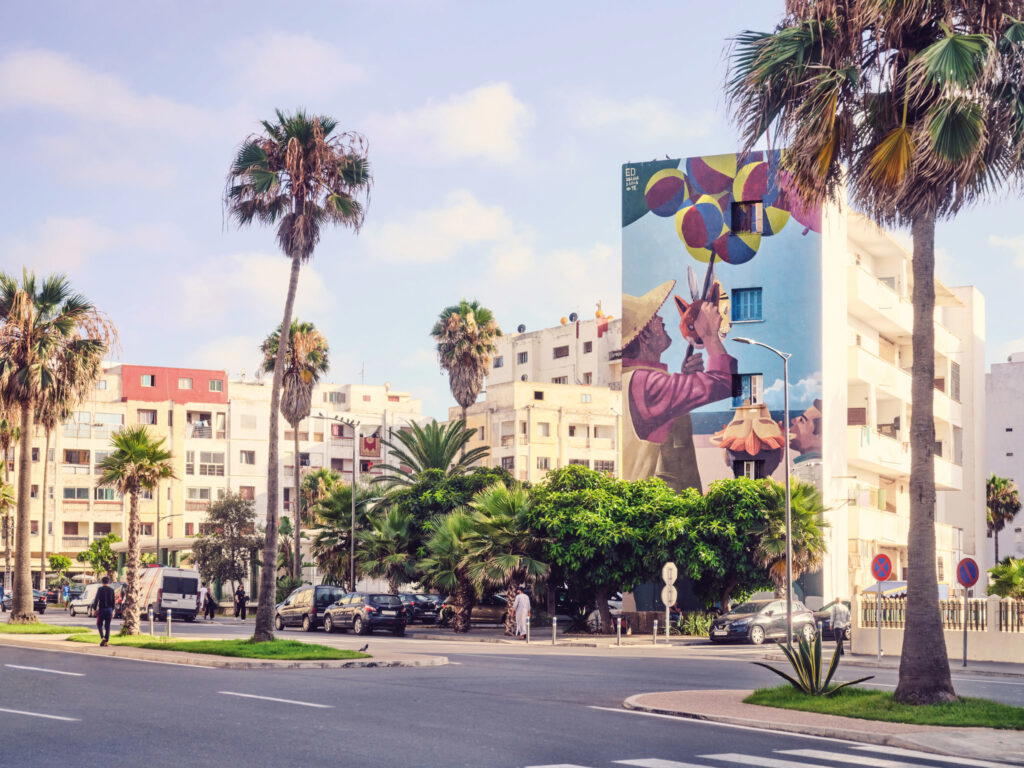
The surrounding neighbourhood is dotted with Art Deco buildings with curved facades, wrought iron balconies with varying layers of patina offering a glimpse into Casablanca’s storied past.
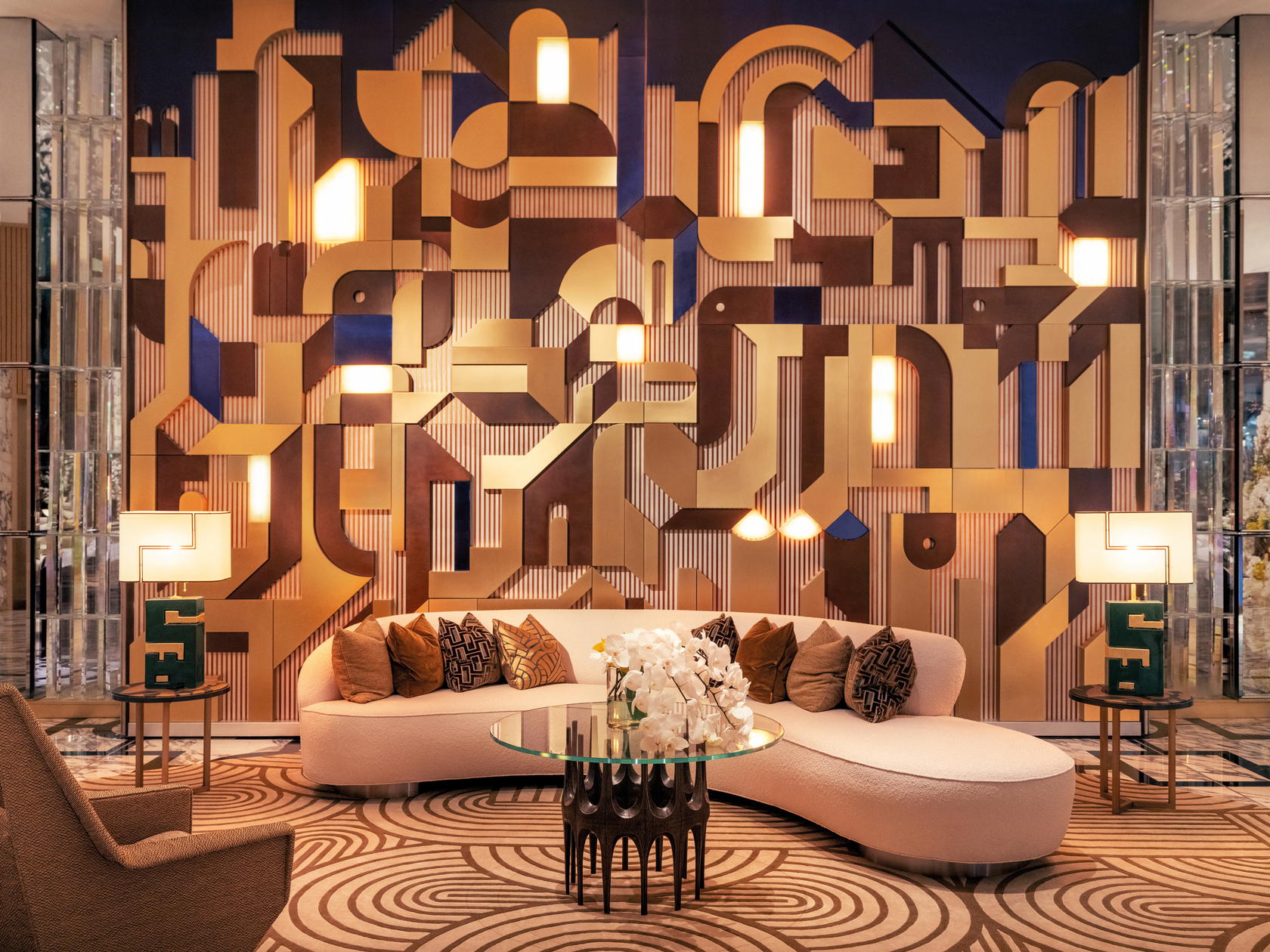
Now, in homage to the city’s 1950s modernist and Art Deco legacy, the reimagined marble-clad 149-room urban palace channels a golden age of glamour with a distinctly Moroccan soul.
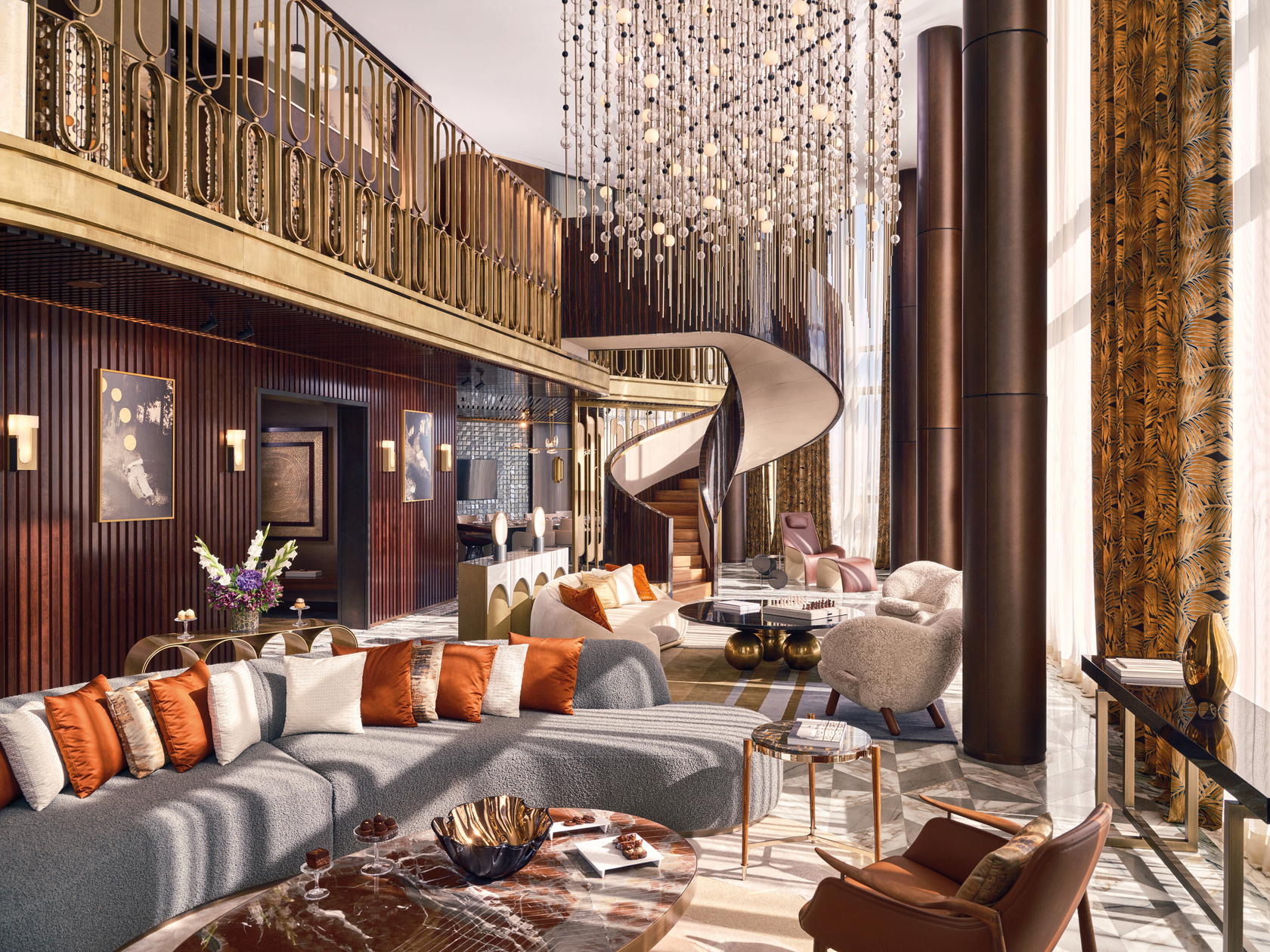
Designed by Casablanca-based Axe International Studio, the interiors blend sculptural forms with rich materials such as onyx, brass and lacquered wood. Stylised geometric patterns nod to both Art Deco and traditional zellige, while mirrored panels and custom wall sconces evoke the cinematic elegance of mid-century Casablanca.
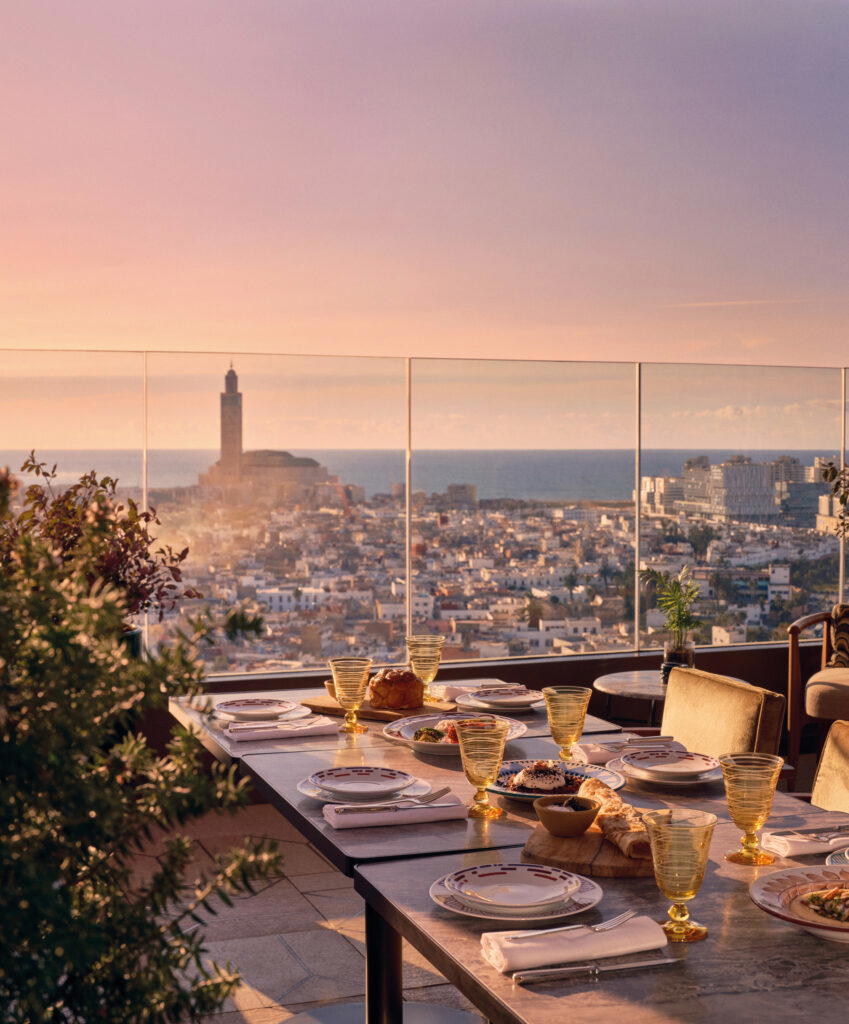
The hotel’s location offers another kind of drama: sweeping views of the iconic Hassan II Mosque, one of the world’s largest mosques—and one of the very few mosques that allows non-Muslim visitors. The contrast of modern cityscape and sacred monument feels strikingly emblematic of Casablanca as a city in constant conversation with tradition and the future.
While women will find plenty of pampering options at the unisex spa, men can visit the hotel’s vintage-style Le Salon Barbier, an evocatively masculine space clad in dark marble and brass accents with an air of old-school indulgence that evokes the golden age. The barbershop is helmed by master hairdresser-barber Sarah Hamizi who made her mark in her Parisian salon. Haircuts and facial hair grooming are based on a unique methodology she devised based on personalised one-on-one consultations.
But what it offers is more than skin deep and surely relevant to all guests, even those just passing through for a curious glimpse: a quaintly glamorous atmosphere that channels the golden age of Casablanca while still cultivating a quiet sense of serenity.
It is exactly this intangible quality that Royal Mansour strives to evoke across its properties. Messant reflects: “The spaces are designed to be immersive and sensorial, where every detail, from the layout to the scent of the garden, fosters a memory that lingers forever. A guest might not always know exactly why but they will feel so deeply at ease when in a Royal Mansour property. That is the design working its magic.”