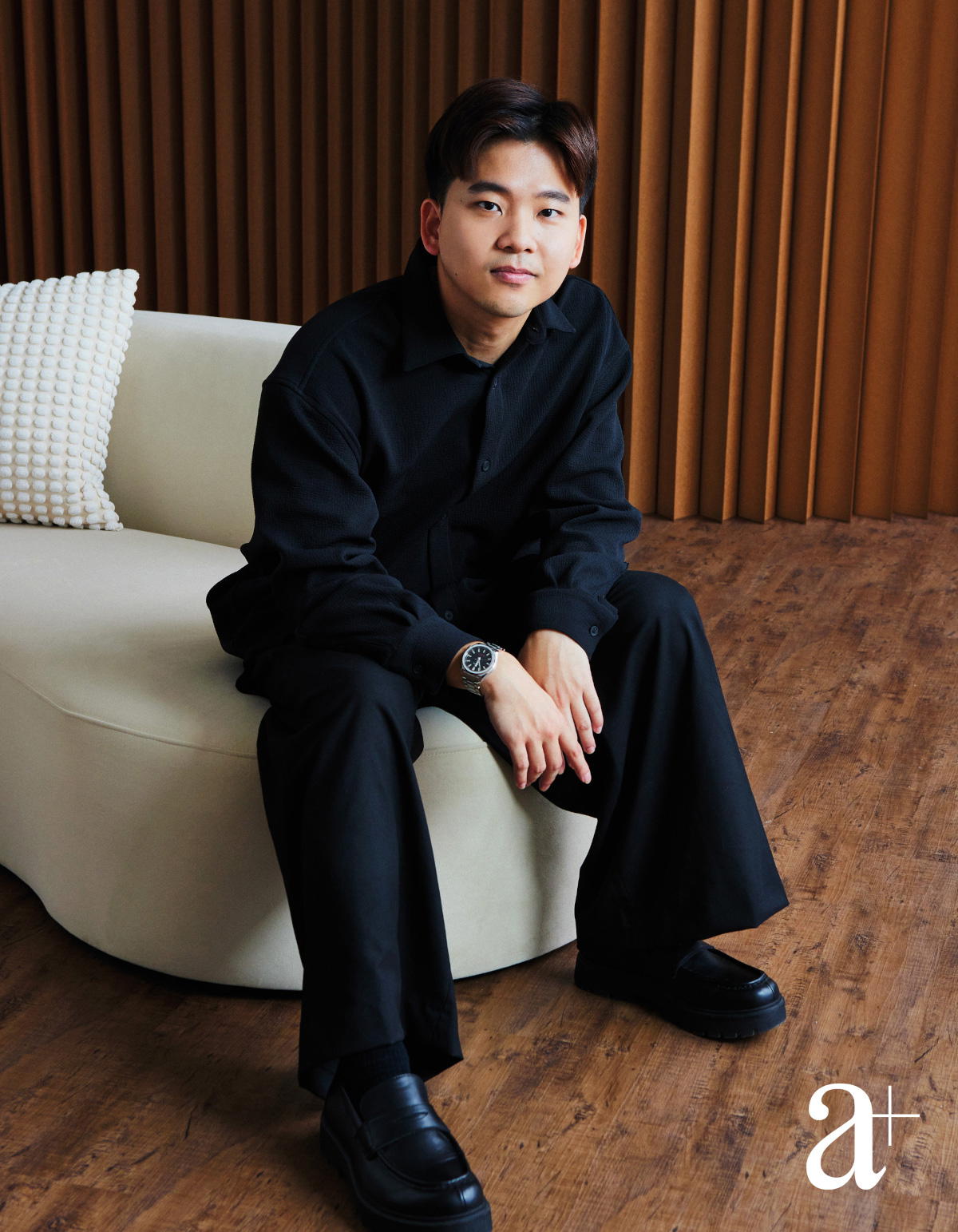
Marcus Oh began learning about printing at his father’s printing production house. Founded in the 1980s, it offers traditional offset printing, such as flyers, brochures, and stationery. “Growing up around printing machines and the smell of fresh ink naturally drew me to the trade. My father worked tirelessly in a business he had nurtured for so long, despite the pandemic,” he recalls.
“It was then that I realised I had to step in—not just to help, but to also bring new energy and ideas to a space that has been a constant in my life.”
While the industry used to focus on large print runs and meeting corporate demand, evolution meant the family business had to keep up with changes. As Oh grew up in the thick of large-scale printing and cutting processes that exposed him to excess paper waste and offcuts, it inspired him to galvanise sustainable practices within the community.
In 2022, he established Print N Matters with a simple objective: to create beautiful, meaningful products and experiences while reducing waste. It does this by repurposing paper offcuts and other waste materials into sustainable paper and other stationery products.
“We want to honour the art of printing, but in a responsible and forward-thinking way. Sustainability isn’t just a buzzword for us, it’s embedded in everything we do, from our materials to our workshops,” he says.
At Print N Matters, paper offcuts are upcycled into eco-friendly paper options and other stationery from otherwise discarded materials. Aside from holding workshops on paper marbling, sustainable pulp painting, Lego printmaking, planner making, and making paper by hand, the company also sells handcrafted papers, notebooks, planners, iPhone covers, and stickers.
Besides establishing a sustainable printing and supply chain, Oh is also committed to incorporating environmentally friendly practices into the company’s printing and supply chain. This is why he offers clients a choice of soya- and water-based inks and FSC-certified paper.
Leveraging his design background from LaSalle College of the Arts and his experience in branding and advertising, Oh provides sustainable paper products and services to both corporate clients and individual consumers. Occasionally, he gives sustainability talks at schools and conducts corporate workshops to share how his company is reducing waste.
“We offer consumers ideas on how to make cool, handmade items from leftover materials from our print factory, including seed paper plantable coasters. More than teaching a new craft, it is also about demonstrating how easy it can be to make these sustainable choices in everyday life.”
Marcus Oh on paper upcycling
His inaugural workshop was especially memorable as he’d never before witnessed such enthusiasm from participants. He also finds great satisfaction in hosting workshops for children.
He particularly enjoys working with the community. “Interacting with customers, collaborating with other makers, building relationships—it’s a busy endeavour, but a rewarding one.”
The concept of sustainability is not meant to be seen as something to accomplish—it’s more like a lens through which one views things. Having a lucrative practice helps, he says. “Being responsible for people and the planet is a smart business decision. It probably represents the single biggest economic opportunity since the Great Depression.”
Art director: Ed Harland
Photographer: Mun Kong
Photographer’s assistant: Melvin Leong
Hair: Ann, Athens Salon
Makeup: Keith Bryant Lee using Charlotte Tilbury