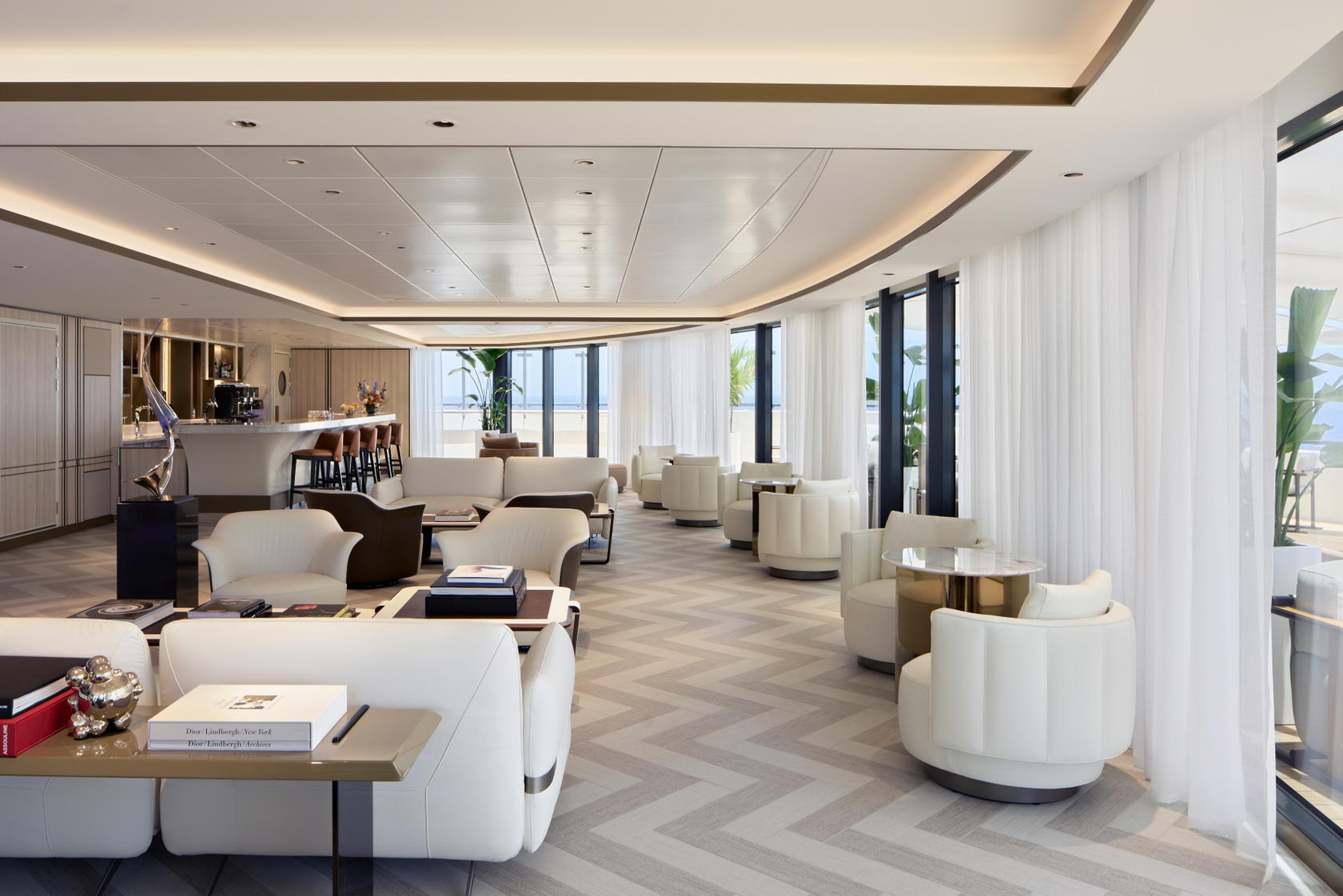
There are only five of us at The Art Bar aboard Luminara, the newest yacht in The Ritz-Carlton Yacht Collection. Its panoramic sea views offer a backdrop few hotel lounges could rival. Meanwhile, tea and sake sommelier Myles takes us through the differences in terroir, oxidation and aroma.
The tea tasting was never featured on the daily programme. I’d casually mentioned to the crew I didn’t drink alcohol but had a keen interest in tea. Soon, a handwritten invitation arrived in my suite for a tasting reserved for just a handful of guests.
The tea tasting, long a signature experience at selected Ritz-Carlton hotels, is now part of its cruising playbook.
On some port days, guests can spend the morning diving straight into the sea from the yacht’s marina, returning for an unhurried lunch or dinner created in collaboration with a Michelin-starred chef. By evening, they can unwind in the hot tub on their private terrace as the yacht slips silently towards its next port.
Yachts, with their smaller size, unlock experiences beyond the reach of conventional cruise ships. They can slip into secluded coves, dock at smaller ports, and linger longer in destinations. For travellers accustomed to hopping between luxury resorts, they promise a different kind of indulgence: the comfort of a familiar hotel combined with the constant novelty of life at sea.
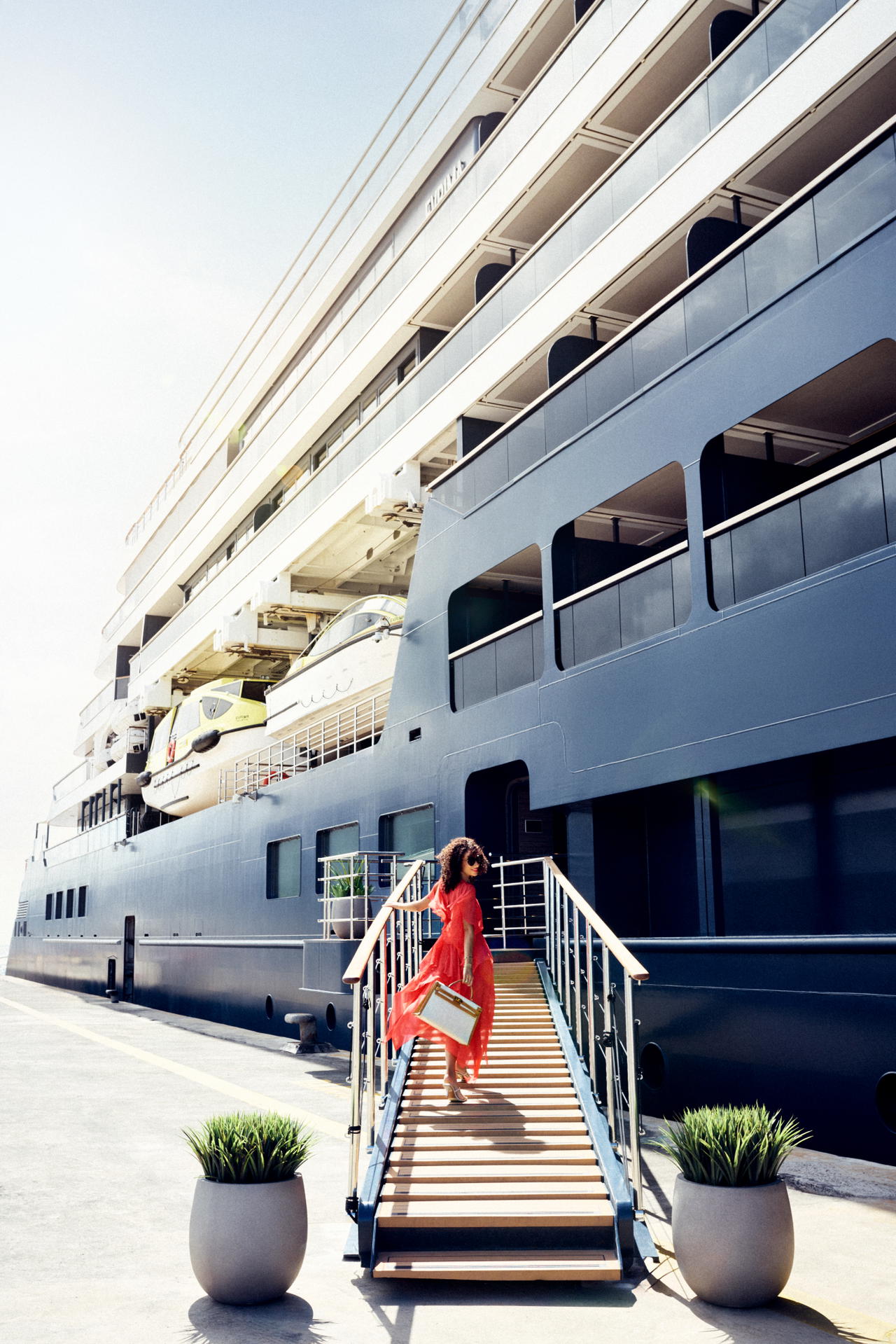
The Ritz-Carlton, which launched its Evrima yacht in 2022, was the first major luxury hotel brand to test whether its signature hospitality could translate to sea. Its fleet has since expanded to include Ilma and Luminara.
The Ritz-Carlton Yacht Collection: Evrima (2022), Ilma (2024), Luminara (2025)
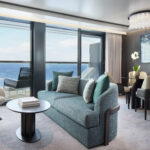
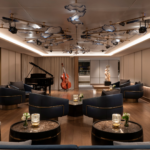
What began as a bold experiment has sparked a wave of new entrants.
High living on the high seas
For luxury hotel brands, yachts are less about entering the cruise business than extending the hotel experience beyond land. It also reaches travellers who never considered cruising by bringing the rhythms and rituals of a luxury hotel to sea.
Four Seasons entered the fray in March 2026 with Four Seasons I, a 95-suite ultra-luxury yacht that brings the brand’s residential-style accommodation and hotel service to sea. Following what CEO Ben Trodd describes as an “exceptional launch”, the company has already announced Four Seasons II, due to debut in 2028 with 79 suites, including a new collection of multi-bedroom options.
Four Seasons: Four Seasons I (2026), Four Seasons II (2028)
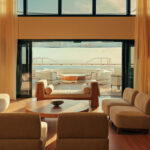
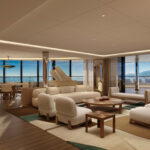
Orient Express made its maritime debut in May 2026 with the 54-suite Orient Express Corinthian, the world’s largest sailing yacht. In 2027, Aman will launch Amangati, a 47-suite floating sanctuary that stays true to the brand’s minimalist philosophy.
Of course, luxury cruising itself is hardly a new concept. Established names such as Crystal, Silversea, and Regent Seven Seas have spent decades perfecting intimate, high-end voyages.
Hotel-branded yachts, however, occupy an even more rarefied niche, with fares that typically command a significant premium over these cruise lines. Week-long voyages such as The Ritz-Carlton Yacht Collection typically start at five figures per guest. The price tag reflects the industry’s accelerating push upmarket.
Jumeirah Privé: The Maltese Falcon (charter partnership launched 2025)
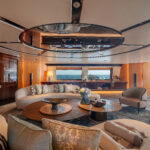
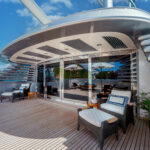
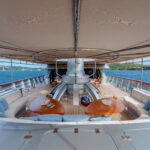
Some brands are adopting a different business model. In December 2025, Dubai-based hotel group Jumeirah eschewed a purpose-built boat in favour of a partnership with the iconic sailing yacht The Maltese Falcon as part of its Jumeirah Privé collection, offering week-long charters for up to 12 guests. Charter rates start at €490,000 (S$724,259) a week in the low season, and can hit €580,000 during peak periods, giving a single family or group exclusive use of the 88-m megayacht, complete with Jumeirah-trained chefs and a crew of 18.
Far from viewing the influx of luxury hotel brands into the sector as a threat, Ernesto Fara, President and CEO of The Ritz-Carlton Yacht Collection, sees it as validation that the company was right to venture into cruising early. “We’ve opened a new segment. As more boutique brands and hotel companies enter this space, they’re helping bring greater awareness to this style of travel and reflecting a broader demand from travellers.”
Luxury travel, as he continues, is increasingly being defined by more intentional experiences, with greater emphasis on access, personalisation, space, and connection.
Aman at Sea: Amangati (expected 2027)



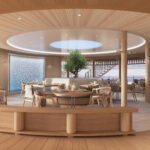
That proposition is proving persuasive. Vlad Doronin, owner and CEO of Aman Resorts, says early reservations for its first yacht, Amangati, have exceeded expectations. The strong demand comes from not only its loyal fan base but also non-cruise travellers for its largest suites and private charters.
While loyal Marriott Bonvoy members remain an important customer base for The Ritz-Carlton Yacht Collection, Fara estimates that about half of The Ritz-Carlton Yacht Collection’s guests are new to cruising.
At Luminara’s tea tasting, I met a Singapore resident in his early 40s who only wants to be known as Jessie. A seasoned luxury traveller, this was nonetheless his first cruise. It wasn’t the promise of casinos or Broadway-style productions that drew him. Instead, he was excited by the idea of a low-density yacht large enough for a smooth voyage, yet small enough to avoid the crowds.
Travelling with his mother, now in her 70s, he looked forward to a journey that combined comfort and adventure sans the constant hassle of packing and unpacking. He reflected: “What became my family’s most treasured memories were the times we spent in common areas— often being the only ones there—playing mahjong, enjoying the view, and simply spending time with one another.”
The art of staying afloat
Judging by the glowing reviews, hotel-branded yachts have seemingly delivered on their promise of bringing five-star hospitality to sea. The commercial equation, however, is proving more complex.
Unlike established cruise lines with decades of operational experience, hotel brands are effectively building an entirely new business model. Their yachts accommodate only a few hundred guests and operate with the standards of service expected of ultra-luxury hotels—all of which come at a considerable cost.
The commercial viability of that proposition, however, will only become clearer over time as these fleets mature.
Orient Express Sailing Yachts: Corinthian (2026), Olympian (expected 2027)
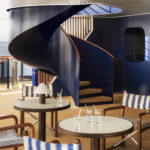
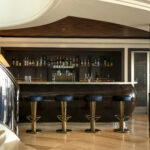
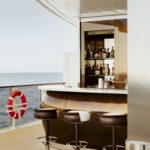
As the category’s first mover, The Ritz-Carlton Yacht Collection offers the clearest glimpse into those realities. Having expanded from a single yacht to a three-vessel fleet in four years, the company has required significant shareholder funding, while lenders recently agreed to extend repayment schedules as the business continues to scale.
According to company filings, management does not expect the collection to reach profitability until 2027. Fara, however, says the business is moving in the right direction, citing record bookings, strong revenue growth, higher average daily rates, improving margins and a growing number of repeat guests as signs that the model is gaining traction.
The challenges can extend beyond financing, and a measured approach is required. Doronin reminds that operating at sea introduces a different level of complexity—everything from the yacht’s design to its operations has been shaped by the same standards that define Aman on land. “As with everything at Aman, we grow thoughtfully and with purpose,” he says.
For operators already sailing, however, the challenge now lies in scaling sustainably.
“Like many global travel businesses, The Ritz-Carlton Yacht Collection is navigating rising operating costs, geopolitical complexity, and the operational demands of deploying yachts across multiple regions,” Fara says.
Rather than pulling back, he wants to focus on refining the experience as the market evolves. “The opportunity lies in staying flexible and managing those pressures thoughtfully, while continuing to interpret and respond to evolving guest preferences and deliver the level of service, access, personalisation, and consistency guests expect from an ultra-luxury brand.”
If the brand has succeeded in one respect, it was in converting Jessie into a cruiser. He was already eyeing his next voyage on Four Seasons I. Not because he expected it to outdo Ritz-Carlton, but for a rather more practical reason.
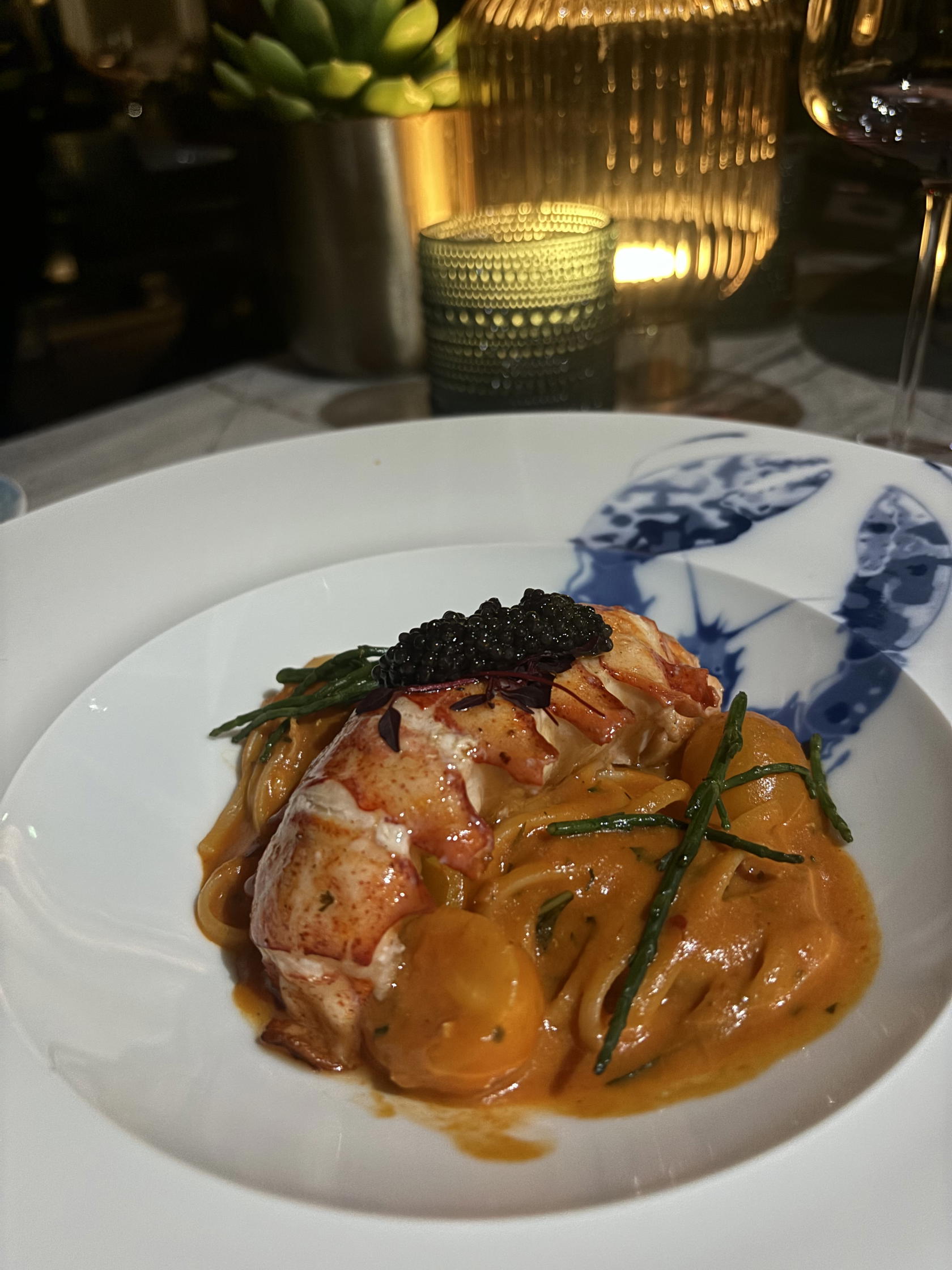
“On Ritz-Carlton yachts, the food is all-inclusive,” he shared with a laugh, referring to the daily menu that included lobster, caviar and freshly sliced sashimi and grated wasabi. “I ate far more than I should have.”
Four Seasons, by contrast, includes breakfast but charges apply separately for many of its dining venues. Jessie was convinced this would provide the self-restraint he lacked previously. Whether it saves his waistline remains to be seen.