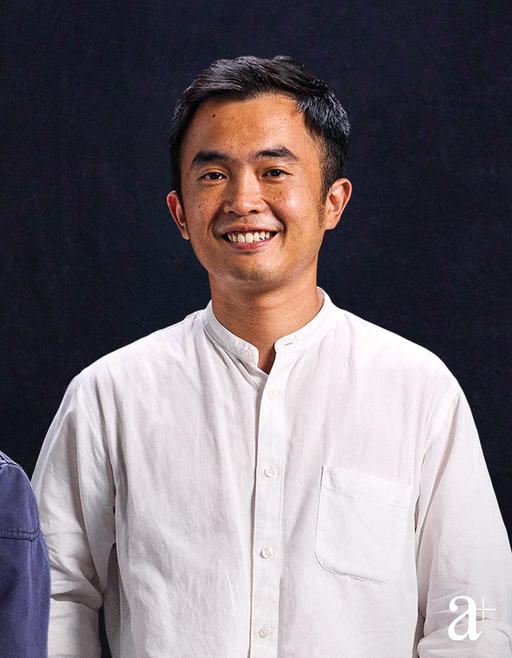

As someone who started recycling at home at 6, co-authored a children’s storybook on wild boars in Singapore at 17, and graduated from Environmental Studies in 2022, my life revolves around environmental sustainability. I even founded my own sustainable sourcing startup MBF in 2018 and am currently working as a sustainability consultant.
While I now call myself a proud sustainability professional and environmental advocate, my journey towards championing a more sustainable future wasn’t all sunshine and flowers.
The year 2020 really challenged me. Honestly, to say that it was a challenge is an understatement. COVID was already enough of a tough pill to swallow as many of my plans—as I’m sure, like many of us—got cancelled.
With nothing else to do and being stuck at home, I took on a virtual, unpaid internship for a sustainability e-commerce startup doing media partnerships and content writing.
An issue arose when I was writing an article for the company about plastic pollution and how the compostable plastic water bottles that it distributed and sold were one solution to combat immense problems with plastics made from fossil fuels.
I disagreed with my manager on pitching biodegradable and compostable plastics as viable solutions within the context of Singapore. I did not agree that Singapore could deal with biodegradable and compostable plastics as there are no big scale biodigester facilities. These supposedly more sustainable plastics would have to be incinerated. I also felt that writing the article would continue to perpetuate the single-use culture.
But to give my manager the benefit of the doubt, I bit my tongue and continued writing the article. I brainwashed myself into believing that maybe other countries can deal with compostables, or maybe residents could have their own compost bins—anything to convince myself that what I was about to write had its merits.
To my shock I found out that the compostable plastic water bottles were not in fact 100 percent compostable. The bottle caps were still made of regular resin-based plastic derived from fossil fuels. Livid and dumbfounded, I immediately jumped onto a Zoom call with my manager hoping to get some clarifications. I questioned and confronted him about the greenwashing, but he seemed to care more about pushing the content to a major news agency in Singapore. He said something to the effect of “just omit ‘100 percent’ from the article; say that the bottles are ‘compostable’ and that will do” as a compromise.
I was disgusted. I did not feel heard, and neither did he show any concern for his employee. And beyond that, a company I thought had cared about making a positive impact on the environment was actually doing the exact opposite. That was when I really spiralled out of control.
I started questioning everything I was doing; nothing seemed real. I stopped caring about making the world better and felt completely numb. I gave up being a vegetarian for a period. There was an instance where I broke down crying with absolutely no trigger while watching a television show with my mom in the living room; I didn’t know how to communicate to her how I was feeling. It even affected my health. I suffered from lymph node inflammation, had recurring fevers and my skin broke out.
Throughout this entire episode, I was blaming myself for being so naïve. If a person who claims to be championing sustainability is in fact working against the environment, how many more people in this field are disingenuous?
Hope was gone for me. There is no point to this work; the environment will be doomed.
It was my friends who noticed that something was really going wrong. “You’re not vegetarian anymore?!” was what I heard a lot. They sat me down and gave me a much-needed reality check. To them, I was possibly the most passionate person about the environment in our circle and the main reason behind me gradually becoming vegetarian was to reduce my environmental impact and carbon emissions. Hence, my drastic shift was a huge signal that my moral compass, my values, and my worldview were breaking down and shattering.
That wake-up call made me realise that I have been letting myself sink into quicksand this whole time. But what was going to lift me out of the quicksand? I remember vividly talking about eco-anxiety (also called by many other names such as climate anxiety, eco-grief and more) in one class. I had to have very open conversations with my friends from college and learn to be vulnerable with the way I felt. I was blessed enough that in 2021, there were counsellors in Yale-NUS that had training in eco-anxiety and knew how to approach it using all the right vocabulary. The community was also amazing—I remember a senior majoring in Psychology working on her capstone thesis regarding climate anxiety, forming groups where I felt safe talking about these issues while supporting and uplifting others.
Fast-forward to this year, I received a Yale alumni email. In it was an article on climate-anxiety and it was startling how pervasive this problem has become.
According to Grist—a non-profit online publication focusing on environmental news and commentary—the number of Google searches for “climate anxiety” soared by 565% in 2021.
Many times, people who have eco-anxiety are simply those who care. They have genuine concerns about where the planet is heading, what they can do for the world, and might have even been passionate about environmentalism at certain points in their lives. And it is truly unfortunate that there are so many people who want to do something but are hindered or even crippled by these emotions of helplessness and aimlessness.
The key thing to do is to seek professional advice, counselling, or therapy. Without the help of my counsellor, I wouldn’t have been able to process my emotions well. Seek your community that supports you on this journey. You want to make sure that you are with people that can support and uplift you, especially your friends and colleagues as they can really be your pillars and anchors through the rough sustainability journey.