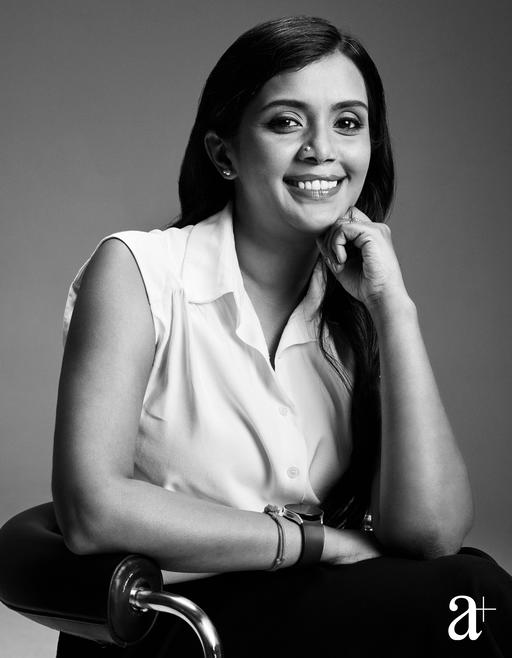


Adolescence is a profoundly eye-opening time. For Kaylee Kua, it was when she took stock of her family’s straitened circumstances, grappling with the loss of household utilities when the bills couldn’t be paid and settling for a school co-curricular activity because it didn’t require coaching fees. In contrast, most of her classmates not only had options, but were sent for enrichment classes. They played the piano and tennis, even squash. “I quickly recognised the limitations of meritocracy and the systemic barriers to social mobility,” she recounts.
At 17, she worked four jobs while waiting to enter university—at IRAS on weekdays, the homes of tutees on weekday evenings, the blood bank on weekends, and distributing flyers across the island during public holidays. The gruelling experience imbued resourcefulness and resilience. It also ignited a desire to help women experiencing similar difficulties.
This prompted her to volunteer at Daughters Of Tomorrow (DOT), a charity that offers underprivileged women the tools needed for sustained employment. The organisation’s provisions include hand-holding through personalised support and coaching, as well as resources and networking opportunities. She joined as a full-time eldercare programme manager in 2016 and rose through the ranks over time. In 2021, she spearheaded a closed-door dialogue with MOH that led to the passing of the parliamentary bill allowing Muslim uniformed workers in the public healthcare sector to wear the tudung.
Last month, Kua was appointed executive director. In her new role, she drives collaborations with training institutions, government agencies, businesses, and other nonprofits to create a support system for women who struggle with sustained employment. One initiative is the Childminding Programme, which offers low-cost childcare services to low-income families, allowing mothers to return to work. Sometimes, childminders also assist with schoolwork revision. DOT also has a Train-and-Place Programme, where it works with employers to provide digestible modular training courses.
However, she understands that the women they help typically have multiple hoops to jump through.
“I’ve realised that the barriers that prevent women from accessing job opportunities are difficult to break. It takes a village to help those who, despite trying so hard, are still weighed down by the challenges of poverty.”
Kaylee Kua on the multi-faceted challenges of poverty
A 2022 survey found that transportation costs, insufficient skills training, and difficulties in workplace communication are among the reasons why women left the workforce within six months of re-entering it. “Most of these barriers are systemic and circumstantial, so DOT enhances support by addressing the symptoms, not the root causes.”
Then there are unfair expectations. Many women are expected to excel on both the professional and familial fronts, and to also deprioritise their career aspirations in the face of caregiving responsibilities. “This can burden the next generation of daughters, who often also become primary caregivers and end up financially vulnerable,” says Kua, noting that the multifaceted issues underscore underlying gender beliefs.
She strives to narrow the opportunity gap and enhance the living conditions of the women in the bottom 20 percent of the socioeconomic strata. Want to play a part? We can start by reframing the narrative around poverty in Singapore and taking collective action.
“I hope to encourage the community to create a more inclusive environment for all. I also aim to engage the younger generation more actively, inspiring them to be stewards of positive change.”
Art director: Ed Harland
Videographer: Alicia Chong
Photographer: Mun Kong
Photographer’s assistant: Hizuan Zailani
Makeup: Ying Cui
Hair: Aung Apichai