

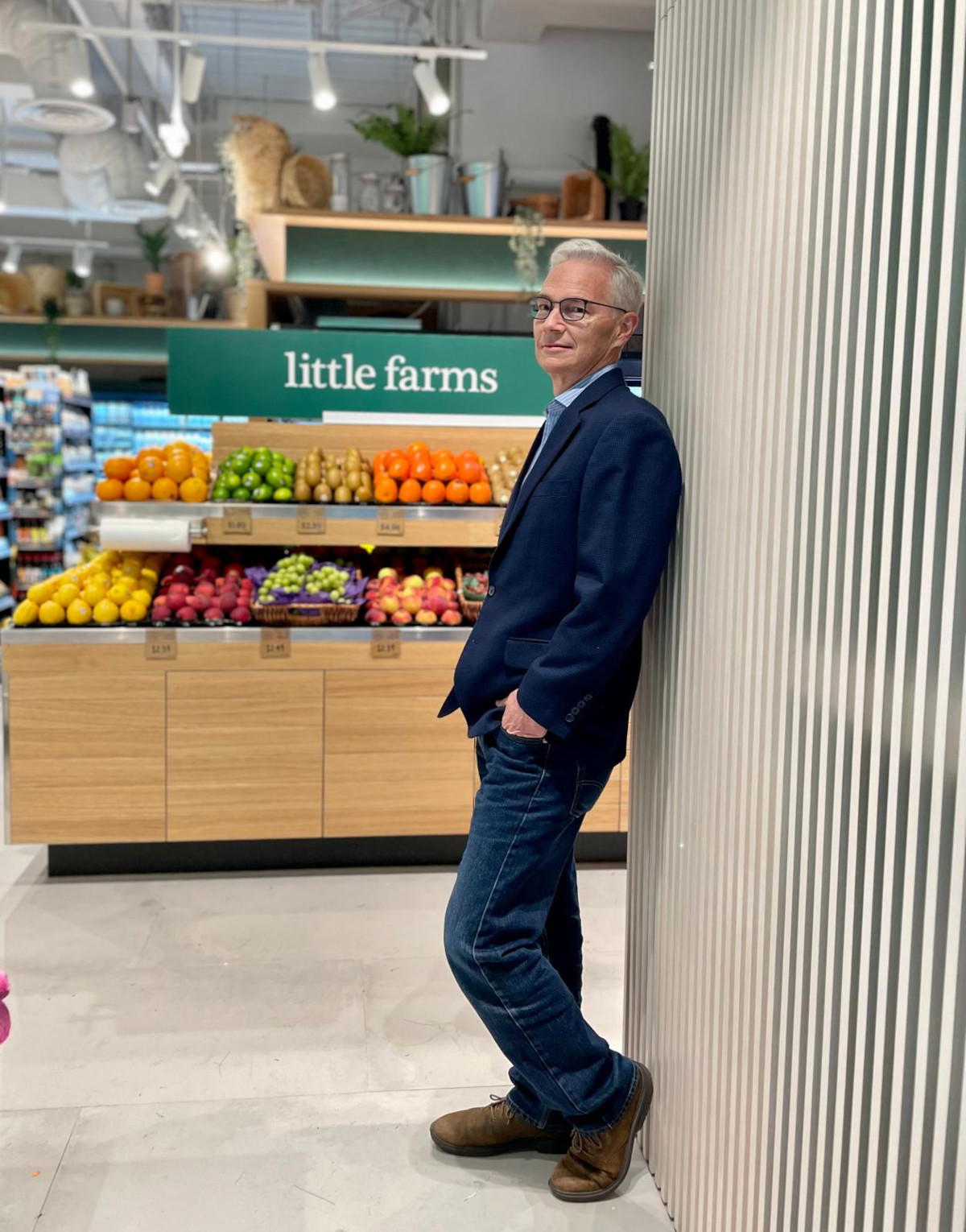
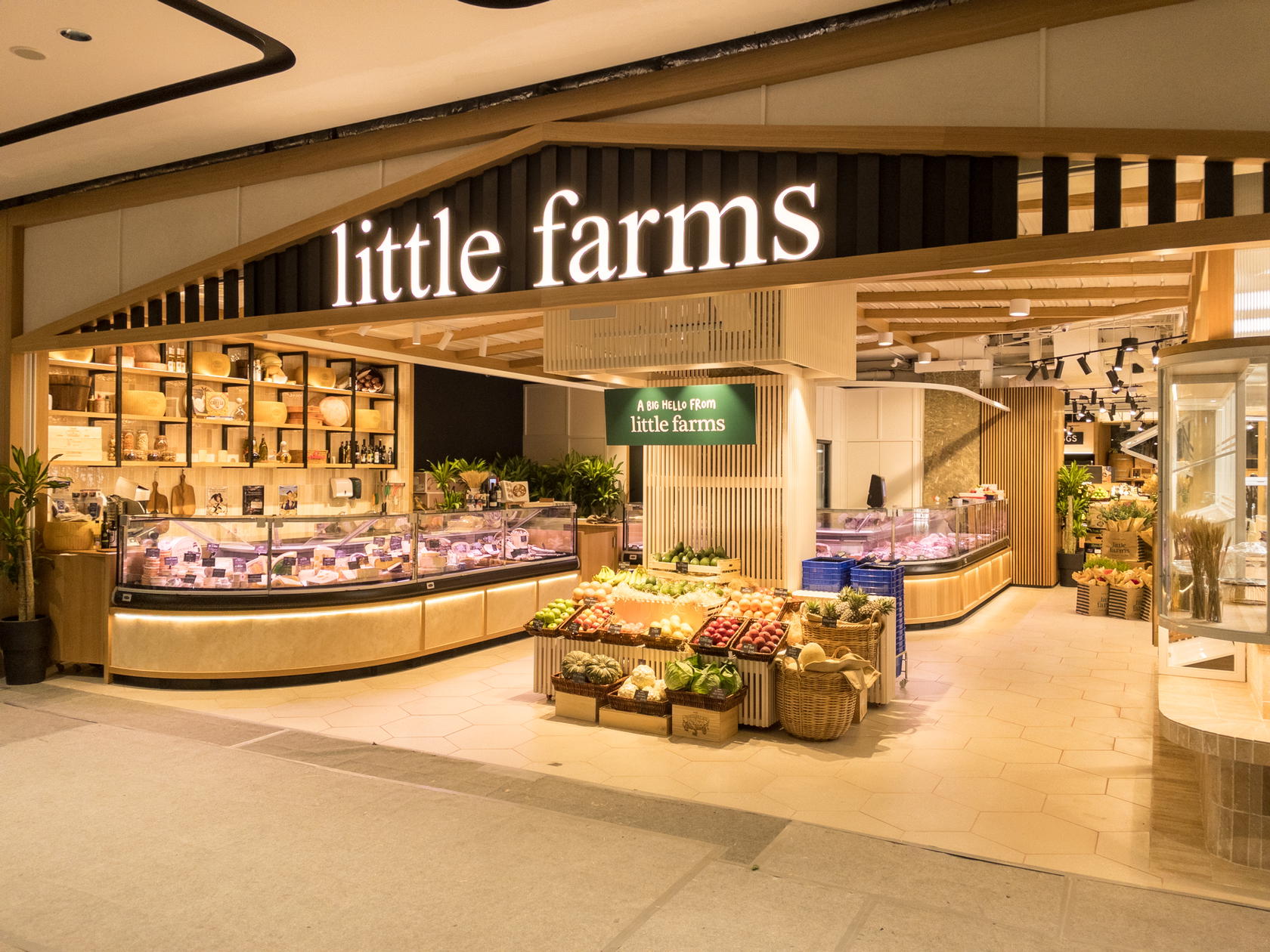
Grocery retail and F&B present different challenges even though they both deal with similar products, says Joe Stevens of Little Farms. He would know: the organic, natural grocer, which opened its first store in 2016, now operates seven stores, six restaurants, an eCommerce platform, and an artisanal bakery across the island.
Unlike grocery retail, which requires strong supply chain management and consistent product availability, F&B’s additional complexities include labour-intensive operations, real-time service expectations, and a significantly larger number of competitors, he explains.
Prior to co-founding Little Farms, the American led a private equity investing business for an international bank. “My initial plan was to spin the private equity business out of the bank and establish it as an independent emerging markets firm. But when that didn’t materialise, I left the bank in search of a new path,” he says.
A lack of premium fresh produce and organic products in Singapore’s supermarkets prompted him to expand the variety. However, compromising on standards was out of the question, so Little Farms currently has, among other things, a list of 200 banned ingredients and stringent cold chain solutions.
Still, he has encountered several stumbling blocks. In Singapore, for instance, careers in F&B are not traditionally considered prestigious, so attracting local talent to the sector can be challenging.
Stevens believes that both premium grocery retail and all-natural F&B offer strong career opportunities for Singaporeans and as such maps out progressive career paths for employees. “These provide clear visibility on responsibilities, learning opportunities, compensation at each level, and what it takes to advance. We are also designing a more structured learning and development programme,” he illustrates.
His goal is to build the Whole Foods Market of Asia. In addition to opening more locations later this year, the company is finalising plans to enter its first foreign market. “We are fully focused on delivering the freshest, highest-quality produce and all-natural food in Singapore while building the country’s best hospitality and service across our businesses.”
He shares four lessons he has learnt from the retail business.
1. Good habits require frequent communication
“When we had just a few stores and restaurants, our senior leadership team was constantly on-site to ensure things were done correctly. As we grew, we had to rely more on processes and training, but we have also learnt that systems and guidelines alone cannot ensure success. Senior team members must lead by example, follow the same processes we expect from others, reinforce standards consistently, and be present to ensure they are upheld.
It took us a year, but through sustained training and retraining, and constant reviews by business leaders, we successfully implemented a new company-wide rostering system, transitioning from old-school Excel spreadsheets to a cloud-based system.
This gives our stores and restaurant managers usable, real-time information and analysis. And, in addition to streamlining operations, it’s also made us significantly more productive and profitable.”
2. Don’t hesitate to leverage technology
“SMEs often delay hiring a Senior Technology Officer until they have scaled, relying on vendors for advice. This can result in underinvestment, overinvestment, or poor implementation—pitfalls we have witnessed in other companies.
Bringing on an experienced professional with an ownership mindset, who treats our capital as if it were his own, helped us avoid such pitfalls and fully capitalise on productivity and efficiency opportunities.
Little Farms’ entire business is heavily reliant on technology. Hence good hardware and infrastructure ensure stability and speed while well-chosen software significantly boosts productivity and efficiency.
Our retail, F&B, and e-commerce businesses have a single, integrated POS and ERP system we implemented in March 2021 and have upgraded since.
Among other things, we also have a cloud-based customer data and engagement platform across all three divisions; an advanced e-commerce website that integrates our three channel partners—Amazon, Grab, and Deliveroo—with our ERP system; a cloud-based communication, learning, and development platform that connects all employees; and a payroll system that integrates with our HR rostering system.”
3. Be transparent to align interests
“In the early days of Little Farms, we never shared our financial statements with our team and our operating and financial results were inconsistent. Although we discussed our strategy and business plans, our forecasts were only sporadically achieved.
Over the past couple of years, however, we have made a concerted effort to share our financial results and ensure that our team understands our financial statements and the key drivers of our performance.
At the same time, we restructured our compensation system to incentivise customer-friendly, profitable growth. We have also introduced an employee share ownership scheme and awarded equity to all managers and members who have been with us for at least five years.”
4. Know how to raise capital for an early-stage business
“My co-founder Justin Reis and I contributed to the majority of the capital invested in Little Farms to date. We also secured key equity funding from third parties to support the development of our stores.
While we have received significant interest from institutional investors, they often seek substantial control and downside protection for their minority investments in early-stage companies. We found that turning to our customers and friends was a more sensible and aligned approach.
Some of our strongest backing has come from our customers and friends; they choose to invest in Little Farms because they have a deep understanding of the business and community we are building.”