
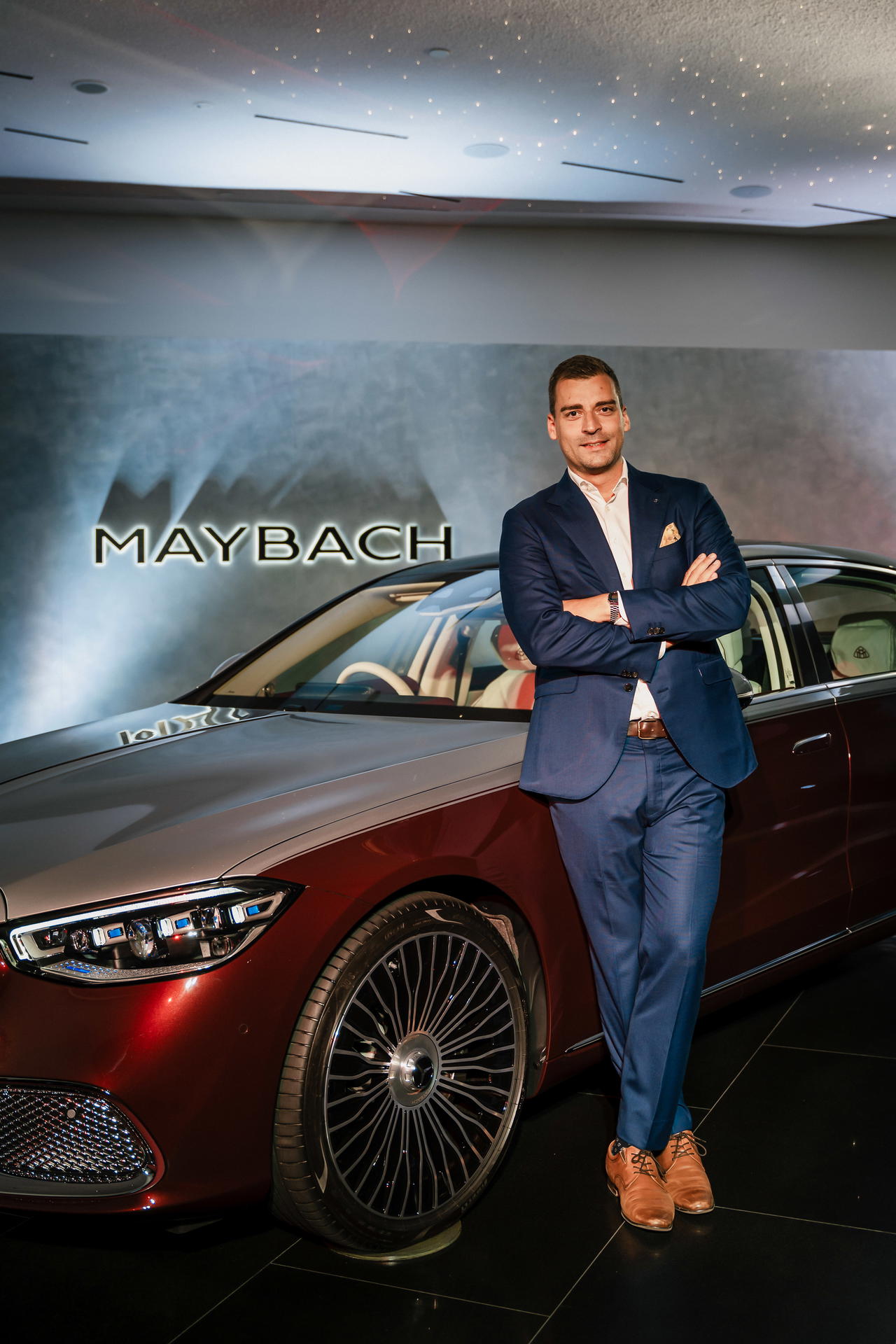
The automotive business comprises a few key growth pillars, but at its core, it revolves around people and experiences, says Marcel Luis Mustelier Perez of Mercedes-Benz Singapore. Apart from steering its strategic direction and commercial performance, the President and CEO also oversees finance and mobility offerings through Mercedes-Benz Financial Services Singapore and Mercedes- Benz Fleet Management Singapore.
Because customer expectations now involve personalisation, transparency, and seamless digital-to-physical experiences, Mercedes-Benz has come to also define luxury through its retail innovation and high-touch after-sales care, he adds.
Then there is the foundational element of sustainability, which entails transitioning to electric mobility, adopting circular design principles, reducing carbon emissions across the value chain, and collaborating with partners and communities to drive environmental and social impact.
As it stands, sustainability is no longer an add-on, but a fundamental to long-term viability, Perez says.
Another factor is innovation, which is defined by rapid advancements in electrification, digitalisation, and intelligent safety systems. For Mercedes-Benz, this means investing in electric architecture, AI personalisation, advanced safety features, and design-led engineering.
“For instance, the Mercedes-Benz operating system (MB.OS) links the car to the cloud, enabling continuous software upgrades and personalisation. This allows us to shape a driving experience that is smarter, more intuitive, and future ready,” Perez explains.
Finally, craftsmanship and legacy to create vehicles that feel timeless, emotionally resonant, and enduring.
With the launch of the Mercedes-Maybach SL 680 Monogram Series and the Mercedes-Maybach S 680 Edition Beyond 60 last year, the company also expanded its G-Class model line.
In addition to driving partnerships and purpose through products, Mercedes-Benz Singapore advances meaningful impact through purpose-led collaborations that champion sustainability, circularity, and community engagement.
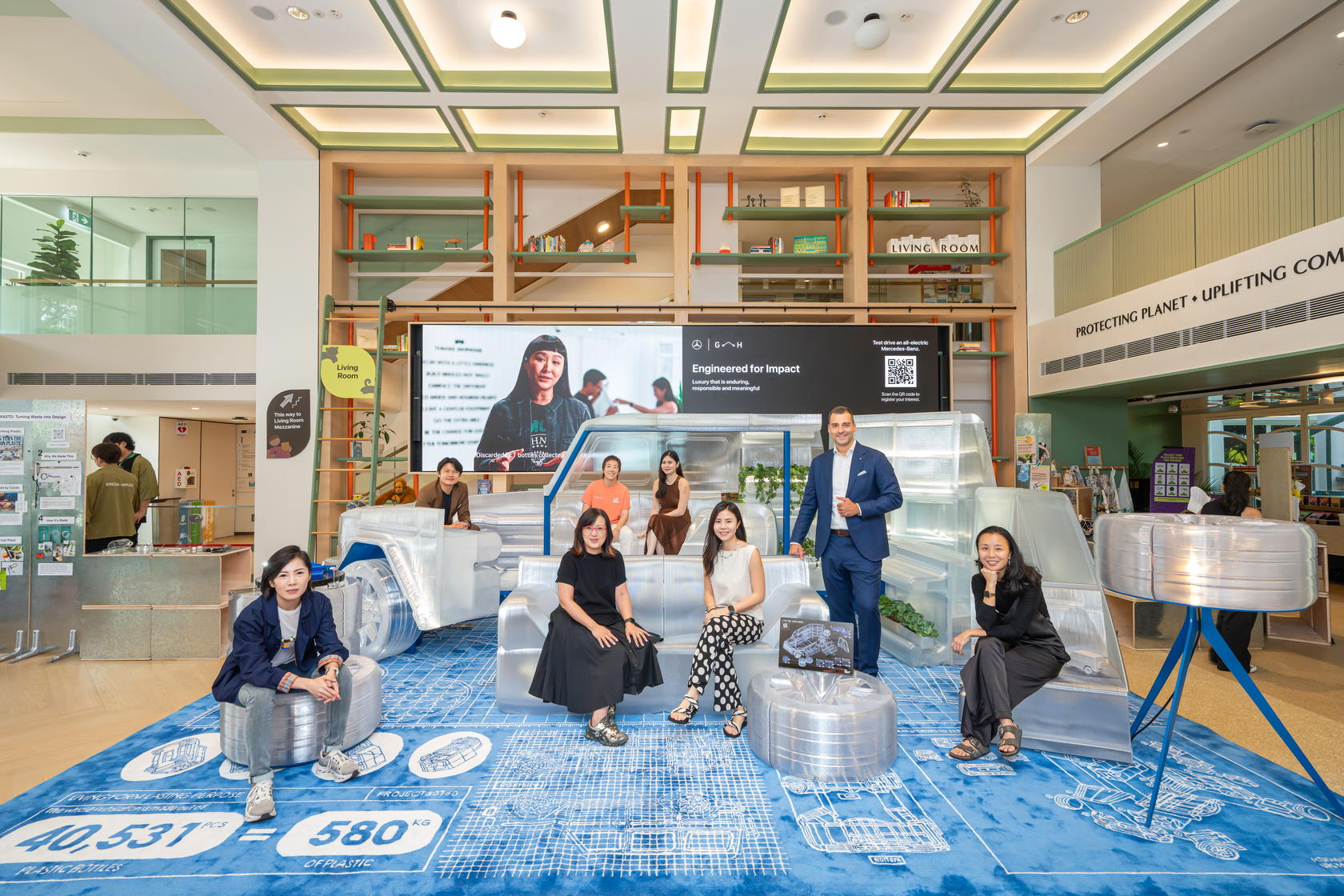
This includes Singapore’s largest sustainability-focused festival Green-House, where Mercedes-Benz headlined one of its key sustainability showcases with ‘Living Form, Lasting Purpose’ last year. The installation featured the first-ever life-sized 3D-printed G-Class created from 40,531 discarded PET bottles (580kg of rPET) in collaboration with Editecture.
In Perez’s opinion, resourcefulness isn’t just about cost, but also about maintaining credibility with customers. “They expect us to demonstrate our commitment to sustainability, which is why we use sustainable materials in our roadshow and motorshow set-ups and continuously look for ways to reduce our environmental footprint… At the same time, there is a need for us to maintain two highly advanced powertrain technologies, and strong competition from new market entrants,” he makes plain.
“Navigating this requires us to stay anchored in our values while ensuring competitiveness. We do this by putting ourselves in our customers’ shoes and asking: ‘How do we ensure we are the most desirable vehicle in the eyes of our customer?’”
Perez shares five lessons he has learnt from the automotive business.

1. Leadership is built on resilience and integrity
Our industry faces constant changes, whether through new technologies, shifting customer expectations or external pressures that can appear overnight. In moments like these, resilience becomes essential. It is the ability to stay focused, adapt quickly, and continue moving forward even when the path is uncertain.
Resilience alone is not enough. Integrity ensures that the direction we choose is the right one. It is easy to drift when under pressure, but staying true to our values is what builds trust with customers, partners, and our own teams.
Integrity gives resilience its purpose. During challenging times, it provides confidence to teams. Additionally, it allows us to make decisions that are both timely and principled, and reminds us that leadership does not mean avoiding difficulties, but navigating them with clarity, honesty, and conviction.
2. Innovating with data drives progress
Innovation has always been central to the Mercedes-Benz story, but I have learnt that meaningful innovation begins with understanding people. Technology alone does not create progress; data gives us insight into what customers value, how their expectations are changing, and where we should focus our energy.
Throughout my career, I have seen how data can transform decision-making. It guides prioritisation, sharpens our intuition, and ensures that the solutions we design are truly relevant.
Innovation becomes purposeful rather than experimental when we understand not only what customers do, but why they do it. It shifts from being a collection of activities to becoming a strategic advantage. We can also anticipate rather than react based on data.
3. Experiences define luxury, not just products
Mercedes-Benz is more than just a vehicle. It carries emotion, aspiration, and identity. Over the years, I have learnt that customers do not only evaluate what they drive, but also how they feel at every moment of the journey. The concept of luxury today begins long before a customer steps into a showroom and continues long after they drive away.
The brand’s culture and lifestyle moments are reflected in the way we welcome them, how intuitive their digital interactions are, the care they receive in aftersales, and the craftsmanship they see in every detail.
Customers remember consistency, thoughtfulness, and the sense of belonging that comes from feeling understood.
4. Titles don’t grow people, purpose does
Titles may provide structure, but not motivation. What truly inspires people is the belief that their work matters and that they contribute to something larger than themselves. In a fast-changing industry, talent thrives when challenged, supported and trusted.
My experience has shown me that individuals can achieve entirely new levels of performance when given the opportunity to solve problems, influence outcomes, and shape the brand’s future. When people feel ownership over the results of their decisions, growth becomes personal.
My role is to create an environment where this can happen. That means offering clarity of direction, access to opportunities, and a culture that values ideas and collaborations.
5. Competitive advantage comes from long-term thinking
This year, Mercedes-Benz will celebrate 140 years of innovation. This milestone reminds me that sustainable success is built on patience, clarity, and long-term thinking.
It can be tempting to prioritise shortterm gains in an industry that changes quickly, but reacting to every fluctuation only creates noise. Long-term thinking allows us to stay focused on what truly matters. It gives us the conviction to invest in innovation, the patience to build capabilities properly, and the clarity to choose what not to pursue.
When we take the long view, we make decisions that strengthen the brand and deepen customer trust, even if they are not immediately beneficial. I often ask my team: ‘How do we remain the most desirable choice for our customers, not just today but for years from now?’ That question anchors our strategy.