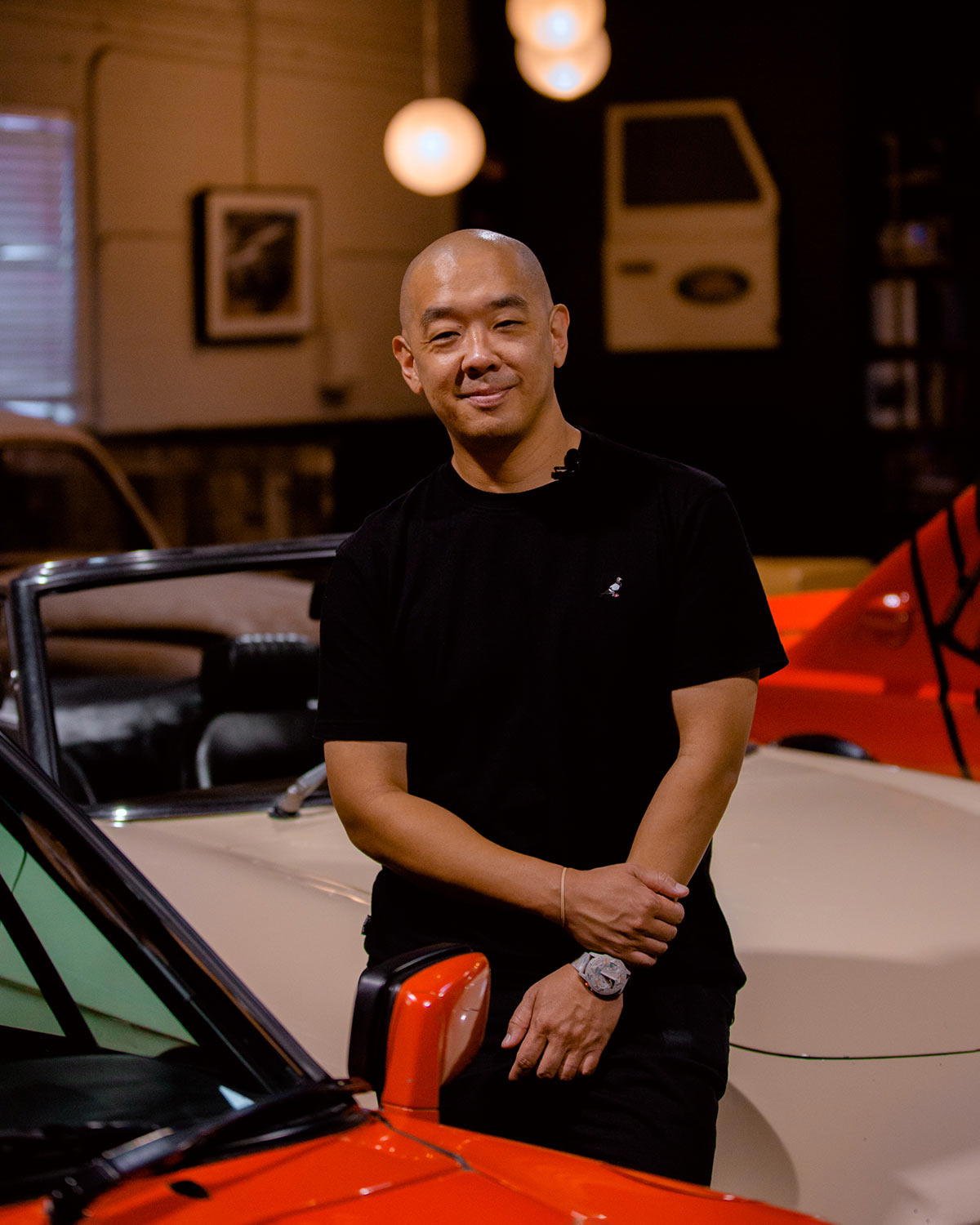
You know someone is a big deal when at a meet-and-greet session, a die-hard fan is clad almost head-to-toe in his brand and whips out merchandise after merchandise of just a sliver of his 25-year repertoire. Jeff Staple is that someone.
But rather than revel in the kind of success that he and his brand Staple have achieved, Jeff remains seemingly level-headed and approachable.
Throughout the meet-and-greet as well as a prior panel discussion session held at Limited Edt’s Chamber, I looked on as Jeff reached out and entertained guests as though he’d known them all for long.
The Staple brand just turned 25 last year. You mentioned in a previous interview that there was no roadmap to where you’re bringing the company and the brand. So when it comes to collaborations, how do you ascertain if a potential collaboration is the right fit?
A lot of gut feeling. We get a lot of inquiries and we say no to a lot of them. I have a formula in my head and it’s the four Fs. The four Fs is number one, friends and family; number two is folio, whether this project will be good for my portfolio and the brand; three is finances; and four is fun. If a project has more than two of them checked off, it’s usually a good thing. But sometimes a project comes along and only one of them is checked off—that always ends up bad. So that’s kind of like my internal formula for how I decide which projects to do.
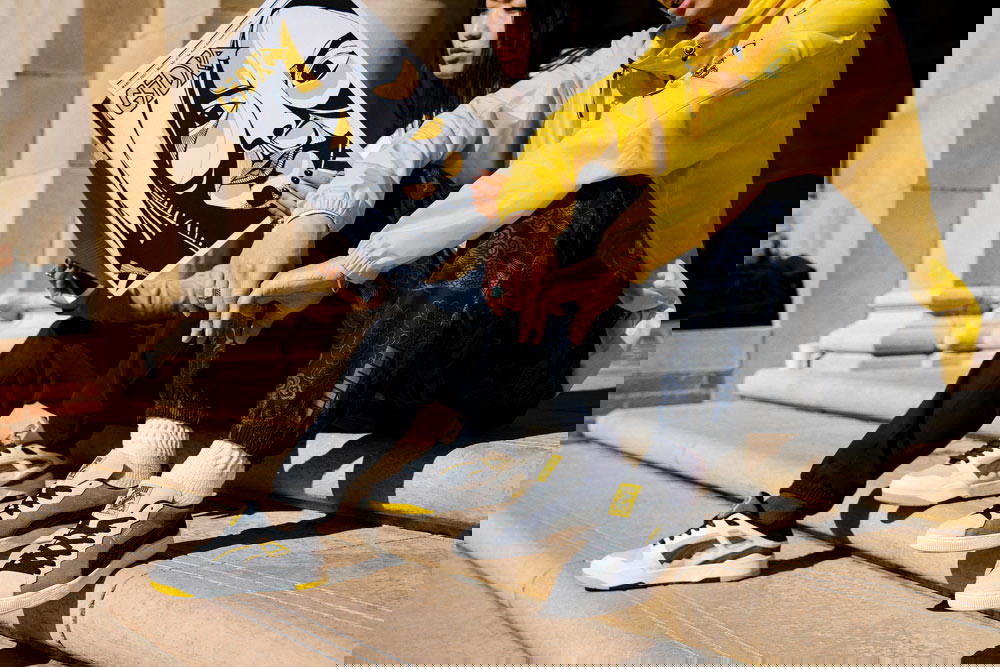
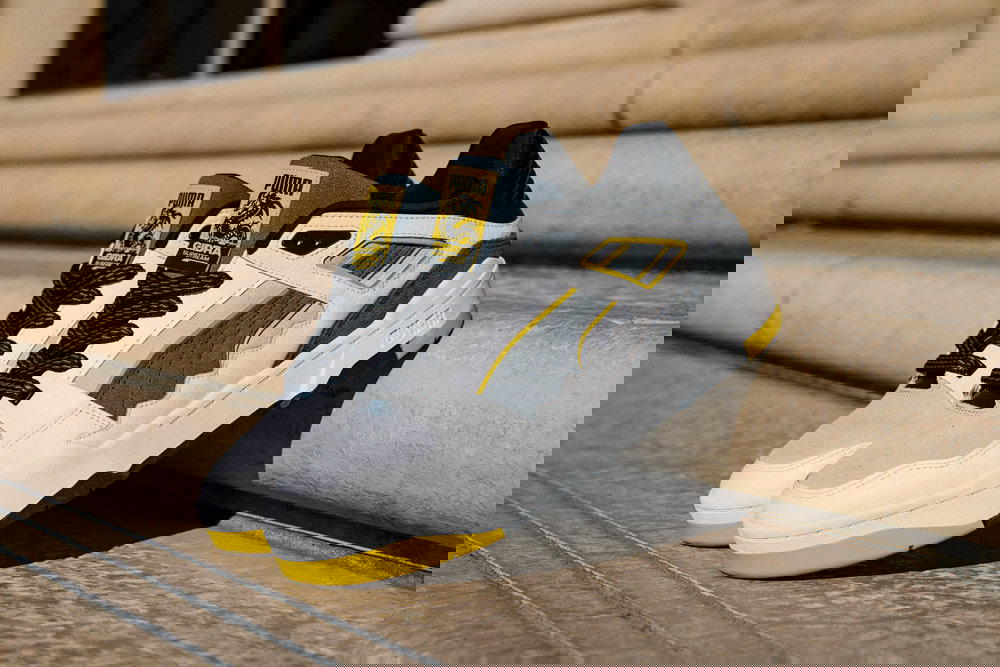
Photo: Puma.
The latest Puma x Staple collection is inspired by Gidra that was created in response to anti-Asian sentiment back in 1969. It’s been more than 50 years since and we’ve read of so many of such incidences happening in the past three years. You said the collection is your way of responding to that. How do you hope people receive this collection?
I just want them to be aware that history repeats itself and that we need to have the conversation about what’s happening. I’m not doing this to necessarily inspire a solution, because I don’t think there’s like a silver bullet solution, you know? But I do think that oftentimes when Asian people are dealing with a tough issue like race, they tend to close off and don’t talk about it—‘Don’t raise attention because then you’ll get hurt.’ Right now, we need to talk about this. That’s the only way it’s gonna get better. I mean, if 1,000 people buy these shoes, and only one kid figures out what the Gidra thing is and starts doing research while 999 other people just want to wear cool shoes, that’s okay. All it takes is that one person to change the way they think.





Street culture is rooted in on-ground realities. But now that luxury has co-opted streetwear, how do you think this has shifted streetwear’s rep?
Very selfishly, it’s an infusion of capital and exposure and eyeballs, right? As with a lot of the powers of industry, whether it’s luxury fashion, or electronics or automobiles, it’s great because it’s going to give a lot of people jobs and opportunities that they couldn’t have before. But I’m always a little bit skeptical and because I’ve been in this for a quarter of a century, I’ve seen the ebbs and flows of people coming in and out. And I suspect that eventually, just as streetwear is so hot right now it will also not be hot one day. So for me, even though there’s all this hype around it, one thing that I always try to do is just remain really core to, like you said, the real people on the street. Now streetwear is on a Paris Fashion Show runway. And that’s cool; I love that. But I also suspect that one day people will leave streetwear and I just want to still be here.
Having said that, have you ever thought of wanting to collaborate with a luxury fashion brand?
I’d be open to it. But I might also not be the right guy for it? I’m not trying to chase clout and I’m not trying to be the hottest name of the year. I always saw, even from the beginning when I started this brand in 1997, that when you’re hot and you’re number one people want to tear you down. I’d rather be top 10 for 50 years than number one for one year.
This isn’t your first collaboration of Puma. What about the brand keeps you coming back to collaborate?
It’s an icon. I’m addicted to working with iconic brands. I just think ever since I was a little kid, whether it was Coke versus Pepsi, or Apple versus Microsoft, I just love the idea that you can create a piece of artwork. It’s just a logo, right? But when you put that logo on things, all of a sudden people think of it as like a religious thing almost. I love that you can create something and people just really, really believe in it. Puma is one of those brands that just represents so much, especially in hip-hop culture in New York City, and they’re just so great to work with. Puma always allows me to do whatever I want. I don’t think they’ve ever said no to me.