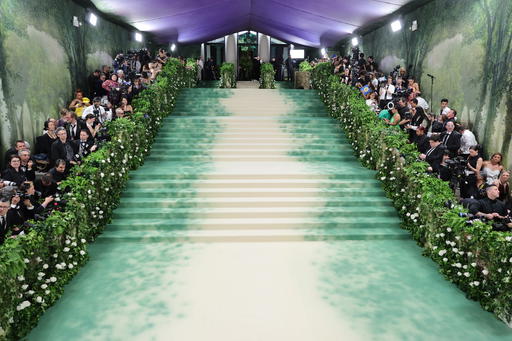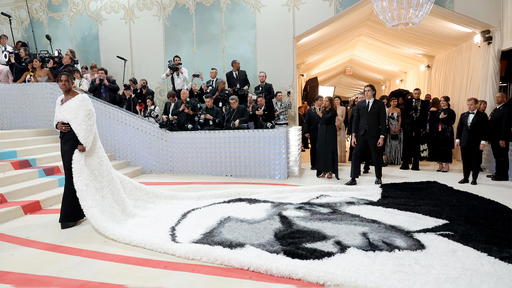
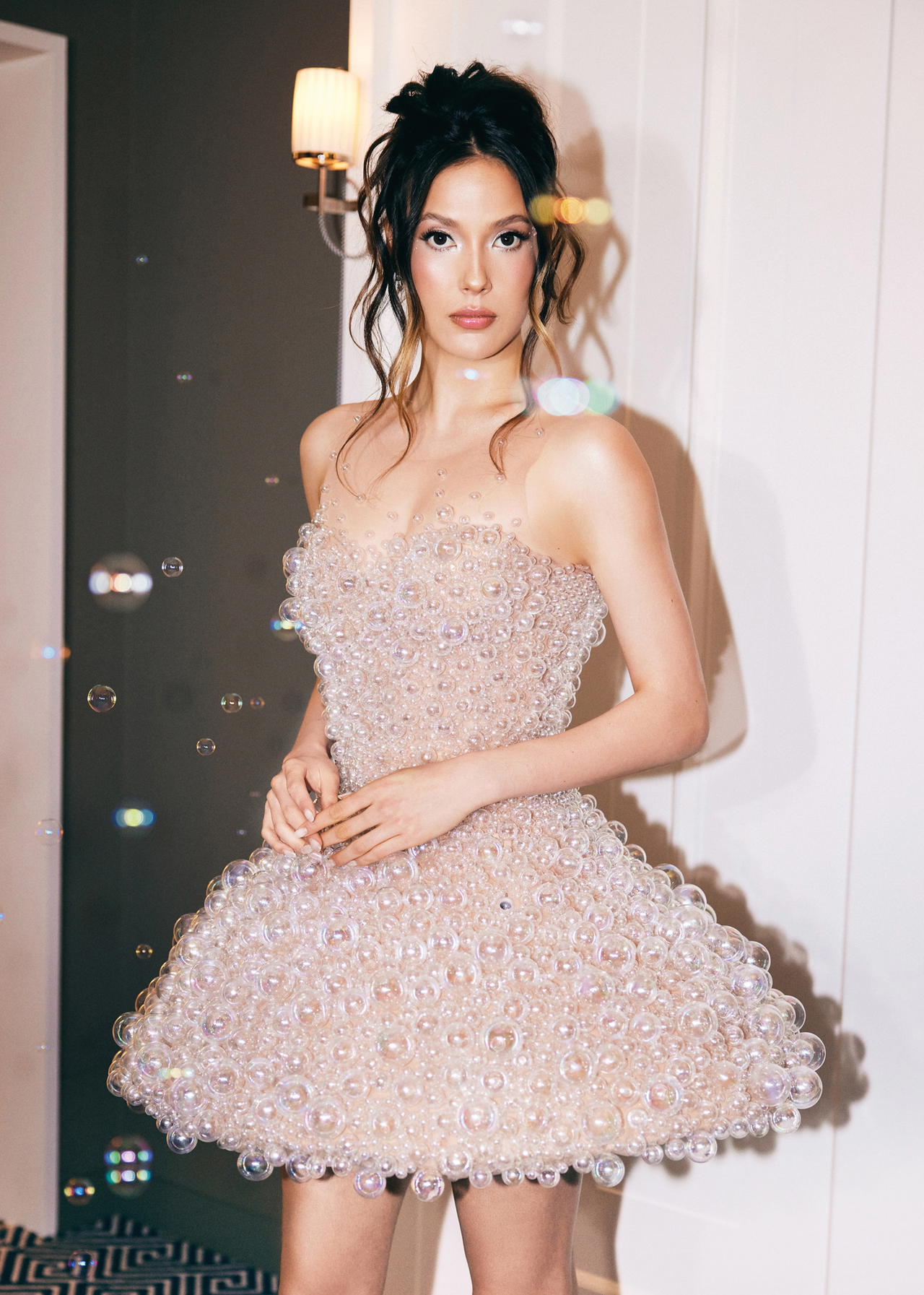
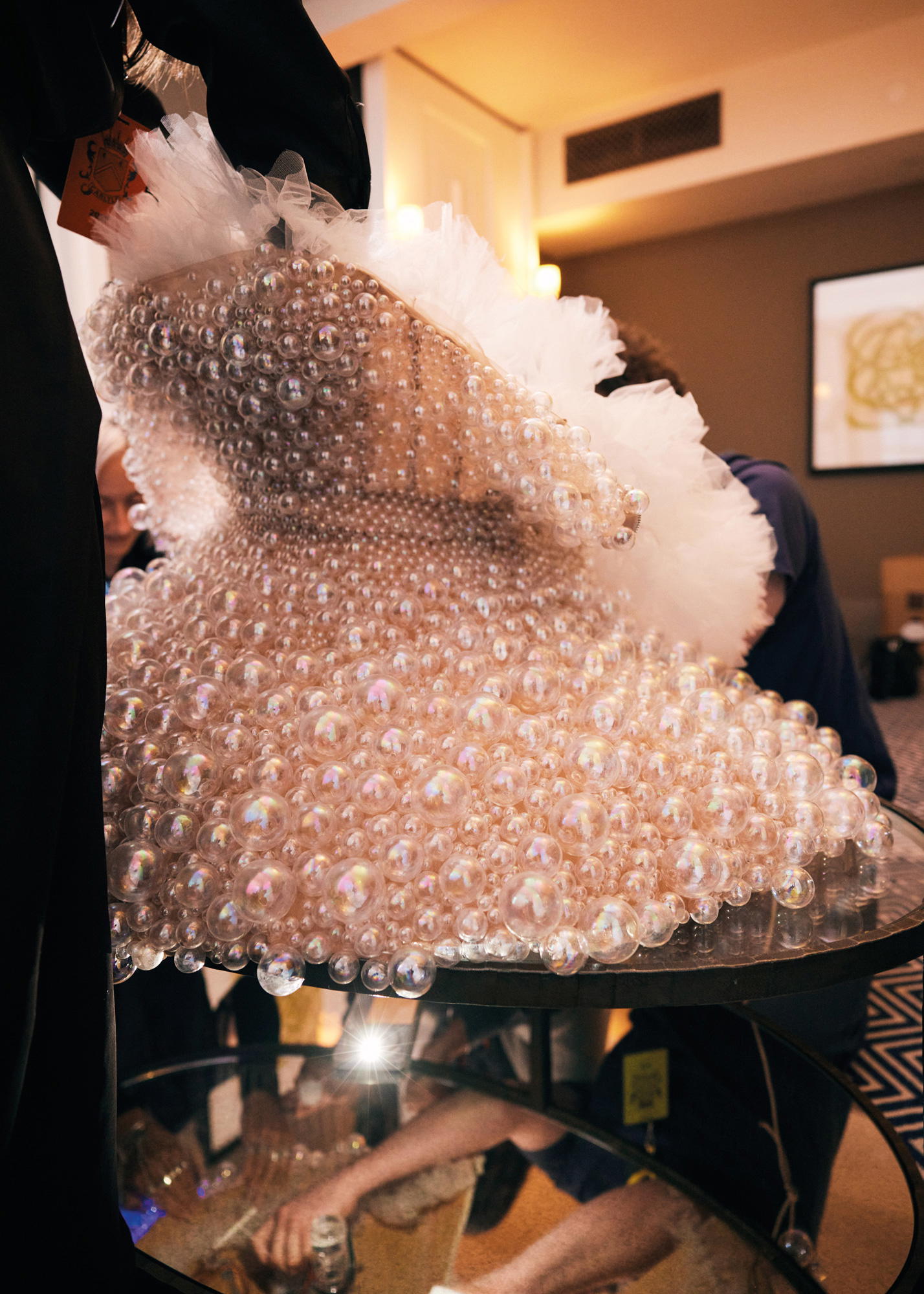
As Olympic freestyle skier Eileen Gu ascends the Met Gala steps, bubbles drift almost imperceptibly from her mini dress, catching the light before floating skyward.
Created with Dutch fashion designer Iris van Herpen, it is more atmosphere than garment. A feat of invisible engineering compressed into haute couture, it transforms one of the world’s most photographed red carpets into a fleeting spectacle.
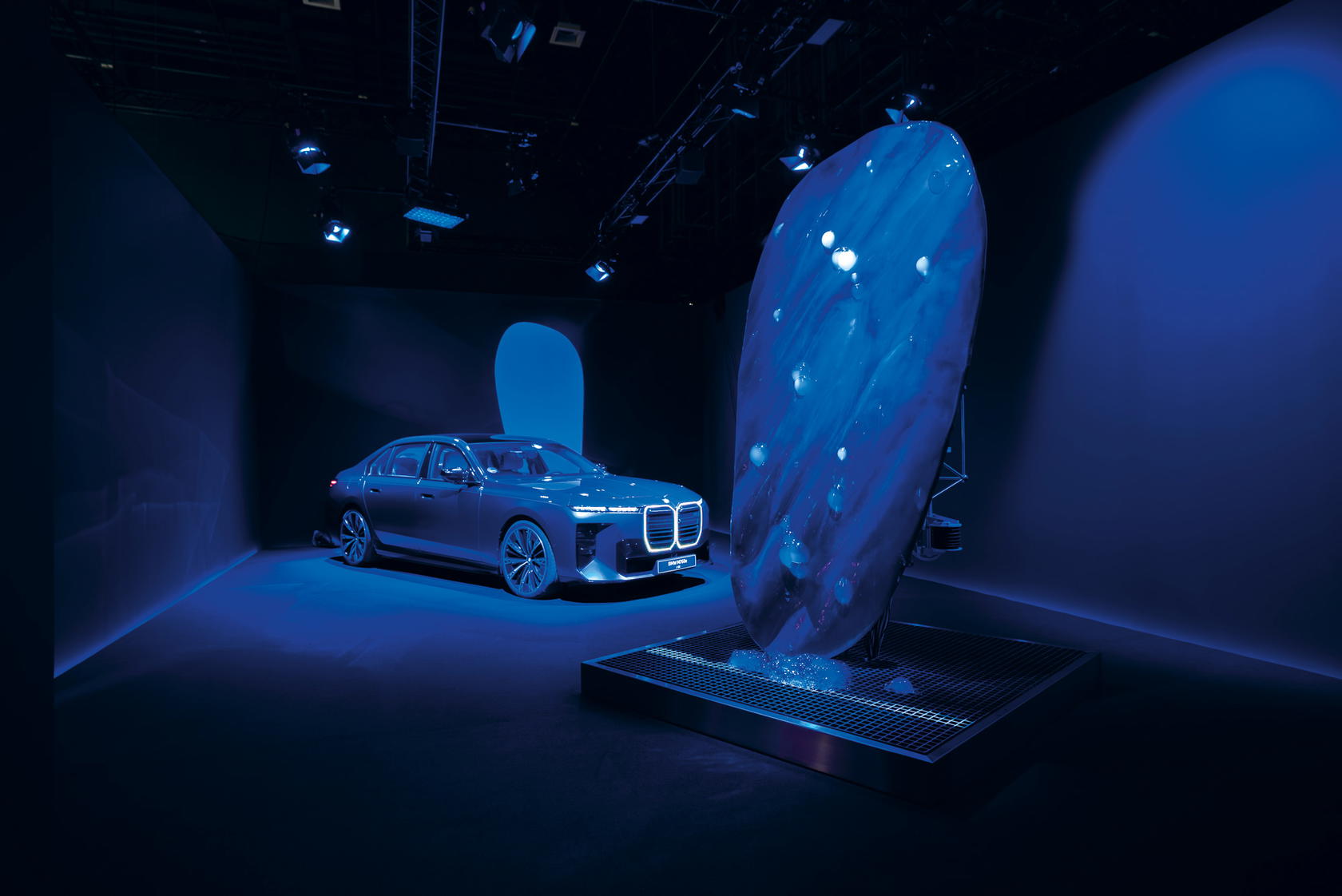
Several weeks after, at Art Basel, I find myself standing in a pool of tanzanite violet-blue light, recalling International Klein Blue or Giotto’s starry night ceiling in the Scrovegni Chapel in Padua in Northern Italy.
‘Symbiosis’, A.A.Murakami’s multisensory exhibit, feels mysteriously alive, like an alien sea creature breathing in slow motion. Before me, a metallic form quietly exhales mist-filled bubbles that swell, detach, and glide silently across its undulating surface before dissolving into nothingness. Mesmerising precisely because it cannot be repeated—each bubble follows its own path.
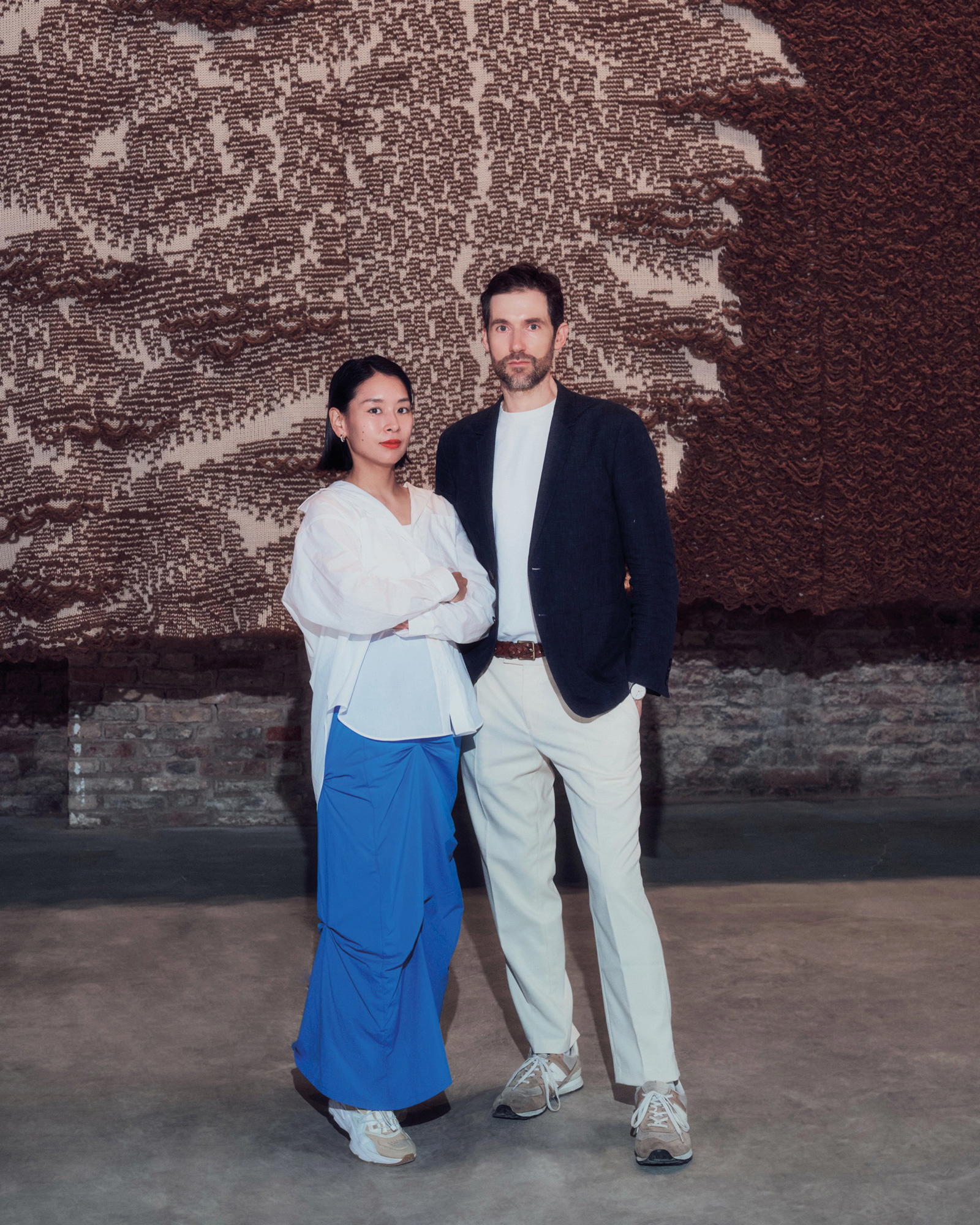
Impermanence lies at the heart of A.A.Murakami, the collaborative practice of Alexander Groves and Azusa Murakami. Working between Japan and the UK, they have become contemporary art’s most distinctive innovators, marrying robotics, chemistry, fluid dynamics, and custom engineering with a profoundly poetic sensibility.
As opposed to simulating nature, their installations, including ‘Symbiosis’, create entirely new phenomena that exist briefly before disappearing.
Groves explains, “Our artworks don’t represent nature; they are nature. We create experiences like giant bubble clouds that feel uncannily natural because they really exist in the laws of physics and nature.”
NATURE TAKING ITS COURSE
Their partnership began almost by chance. Groves grew up in rural England, immersed in natural history, science, and art, before studying fine art at Oxford and product design at London’s Royal College of Art (RCA). Murakami spent her childhood in Nagoya, Japan, then moved to an English boarding school at age 12. She pursued architecture at University College London before enrolling at RCA. They met in 2009 and began collaborating the following year.
“It felt very natural,” Groves recalls, noting that their conversations consistently produced ideas neither would have conceived alone.
This dialogue evolved into “Ephemeral Tech”, a term they coined for technology that behaves more like nature than machinery. “Instead of screens or projections, we work with fog, bubbles, and plasma to create moments that cannot last. These moments are subject to gravity, intermolecular forces, and air currents,” Murakami says. “Like us, they are subject to time and entropy.”
Groves describes it as a reaction against an increasingly virtual culture: “I don’t want to visit a museum and be on a screen. The material we work with is existence itself.” The pair create experiences that physically emerge before vanishing for good.
“In the digital realm, you can come back to it in 20 years and it will be the same. You can press pause or play, and that disembodiment makes you feel less connected to it. However, when you are experiencing nature, like cherry blossoms in Japan, there’s an awareness that it’s a moment in time, it’s fleeting, and it will never come again. It makes you very aware of presence.”
“When you are experiencing nature, there’s an awareness that it’s a moment in time, it’s fleeting, and it will never come again. It makes you very aware of presence.”
Alexander Groves of A.A.Murakami
THE NOTION OF A-WA-RE
This explains why A.A.Murakami’s multisensory installations rarely engage just the eyes. Visitors inhale fragrances released from bursting bubbles, feel drifting fog against their skin, and navigate evolving environments.
“In Japan, there’s this concept called ‘mono no aware’, an awareness of the beauty of impermanence—seasonal rituals that happen once a year or gardens designed to change and decay. Something is meaningful because it will pass,” explains Murakami.
Neither artist trained as an engineer. Instead, curiosity led them there. Both describe themselves as generalists who understand enough physics, biology, and technology to ask the right questions before assembling specialists to realise increasingly ambitious ideas.
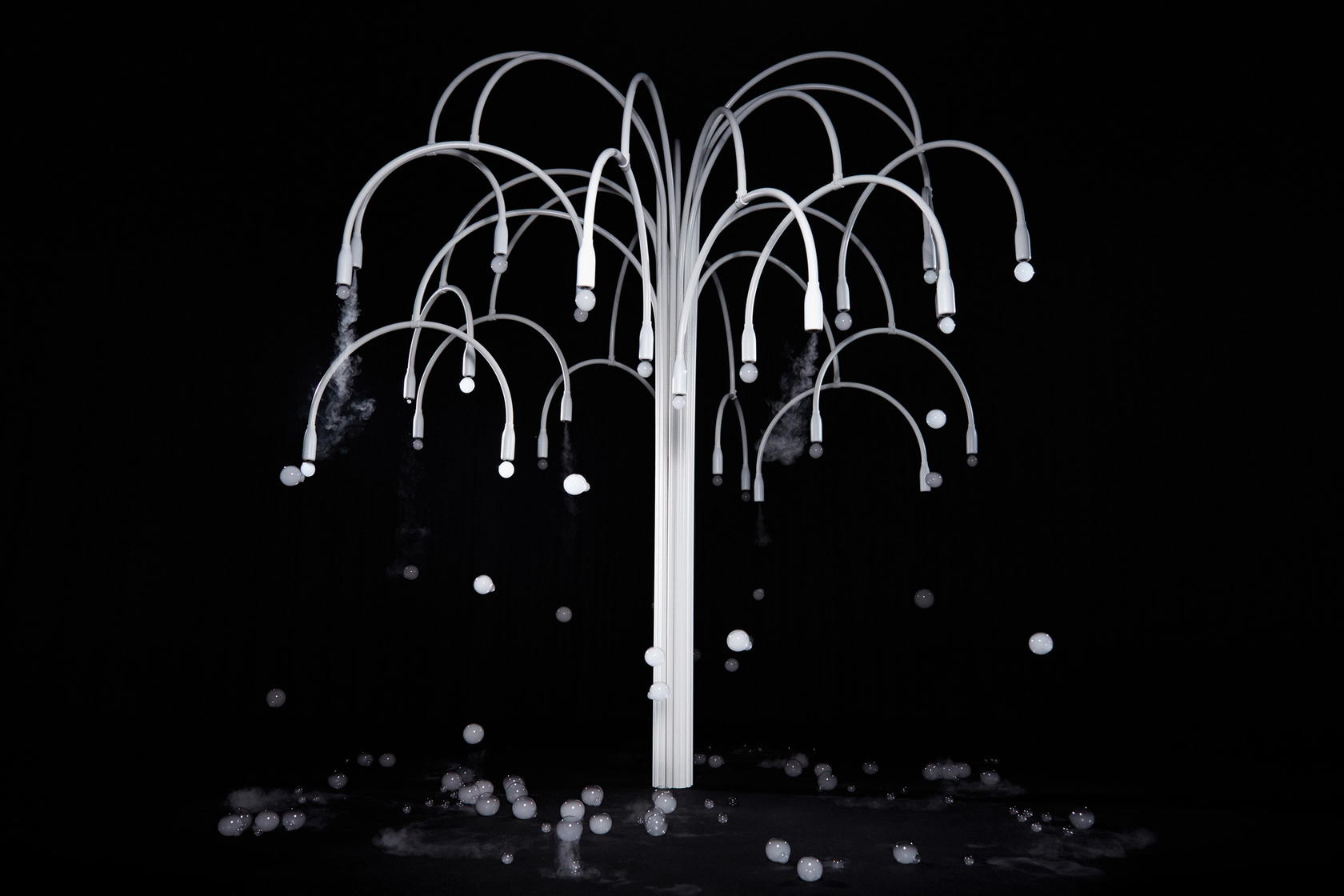
Groves likens their role to conducting an orchestra rather than playing every instrument. Often, ideas gestate for years. ‘New Spring’, a tree-like sculpture emitting mist-filled bubbles, took seven years to develop after countless experiments with bubble chemistry. Inspiration may arrive instantly, but the execution requires relentless testing, engineering, and fundraising. “The most fun part of our job is that we can dream big and absolutely believe that we will make it happen,” Groves says.
Their philosophy found its first wearable form in the Met Gala’s Airo Dress. Van Herpen was the perfect creative partner because “she is tech-couture and we are Ephemeral Tech,” says Groves.
The diaphanous dress concealed a 5-kg helium tank, bespoke electronics, and a trigger hidden among thousands of glass bubbles that enabled Gu to release floating bubbles as she walked. Groves says she grasped the concept immediately as well as the technology, mastering the secret mechanism with remarkable ease.
“She was perfect because she’s this great athlete who flies through the air, studies physics at Stanford, and loves technology. She’s also the exact synthesis of performance and science, so the idea of the dress dissolving into the air really speaks to what she does as well.”
ART THAT ENDURES
Equally ambitious is ‘Symbiosis’, commissioned by BMW for Art Basel 2026. For the first time, A.A.Murakami reveals the technology behind their work. Rather than conceal the mechanics, the sculpture deliberately exposes its bellows and machinery alongside the ephemeral spectacle. Inspired by BMW’s Symbiotic Drive interface between AI and the human driver, it stages a dialogue between engineering and natural forces, surrendering every bubble to chance.
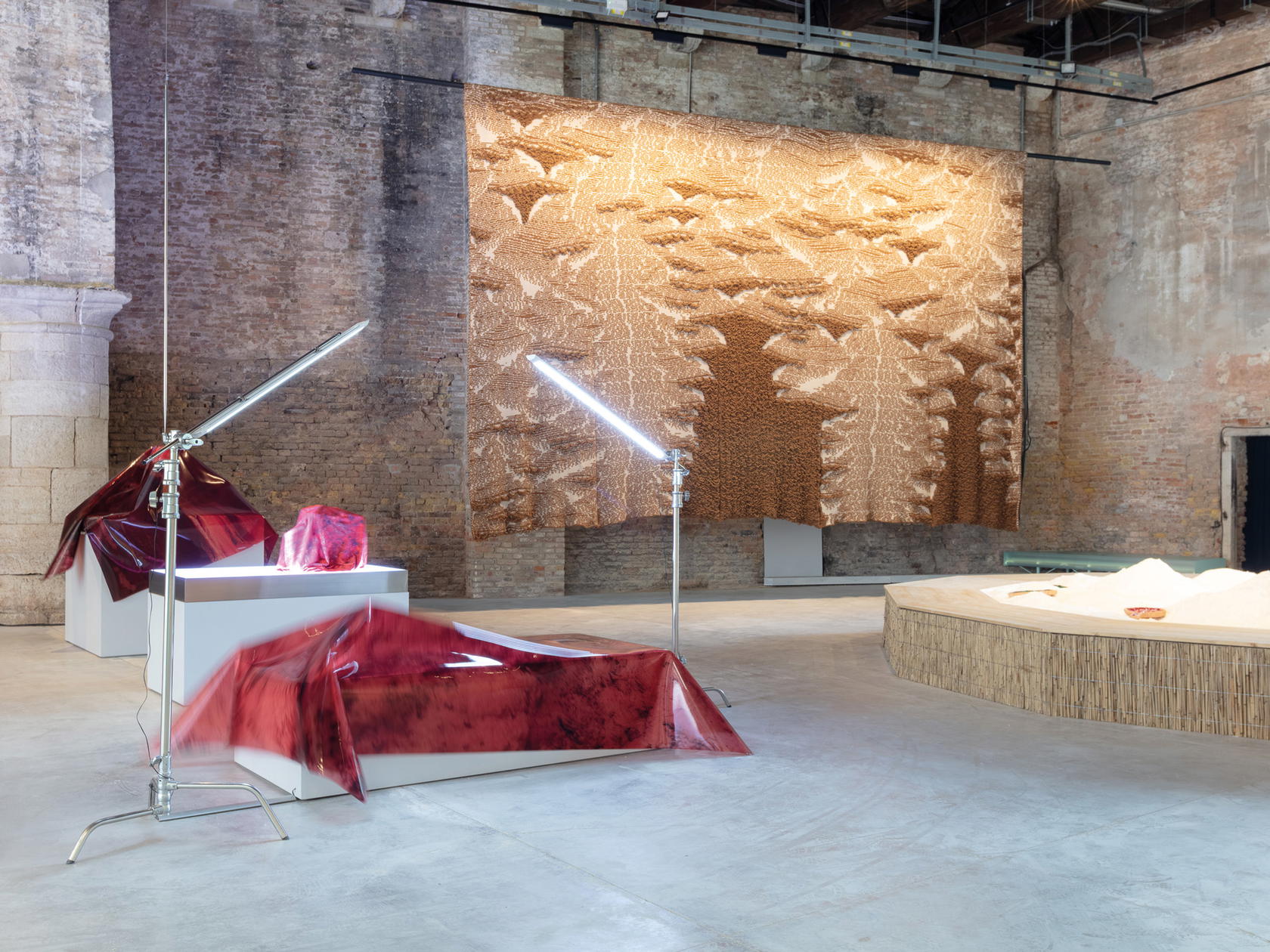
The questioning continues. At the 2026 Venice Biennale’s Uzbekistan Pavilion, the duo’s ‘The Sun Sets in a Shell’ transforms the shell patterns of the extinct zebra mussels of the Aral Sea into a monumental, algorithmically knitted tapestry. In September, “New Nature”, their first solo exhibition in South Korea, debuts oil-and-mud paintings fashioned from the generative code they developed to mimic these same patterns.
It marks a significant shift. After years of creating moments that disappear, the pair are beginning to produce enduring physical objects without abandoning the biological systems that inspire them.
Groves and Murakami never see technology as a destination. Conjuring wonder is simply an invisible process. It is through their works that we slow down, look harder, and acknowledge, even for a moment, the extraordinary beauty of things that exists only briefly.