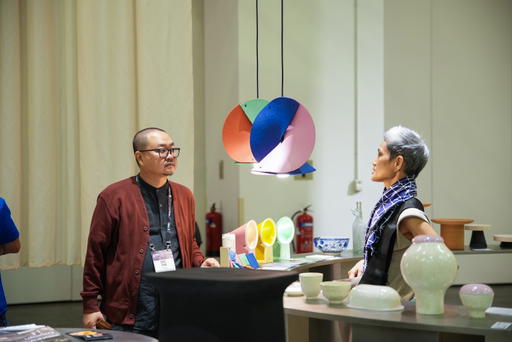
Tucked outside the “Into The Ocean: Journey Beneath” exhibition at Marina Bay Sands’ ArtScience Museum, Basement 2 Circulation, “Prototype Island Homecoming Showcase” is a curious assortment of objects.
Curated by Hunn Wai and Eian Siew, this 15-strong line-up received the inaugural “Essere Progetto” Special Mention at Milan Design Week in April 2026. Each work in “Prototype Island” reflects the idea that people are active agents of change, and that design can reshape how we relate to one another, objects, and the environment.
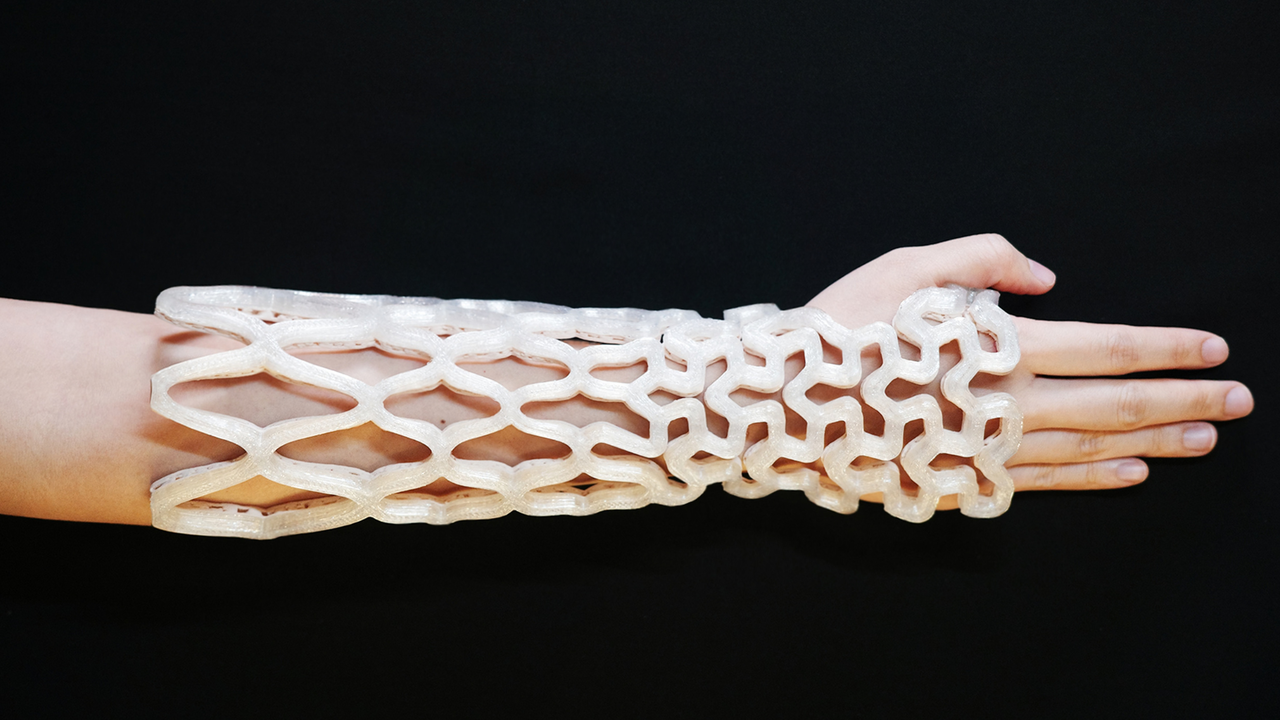
This was where I first encountered TessaCast, an orthopaedic cast featuring a lattice of hexagonal patterns (like those on fruit sleeves). I had to stop myself from pulling it onto my arm. Developed by A*Star Innovation Factory@SIMTech for med-tech company Castomize, it was beyond too cool for school. Lightweight and waterproof, it could also adapt to the body for comfort and support.
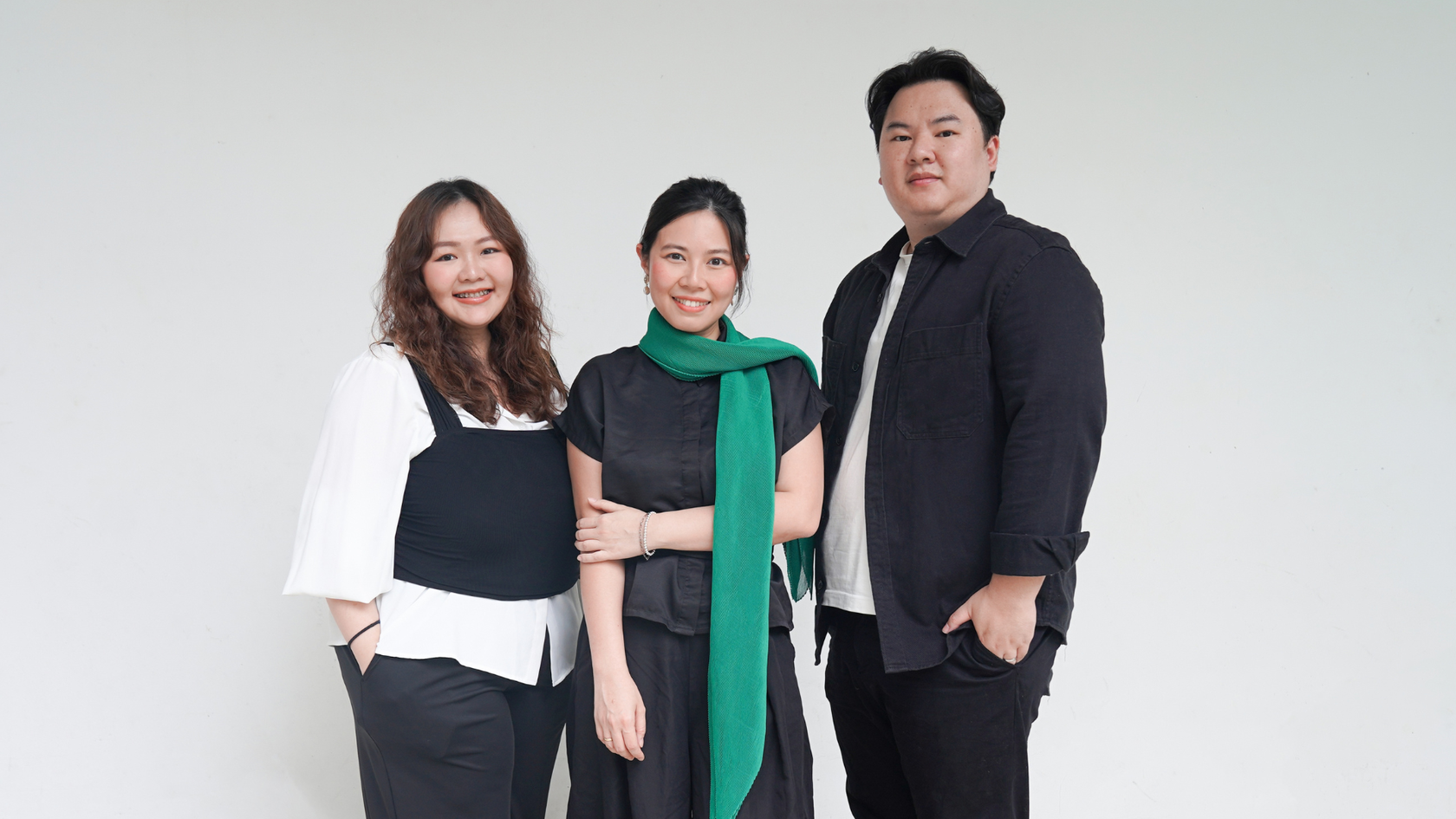
Abel Teo, CEO and co-founder of Castomize, says the idea for TessaCast dates back to 2017, as a research project at the Singapore University of Technology and Design. A project member broke his hand and had to wear a fibreglass cast. “He constantly complained about feeling itchy and sweaty, worsened by the fact that he couldn’t shower,” Teo recalls during this interview. The discomfort extended to its fit—wrapped too tightly or too loosely, the fibreglass cast can cause pressure sores and impede the healing journey.
IF THE CAST FITS
TessaCast is fabricated through 4D printing with smart thermoplastic polymers arranged in a flat, rigid structure. To customise it for a patient, the doctor heats the cast until it becomes flexible, wraps it around the injured limb and lets it cool. It can be continuously adjusted during healing, which reduces the need and cost for replacement casts, and material waste by at least 30 percent.
Jasper Chua, Lead Mechanical Engineer, A*Star Innovation Factory@SIMTech, says the team produced more than 20 prototypes before deciding on the current anti-chiral triangle pattern. The design was crucial because it had to adapt to different shapes and sizes of arms, wrists and palms. In particular, it had to accommodate the natural curvatures in the thumbs and wrists, says Rachel Ng, Lead Industrial Designer, A*Star Innovation Factory@SIMTech.
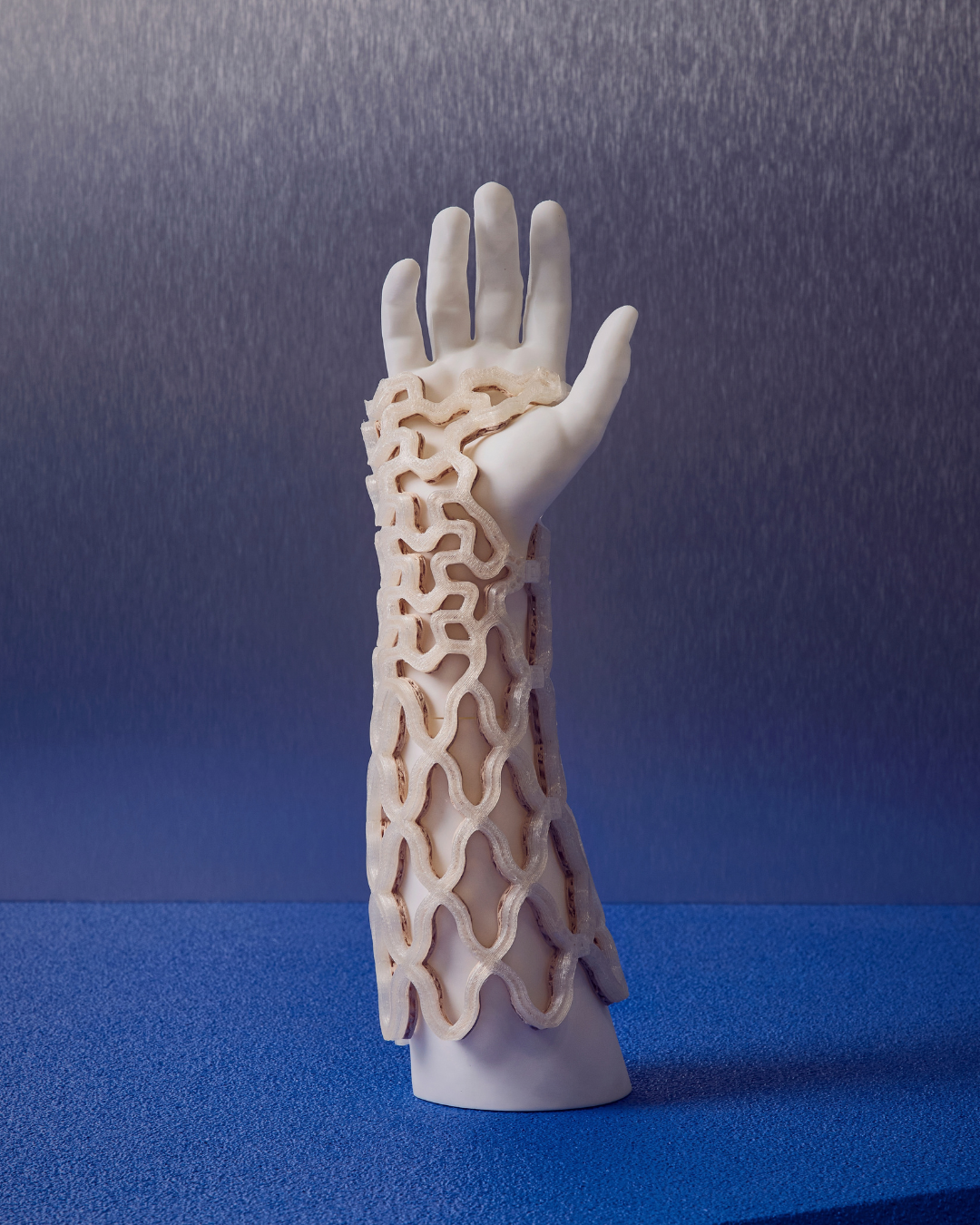
Getting the design right was only part of the challenge. The team had to consider how the material could bend, contour, stretch, and be manufactured. While this created some constraints, it also led them to explore and refine patterns. As Ng puts it, “The selection of the materials helped keep us grounded and not let our imaginations run too wild.”
While the team sought feedback from many doctors, they also had to learn to filter it. Teo adds, “Sometimes it was a localisation issue since doctors’ approaches to the same problem differed according to countries or cities.” The team also considered if the same feedback came from one doctor or several, and their seniority and influence.
Ng concurs: “Is their feedback about the product or process? Does the feedback mean there’s a problem with the product?” A clinician’s resistance to a new device, she points out, may have more to do with having to learn a new way of working. “It’s like cooking a meal, basically, but everybody has different tastes.”
THE JOURNEY CONTINUES
Until TessaCast’s appearance at Milan Design Week, the team primarily focused on building the device’s approval and credibility among doctors. Getting included in Prototype Island “wasn’t something we actually expected”, Teo says, but the exposure brought TessaCast to a wider audience, including patients. All this strengthened the team’s confidence.
Meanwhile, TessaCast has secured approvals and purchase interest in Singapore, South Korea, Taipei, and Australia. Castomize is also working on translating this design into products for prosthetics and pet health.
TessaCast has travelled further than its creators intended. It won a Singapore Good Design Award and Japan Good Design Award, and a Silver for Medical Devices Product Design at the Muse Design Awards, all in 2025. Occasionally, it did more than help people heal. Teo says with a laugh, “Yes, we have used it as a cover for our wines too!”