

You may recall an iconic scene from the cinematic epic Forrest Gump, where the titular character’s marble-mouthed platoon buddy, Bubba, rattles off a litany of shrimp dishes, oblivious to the grunt chores at hand. Insect-crazed Singaporean Javier Yip seems to be cut from the same mould, but instead of crustaceans, he’s obsessed with bugs.
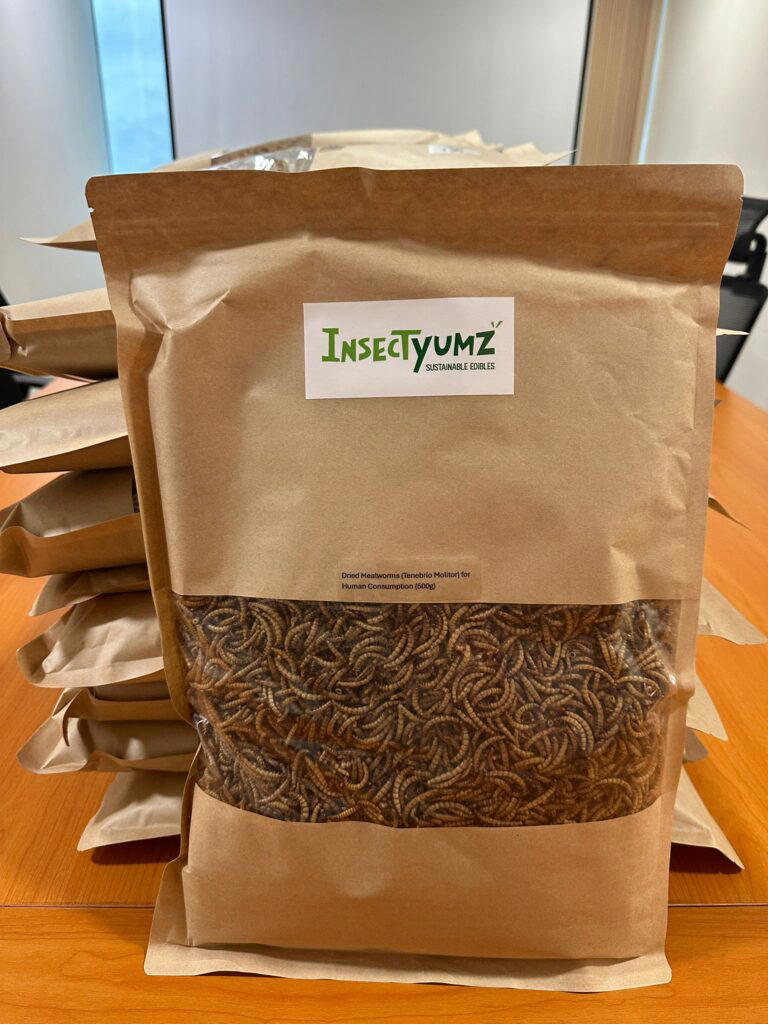
In his cramped office scattered with documents, the founder of local edible bug supplier InsectYumz regales me with accounts of delicacies he’s sampled overseas—silkworms sautéed with onions are a standout dish in China—and how to consume them in varying permutations.

Crickets and grasshoppers, for example, are typically eaten when they become fully formed adults, while mealworms and silkworms are eaten when they are pupae.
The 39-year-old developed a curious taste for the squirming, skittering creatures while in secondary school when he purchased a mealworm cast in a lollipop from a stall at Tampines Mall. In the intervening years, he burrowed into a smörgåsbord of exotic and sometimes outré insects, which he scoped out in countries such as Thailand and China, where they’re sold as street snacks.
His was a flight of fancy fuelled by novelty, rather than a gastronomic excursion. Somehow, though, it morphed into a business proffering crunchy crickets and mealworms he bought in Thailand and seasoned with flavours such as tom yum and barbecue.
“Back then, I felt very brave and then I realised insects are tasteless when eaten plain. Our selling point is their high protein content,” admits Yip, who also runs a logistics company. He launched InsectYumz in July 2024, after the Singapore Food Agency (SFA) approved 16 insect species for human consumption.
Future food for the planet
Once shunned as vermin, these are now permitted in Singapore as alternative proteins, not least because of their environmental benefits.
“Compared with outdoor traditional farming and indoor urban farming, insect farming is much more efficient in terms of requirements for land, energy and water,” says Professor William Chen, Director of Worms Over Wagyu Nanyang Technological University’s (NTU) Food Science and Technology Programme. As an example, insects require less light to grow than vegetables, which reduces their carbon footprint.
Furthermore, insect farming produces significantly less greenhouse gases than traditional livestock farming. Methane emissions from crickets are 80 times lower than those from cattle, for example.
They also consume less feed than larger animals, which reduces the strain on agricultural resources. For every kilogram of protein produced, insects require around 2kg of feed, while chickens, pigs, and cattle consume 2.5kg, 5kg, and 10kg, respectively, according to Chen.
There is no doubt that more environmentally friendly diets would be preferred, but many still shun bugs while chowing down on choice cuts of methaneripping beef without any guilt whatsoever.
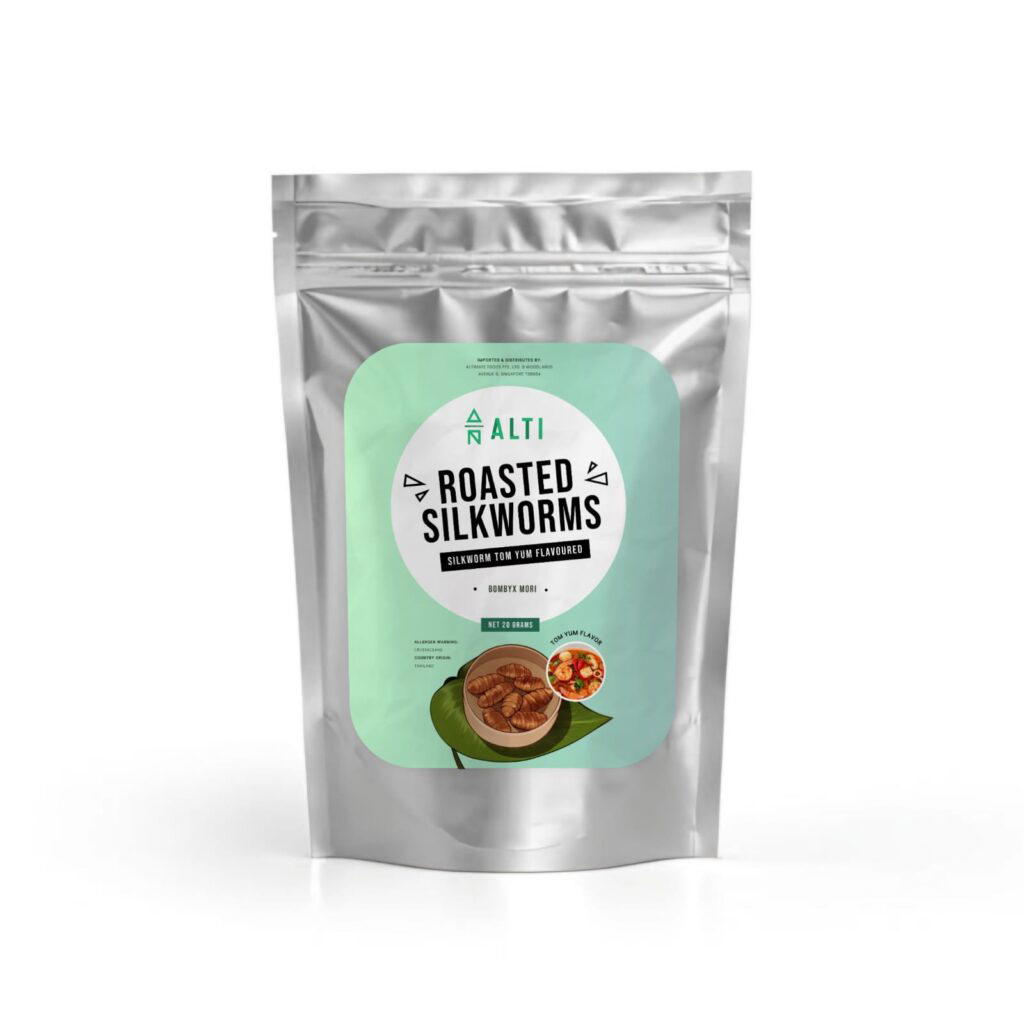
Gavriel Tan, Altimate Nutrition’s cofounder, is going full tilt to change taste buds through his company’s edible insect protein snacks. Since the regulatory approvals, a blizzard of outreach events for government agencies, schools, and companies has filled the 24-year-old’s calendar. He has even partnered with Science Centre Singapore to conduct workshops dissecting insects’ nutritional benefits.
“If we focus on the younger generation, edible insects could become mainstream,” asserts the Republic Polytechnic biotech graduate, whose company’s protein bars are made with cricket flour as well as roasted silkworms and crickets.
Tan claims his promotional blitz, which included bug-tasting sessions, has led to squeamish diners overcoming their insect phobias. With this in mind, Chen suggests that consumers can be weaned onto insect protein by gradually introducing it to pantry staples like pasta and potato chips.
Moreover, Singapore’s innovation hub is well-positioned to pitch this lifestyle trend to the future through food technology breakthroughs. Insect proteins are known to function as emulsifiers, Chen says, and he predicts that insect proteins may replace egg yolks in future mayonnaises. He also floats the possibility of insect proteins derived from fermentation, which generates different flavours and textures. “We might see, for example, umami-flavoured potato chips coated with fermented insect powder.”
Altimate Nutrition is partnering researchers from institutes like NTU to hydrolyse cricket powder to enhance its flavour and appearance. “My background is in cell biology, so I’m happy to contribute to the advancement of the product, beyond pure commerce,” says Tan.
Insects on the menu?
The fact that local F&B players are open to experimenting with edible insects is encouraging. Yip, for example, supplies mealworms to Tom’s Palette Ice Cream. Additionally, Tan has spoken with representatives of the Paradise Group of Chinese restaurants and received inquiries from curious hoteliers. Still, crispy crawlies are unlikely to appear on menus anytime soon.
According to Yip, restaurateurs tend to be more circumspect when introducing unconventional ingredients. Fura, however, is an eco-conscious bar that ventures into uncharted territory. Having previously served mealworm margaritas, it has a tequila-spiked cocktail infused with mealworm and chillies in the offing.
Although chefs aren’t exactly whopping up insect-based meals yet, we spoke to entrepreneurs who are optimistic about the industry’s growth. Tan recently goosed up his enterprise with a cricket farm measuring 650sqm in Hua Hin, Thailand, with the capacity to breed three tonnes of crickets annually.
It does not touch the sides of the 35,000- sq-m high-tech insect farm—the world’s largest—that opened in France in 2023, but it will give Altimate Nutrition a competitive edge locally.
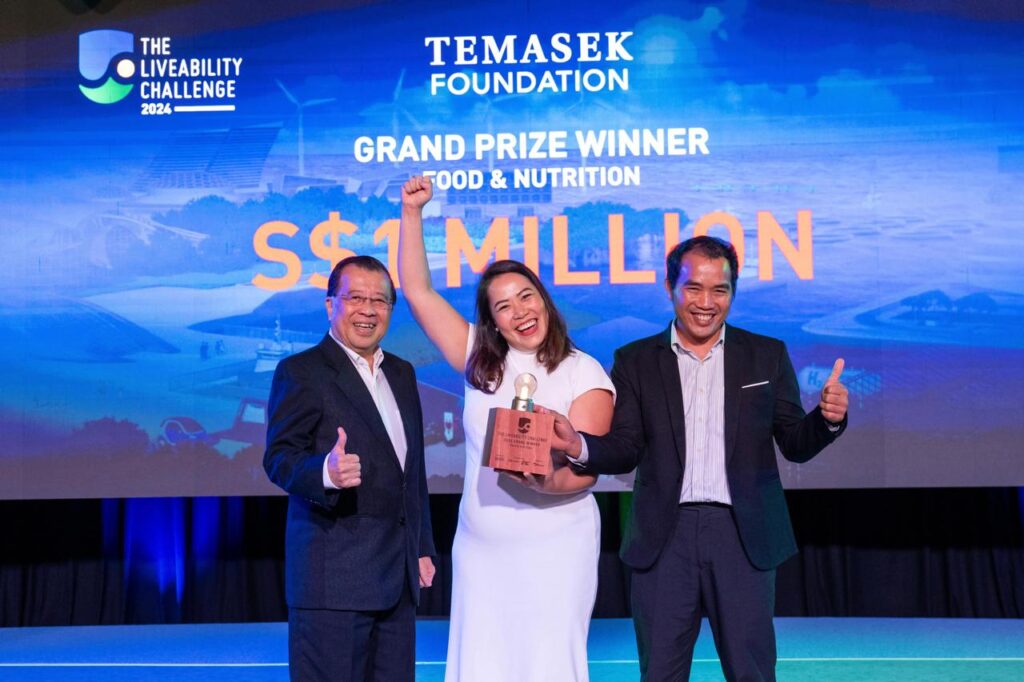
In light of the fact that international players such as Lithuanian insect protein firm Divaks and Vietnamese foodtech startup Cricket One, which clinched $1 million at Temasek Foundation’s The Liveability Challenge 2024, are dipping their fingers in the metaphorical honeypot, it’s a timely move. Both recently registered with SFA.
Divaks’ CEO, Kestutis Lipnickas, says, “Singapore’s commitment to food security, coupled with its strategic location in Asia, makes it an ideal hub for introducing novel food sources like insect protein.”
Cricket One’s co-founder Bicky Nguyen tells us the company plans to introduce snacks and meal replacement products that incorporate cricket protein as a central ingredient in Singapore. “The funding from the Temasek Foundation will accelerate our efforts to produce high-quality cricket protein while improving its appearance,” she says.
As for Yip, although it has been challenging for him as a first-mover to navigate the cat’s cradle of import regulations, he has inked a deal with Sheng Siong to have his products stocked in its supermarkets. This is great news, considering many similar ventures failed due to the protracted wait for SFA’s approval.
Nonetheless, he is prepared to ride his venture till the wheels fall off. In his view, Singapore’s future culinary scene is brimming with possibilities, such as Halal-certified insects available in supermarkets, and insectbased dishes—nasi lemak with crickets, anyone?—on delivery platforms.
Eventually, Yip plans to market crickets to tourists visiting Chinatown and other hotspots. “Singapore’s brand stands for safety and hygiene, which will appeal to international customers. Just look at how strong TWG’s branding is, even though it doesn’t even produce its tea here,” he concludes.