Chanel
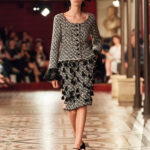
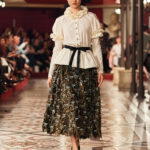
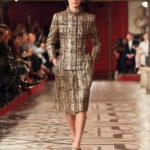
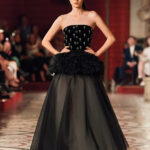
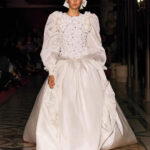
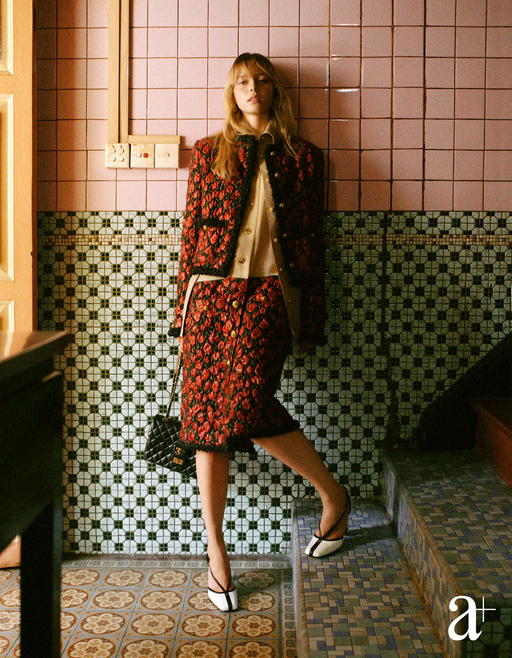
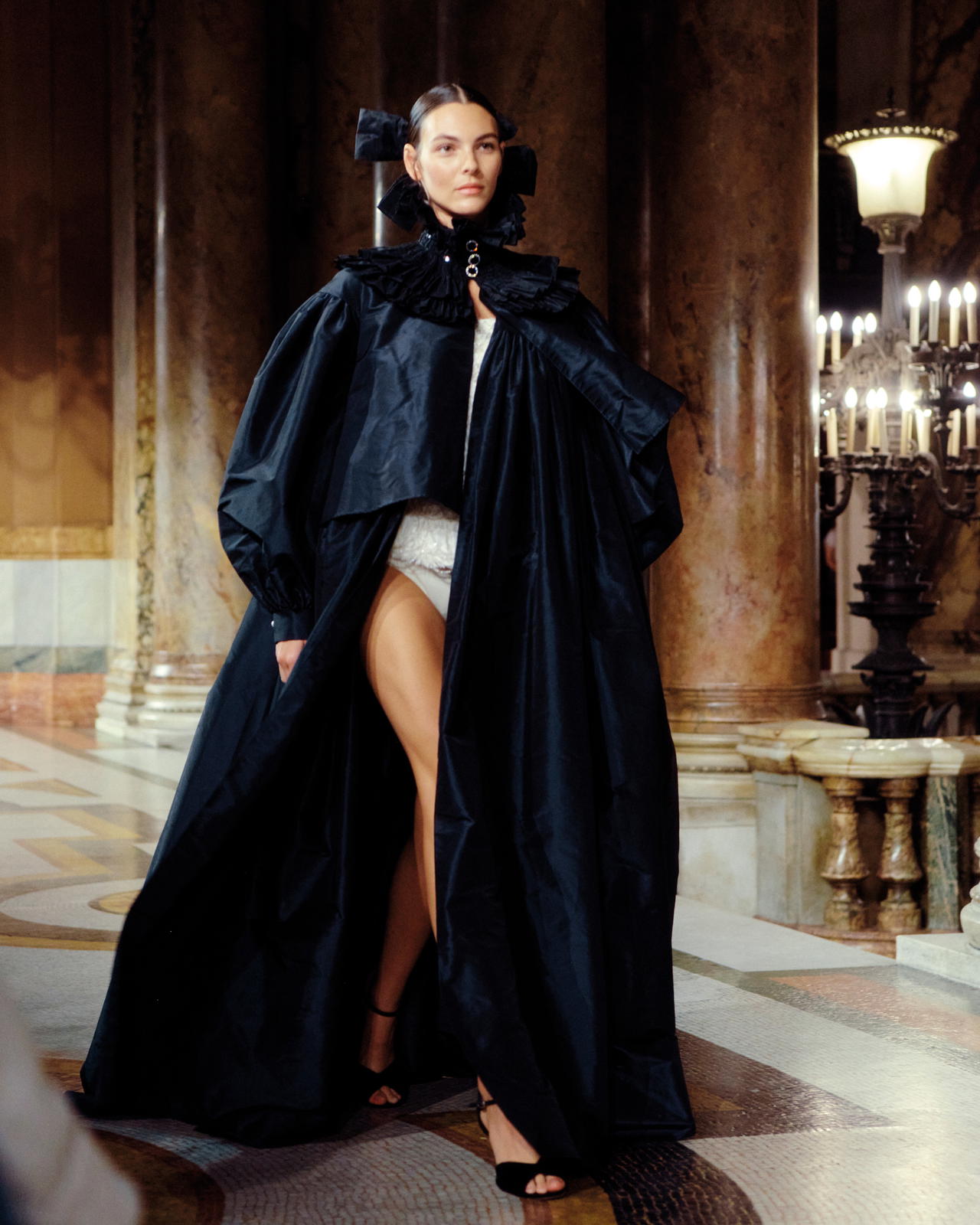
This highly-anticipated presentation generated plenty of pre-show buzz, from the change in venue because of the 2024 Paris Olympics fencing competitions at the Grand Palais to the announcement of creative director Virgine Viard’s departure. As indicated in the show notes, the collection was created by Chanel’s Fashion Creation Studio and intended as a tribute to the stately Palais Garnier, also known as the Opéra Garnier. The opening look, a billowing black taffeta cape, evoked the dramatic tone of theatrical opulence, while the others that followed embraced the house’s codes, just as Coco Chanel and Karl Lagerfeld would have.
Chanel tweed suits, seen from exits 2 through 10, embodied the fit, ease, and precision
tailoring Mademoiselle Coco introduced. With some of these pieces, the lack of adornments spoke volumes about restraint and linear proportion. In others, the skilfully embroidered feathers, tassels, fringeing, and intricate beadwork lent a touch of whimsy and true artisanal value from the brand’s acquired ateliers.
Balenciaga
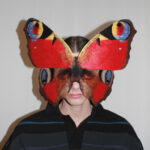
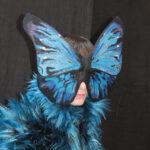
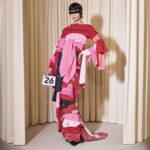
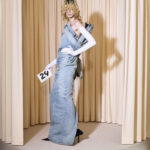
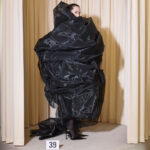
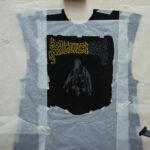
This is Demna’s fourth couture collection and arguably his most provocative. At first glance, most of the looks conveyed a casual Friday vibe (yes, we said that!). There were no excessive high-brow formalities as expected of haute couture, but let’s not judge a book by its cover. Instead, let’s recall the couture genius of this Georgian designer’s previous endeavour: a duster coat made of a fabric manipulated to appear permanently windswept and trompe l’oeil fur textures achieved by oil painting (no animals had to die).
Similar disciplines appeared in the show, such as the metalhead T-shirts and hoodies with their imageries of Balenciaga “rockers” that certainly weren’t Hellfest merch. The laborious hand painting by a professional artisan referencing a pre-styled photograph took 70 whooping hours to complete. Likewise, as irony would have it, a moth-eaten gown was finessed through the art of distressing.
The latter upcycled number was handloomed and adorned with black beads from the
atelier’s deadstock. In addition to the construction phase of the gown, just the embroidery process alone took over eight gruelling weeks to realise.
Dior
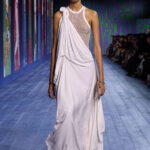
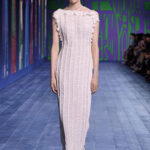
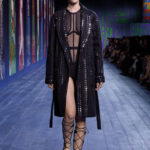
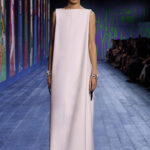
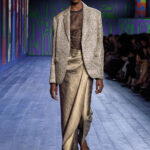
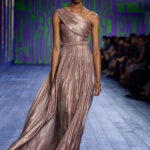
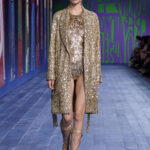
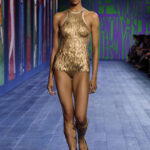
The sensational lead-up to the Paris Olympics presented Maria Grazia Chiuri with a compelling storyboard for fusing sportswear with haute couture. A remarkable collection of 61 pieces showcased Dior’s reinterpretation of the peplos, an ancient Greek body-length garment.
Using jersey, an uncommon material in couture, she cleverly modernised goddess-inspired gowns with racerback tanks and rhinestone-embellished bodysuits, simultaneously redefining the meaning of ease and underscored luxury. A series of evening looks incorporated metal mesh draped sinuously over naked figures to make the jersey fabric more ceremonial. The metallic tones gave these red carpet-worthy pieces championship appeal.
Schiaparelli
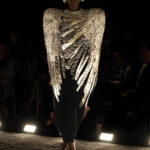
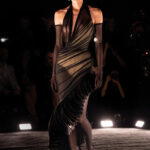
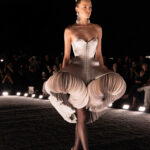
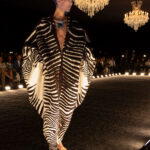
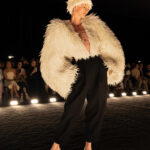
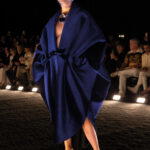
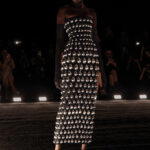
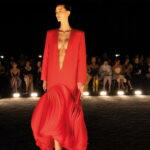
Daniel Rosenberry attributes his collection to a dream he had: a lost couture collection tucked away in the basements of Elsa Schiaparelli’s home. Running with this surreal time-capsule fantasy, the Texan-born designer seamlessly transformed—and reinvigorated—the wonders of Schiaparelli’s oeuvre. The Phoenix, the first look to go down the runway, was inspired by a feather stole ensemble the foundress herself wore, circa 1940s.
With its avian silhouette, or in this case, of an exceptional phoenix, the mighty cape galvanised the rest of the collection’s fantastical power-shoulder creations. Additionally, a corset with shoes for bra cups reminiscent of Schiaparelli’s collaboration with Salvador Dali and gowns with millefeuille circles at the hems demonstrated the quality of the storied house’s—and Rosenberry’s—unique craftsmanship.
Iris van Herpen
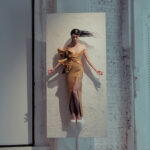
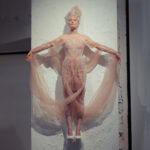
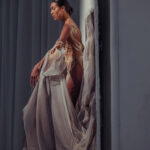
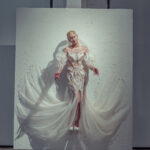
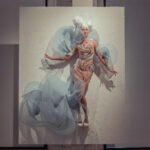
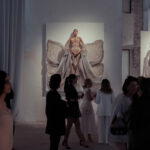
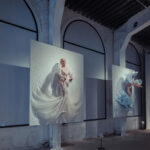
After working 16 years in haute couture, Iris van Herpen had an epiphany while prepping for her Musée des Arts Décoratifs retrospective, Sculpting the Senses. “I could see the interdisciplinary approach throughout my whole body of work, but I was missing something that had always been a part of me: my love of sculpture and painting,” remarked the 40-year-old Dutch designer.
Let’s fast forward to her Hybrid Show, in which van Herpen presented an intimate arrangement of just nine works in a gallery-like space. In this capsule, there were only five couture gowns. Additionally, there were large-scale artworks using oil, tulle, and pleated silk as well as tableau curtains hanging from steel tubes. In a twist on the tableau vivant (French for “living picture”), she presented her masterpieces on floating models perched on shoe sculptures that protruded from impasto wall reliefs.
In true performing arts style, each model emoted the celestial spirit of van Herpen’s artistic energy with just their arms and a sage gaze. The gilded Sensorium gown Coco Rocha had on was made of Japanese obi fabric, while Lily Cole wore the Aeromorphosis, a 3D powder blue stunner with bodice pearls and whorled ruffles.
Thom Browne
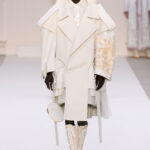
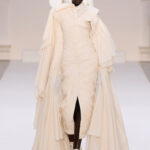
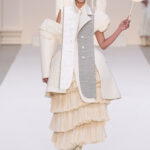
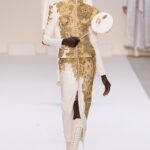
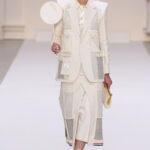
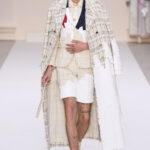
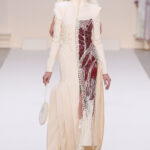
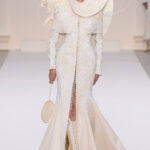
Every couture creation begins with muslin used to perfect a prototype. In the workshops, this WIP is called a toile (French for “canvas”). Thom Browne’s sophomore couture collection tested this demo material on fabric engineering feats only the American designer could subversively dream up.
By using different densities, Browne manipulated the original fabric structures and then created new forms, including pleated panels on a robust pannier gown and a finely woven, sheer tweed fashioned from gauzy strips of frayed muslin to create a tongue-in-cheek trompe l’oeil dress. He also played on the brilliant fact that haute couture is ultimately a couturier’s proficiency in crafting magic on a human form. Constructing suits to mimic the working stages of pinned patterns on a tailor’s dummy, he proposed exceptional inside-out jackets and quirky asymmetrical coats with sleeves that were partially attached.
There was even a striking button-down coat that tackled the study of human anatomy. It exhibited an extraordinary patchwork of abdominal pecs on one side and the underpinnings of the muscular system—rendered in red, blue and white beads—on the other. Incredible.
VIKTOR & ROLF
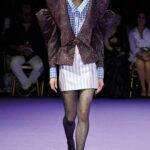
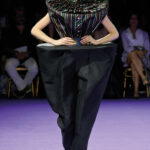
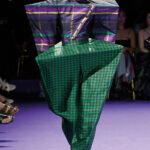
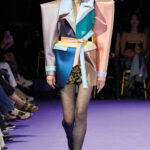
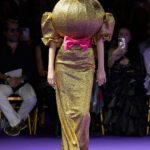
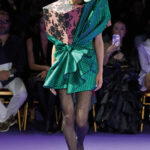
“You’re only as good as your last success”, as the saying goes. Sadly, that’s not true here. Twenty-six years ago (Fall 1998), Dutch designers Viktor Horsting and Rolf Snoeren presented Atomic Bomb, their second haute couture collection.
If you’re a couture aficionado, you will recall the famous rotund silhouettes. Or the fact that these mushroom shapes first sprouted at the duo’s debut Spring offering. But enough schooling on V & R’s design prowess and back to the drawing boards of “Haute Absurdism”—the current madcap collection that revisited fashion moments from Atomic itself.
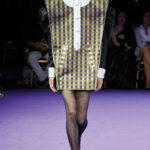
Characterised by the same explosive, top-heaviness, the geometry lesson this time around was the study of rectangles, triangles, inverted trapezoids, and parallelograms.
The show-opening jacket offered an art-meets-math masterclass, considering the visual spectacle of Cubism it was giving. As for the fragmented retro colour scheme, let’s just call that neo-Memphis Milano or kitschy 1950s kitchens—if you will. Balloon-like, off-shouldered mini dresses with boxes doubled as a rather unsexy take on the female décolletage, and spherical upper bodices (read: atomic mushrooms) gave some models the comic absurdity of Cosplay boobs. Talk about off-kilter opposites!