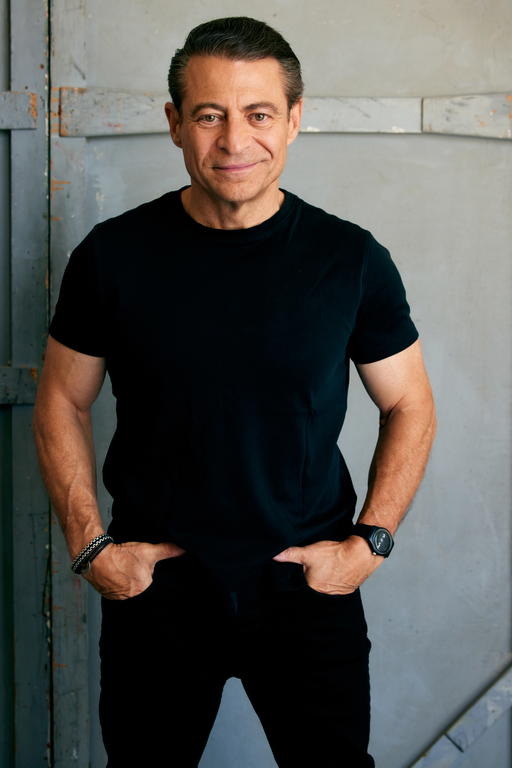
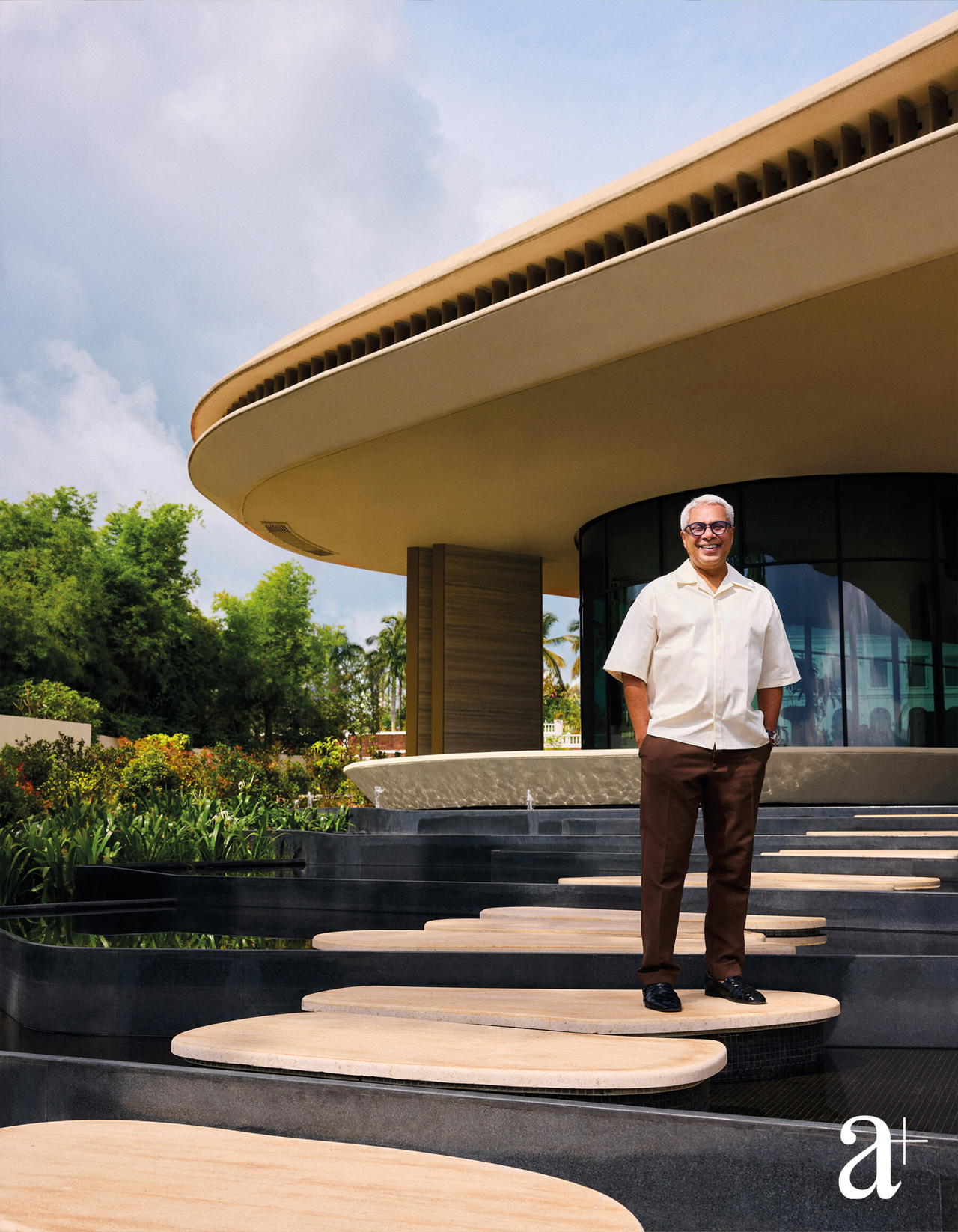
It is the morning of this cover shoot. The team is in Kerala, India, and the mood on set is tense. Monsoon season is in full swing, a storm is rolling in, and we’re bracing for poor light and disrupted plans. Then Faizal Kottikollon arrives, and as if by design, the clouds part and sunlight hovers above the compound. Our photographer, Mun, jokingly dubs him Mr Sunshine. Faizal responds with a small smile.
It is however an apt nickname as this Indian-born, Dubai-based businessman has spent his career illuminating opportunities and creating conditions for growth. As the founder and chairman of Singapore-headquartered KEF Holdings, his interests span infrastructure, healthcare, education, metals, and investments across India, Middle East, and beyond.
Faizal has earned a reputation for spotting potential long before others do. In 1997, he established Emirates Techno Casting (ETC), an industrial foundry and precision engineering company in Sharjah, UAE. It primarily manufactures high-performance valve and industrial castings for the global oil and gas industry.
He steered the business to global success through pursuing innovation and strategic investments in foundry technology and sustainable practices. In 2012, ETC was acquired for US$400 million (S$518 million) by Tyco International.
The sale could have been a victory lap. Instead, it marked the start of his next chapter: healthcare and wellness. In 2017, Faizal launched Meitra Hospital, a quaternary care facility in Kozhikode, Kerala. It provides advanced, world-class clinical care across specialised departments, including cardiovascular, thoracic, vascular, neurology, neurosurgery, and targeted cancer treatments such as hematologic malignancies and immunotherapies.
In 2024, American investment firm KKR acquired a majority stake in Meitra Hospital for INR 11 billion ($150 million). Faizal remains a minority shareholder and chairman of the board.
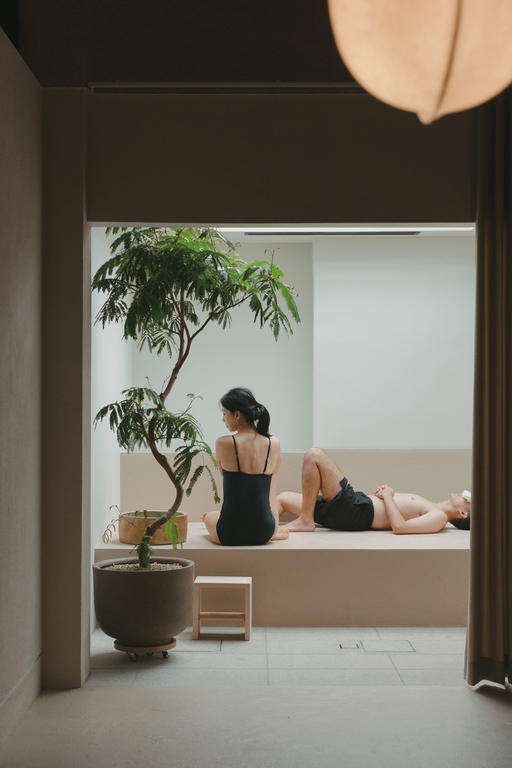
These milestones have only sharpened his ambition. At 63, he is scaling his latest venture: Tulah Clinical Wellness, a luxury wellness sanctuary that bridges traditional medicine with preventative science through highly personalised wellness and longevity programmes. Notable breakthroughs involve a patented Vichy Bed that it designed and The Sonorium, the world’s largest sound-healing dome.
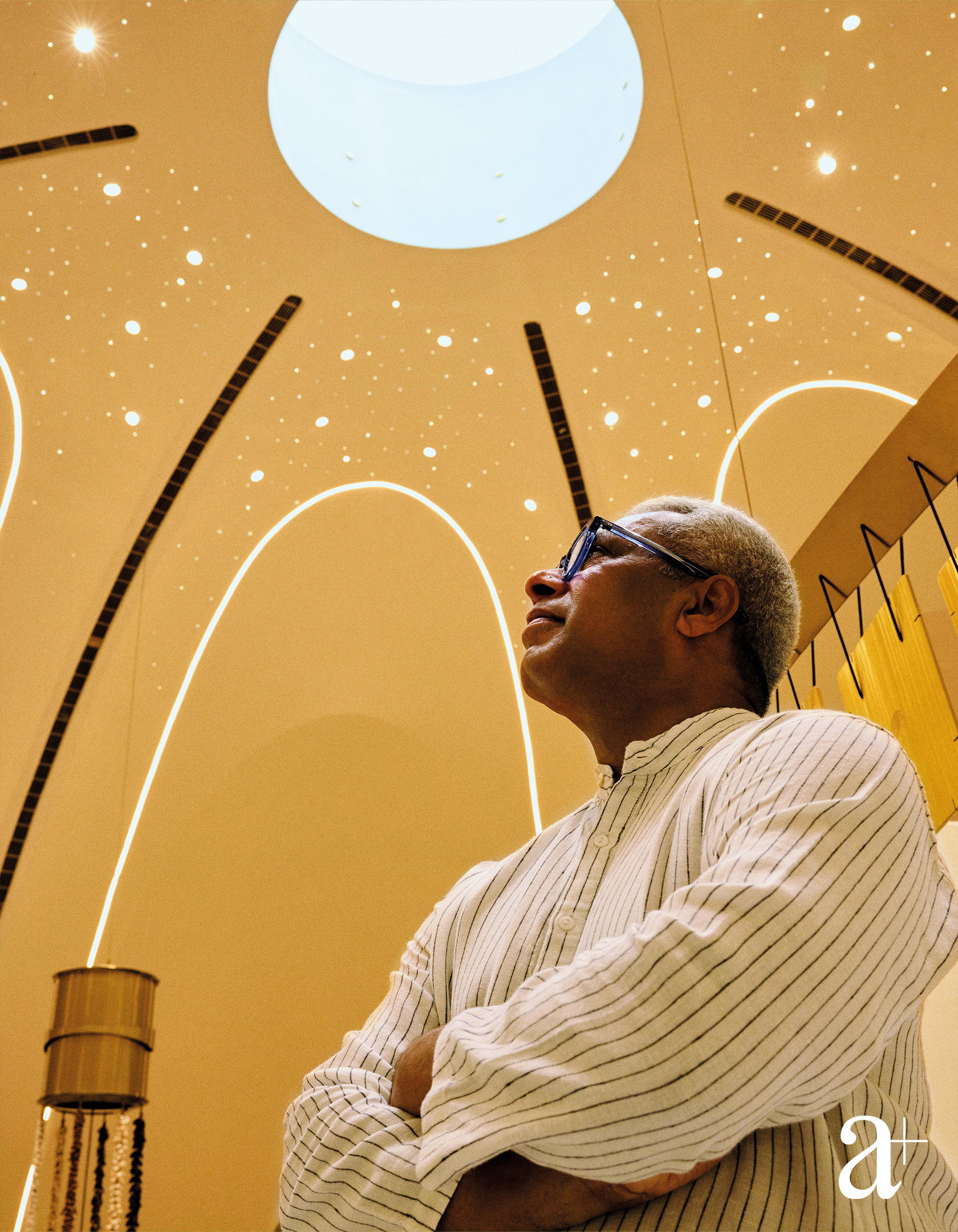
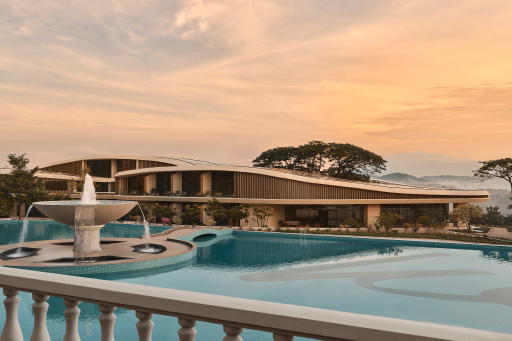
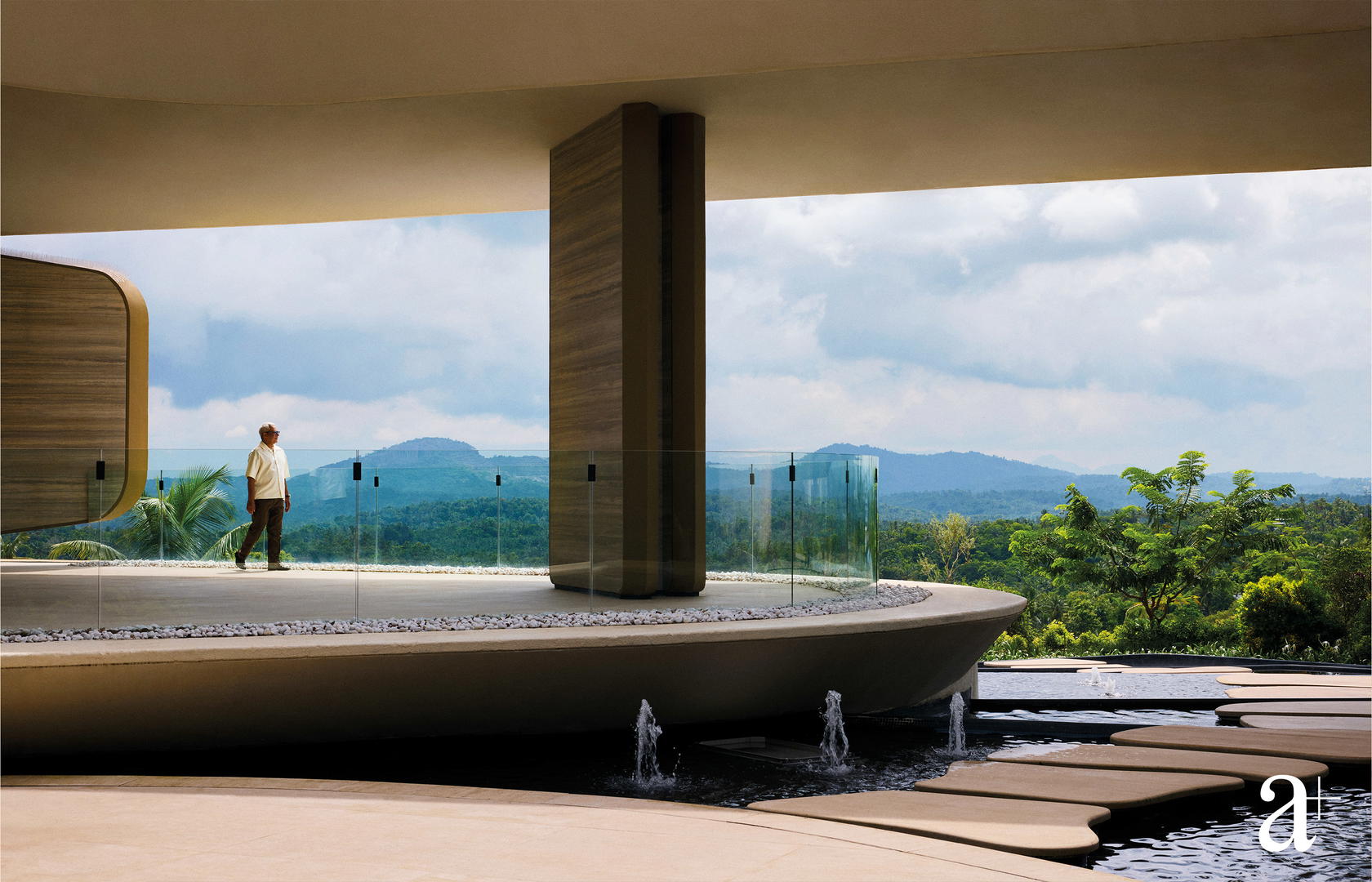
It is at Tulah that this shoot is taking place. Opened last year in Kozhikode, it comprises 35 guest rooms and suites, with another 30 in development. Its facilities include advanced medical diagnostics like CT and MRI imaging, a fully equipped operating theatre, and an intensive care unit.
The property sits on 12ha (30 acres) of rewilded forest and medicinal gardens. More than US$100 million has been poured into its development, with additional funding allocated as the second phase of construction continues. If all goes according to plan, a “mini Tulah” will open in Singapore by the end of 2027 to introduce access to integrative healthcare to a wider community.
The wealth Faizal has generated is extraordinary by any measure, but financial success is not what drives him to keep raising the bar. He views himself as a steward entrusted with deploying resources for the sake of the greater good. “My parents taught me that money is a responsibility. It’s a limited resource and we need to be responsible in how we use it for the next generation. In spite of all my financial success, I still feel as though the money isn’t mine. I’m just a custodian.”
His thrill lies in arriving, not building. “I’m always like, ‘I’ve done this, now I must move on. What’s next?’ I’ve always been a problem solver, so I’ve never been too excited about the money I bring in. It just gives me the freedom to fix other issues.”
Relentless Builder
Faizal is the son of PK Ahammed, the renowned industrialist behind Peekay Group, a conglomerate with interests in steel, manufacturing, and trading. The most important lesson his parents imparted, however, had little to do with business. It was self-discipline—almost ascetic in its rigour. “From an early age, we were taught to follow our natural circadian rhythm. We would wake up at 5am every day, regardless of what we did the night before. It’s a habit I’ve carried with me, and I credit much of my success to it.”
His decision to pursue civil engineering at the Manipal Institute of Technology was, in part, practical. “When it comes to Asian parents, you only have three options: doctor, engineer, or lawyer,” he says half in jest. Engineering felt like the best fit given his family’s industrial background. He later earned an MBA from T. A. Pai Management Institute, followed by a master’s in industrial engineering from Bradley University in the US.
He decided to forge his own path instead of joining the family business after graduation. In 1995, he founded Al Ahmadi General Trading, a scrap metal recycling business, in Ajman, UAE, with a US$5,000 loan from his father. He eventually sold the business, and what was once a modest operation has grown into one of the region’s largest ferrous and non-ferrous metal recycling companies.
Next came ETC. Faizal spotted an opportunity in one of manufacturing’s most intractable challenges: pollution. Foundries are notoriously resource-intensive operations, generating air emissions, volatile organic compounds, and industrial waste. At the time, sustainability was hardly a priority for most manufacturers.
“When I got into the foundry business, China had 50,000 foundries and India had 30,000, many of which contributed significantly to pollution. I came up with the idea of manufacturing sustainably using vacuum technology, but it took 10 years to develop because I didn’t have the capital. I had to run other businesses to accumulate the funds required.”
The gamble paid off in spades. By 2007, when Faizal was just 44 years old, ETC was rated among the top three foundries in the world.
That same year, Faizal and his wife Shabana established The Faizal & Shabana Foundation. This formalised a long-standing commitment to philanthropy that has accompanied their entrepreneurial journey. While the foundation supports healthcare, sustainable development, and arts and culture, it is perhaps best known for its work in education and youth development.
Foremost among its initiatives is the transformation of the historic Government Vocational Higher Secondary School for Girls in Nadakkavu, Kozhikode. It involved rebuilding and upgrading of the campus, adding new classrooms, science laboratories, and an astroturf sports field, among other facilities.
“It now outperforms some private schools. People said it would be impossible, but the measured outcomes speak for themselves. The students fare better in exams and even earn overseas scholarships.”
The project became a nationally recognised model for public-school renewal, boosting attendance, enrolment, academic engagement, and student aspirations. Elements of its approach were subsequently adopted by some 1,000 government schools across Kerala. Last year, the model expanded outside the state through education initiatives in Srinagar, Jammu, and Kashmir.
Thus far, Faizal has received two honorary doctorates for his contributions: Doctor of Humane Letters, honoris causa, from Gulf Medical University in recognition of his contributions to learning, education and humanity; and Doctor of Letters, honoris causa, from the Kalinga Institute of Social Sciences in Odisha.
He and Shabana have four grown children. Shabana attributes her husband’s success to heartfelt curiosity: “He pays attention to detail in a way that surprises people; he notices a problem someone mentions in passing and carries it with him until he’s found a way to make it better.”
Also, his capacity to listen. “He believes in collaboration and lifting others up. He trusts people’s knowledge and expertise and isn’t afraid to be proven wrong. What matters to him is the best possible outcome, not whose idea it was.”
And his quiet patience. “He is not someone who rushes towards an outcome. He sits with an idea, lets it take its proper shape, and trusts that the right form will reveal itself.”
These qualities allow him to build things that last, Shabana continues. “It is never only about the achievement. It is about getting it right and bringing everyone with him on the journey.”
the bigger picture
Establishing KEF Holdings in Singapore was a “natural choice”, Faizal says. “After the Tyco exit in 2012, we asked ourselves, ‘Where should our next chapter be?’ Many countries wanted us to relocate our headquarters to theirs because we would be coming in with a sizeable investment.”
Singapore stood out for several reasons. “It not only shares cultural similarities as an Asian country, but is also structurally transparent. It has excellent governance and stamps out corruption. Its values align closely with my own.”
A permanent resident, Faizal divides his time almost evenly between Singapore, UAE, and India, spending roughly 10 days a month in each. After years of staying at Four Seasons Hotel Singapore every time he’s in town, he recently purchased a family residence in District 6.
His ties to Singapore will deepen with the local Tulah Clinical Wellness outpost set to open next year. Despite the explosion of wellness brands in recent years, Faizal is optimistic: “Real wellness has only just begun.”
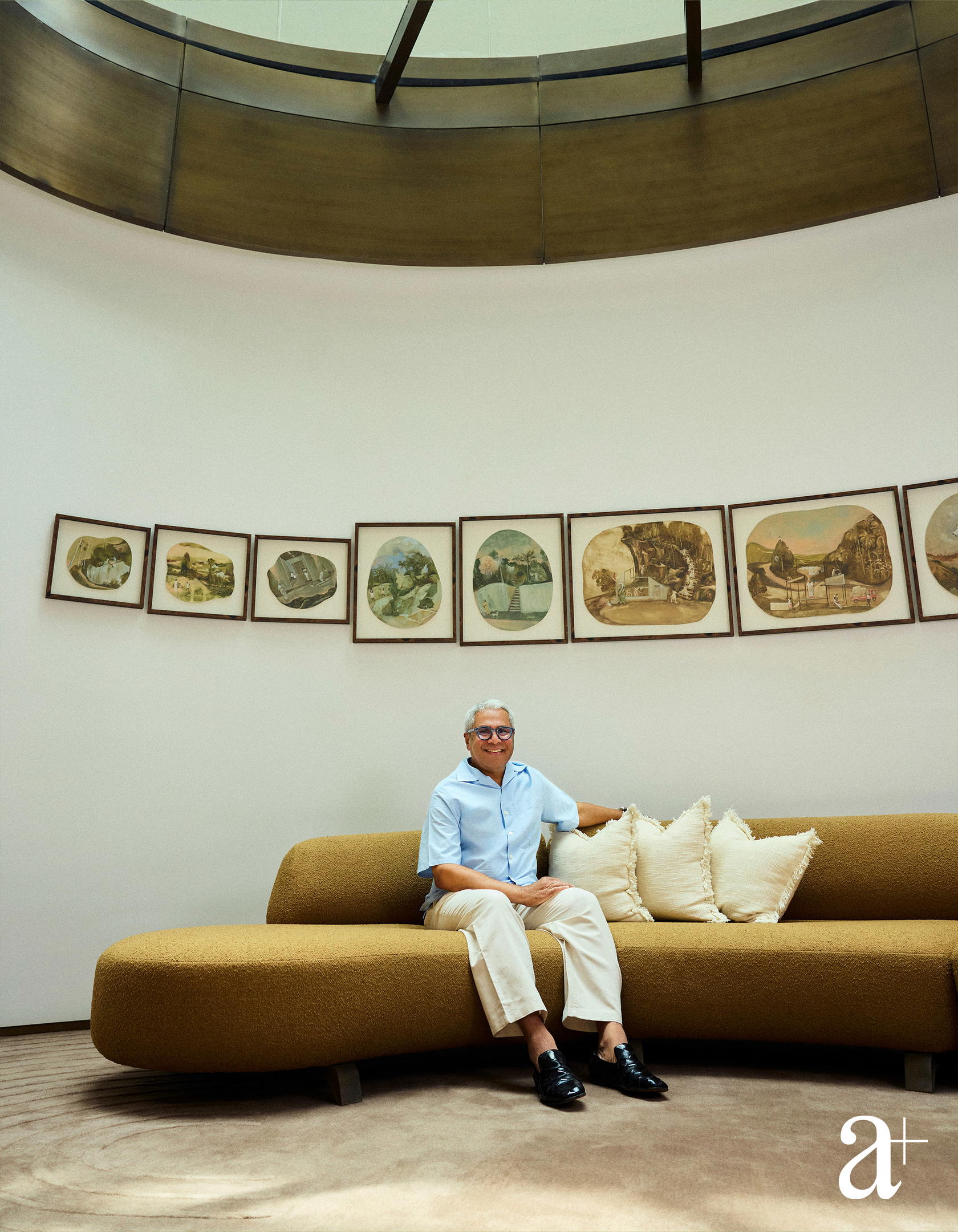
He believes the industry is at an inflection point. For too long, healthcare systems have focused on intervening after illness arises and under-prioritising prevention. “Stress contributes to some 70 percent of diseases, so we should be investing more in prevention. It’s time for governments and insurers to focus on keeping people healthy rather than waiting for them to become patients,” he argues.
While the global wellness economy has ballooned into a US$6.8-trillion industry, Faizal contends that much of it is driven more by the zeitgeist than science. Tulah aims to address this disconnect by combining preventive healthcare, longevity science, and holistic well-being under one roof. This shifts the focus from treating illness to optimising health before problems emerge.
Unlike traditional hospitals, it integrates advanced diagnostics, personalised health programmes, and lifestyle interventions spanning nutrition, fitness, sleep, and mental well-being. Its approach is rooted in data-driven preventive care, helping individuals understand their health risks early and take proactive steps to extend both lifespan and healthspan.
“There are a lot of things being sold to us in biohacking, like ice baths, cryotherapy, and hyperbaric oxygen,” Faizal says. “Tulah has some of those facilities too, but healthcare requires more than that. Real progress starts at the cellular level. Humans are nothing but trillions of cells, so unless you detox at a cellular level, you will not be able to remove diseases.”
Faizal acknowledges a common critique of wellness retreats: that they mainly serve the affluent, who already enjoy access to good healthcare. To broaden access, he will soon launch Tulah Tech, a digital ecosystem designed to extend Tulah’s reach far beyond its physical campus.
Alongside an existing app that enables clinical and nutritional experts to monitor users’ progress, deliver data-driven interventions, and conduct virtual consultations, the company is preparing to introduce the Tulah Ring, a smart wearable device for continuous health monitoring.
In other words, Faizal is betting that the future of wellness will not be confined to luxury destinations, but woven into everyday life.
“You don’t have to come here and spend $2,000 a night. Anyone can be part of Tulah without having to visit.”
Faizal Kottikollon on extending Tulah’s reach through Tulah Tech
If Faizal’s track record is anything to go by, the man builds institutions rather than businesses. While many ventures chase quarterly performance and profits, institutions endure—shaping systems, outlasting their founders, and creating value for future generations to benefit, he states.
I ask what he hopes people will think about his accomplishments 50 years down the road. He chuckles. “I hope they will think, ‘How simple it is to find happiness’. I’m never stressed out. It goes back to managing the monkey mind and developing our intellect.
“Our mind is like a river flowing, and our intellect is the riverbank. To cultivate this intellect, you need to read, enjoy nature, practise yoga, and start each day with intention. My journey has always been a happy one.”
That’s Mr Sunshine for you. Whether in business, philanthropy or healthcare, Faizal has spent a lifetime unlocking and nurturing potential in places others overlook. And wherever that light falls, growth follows.
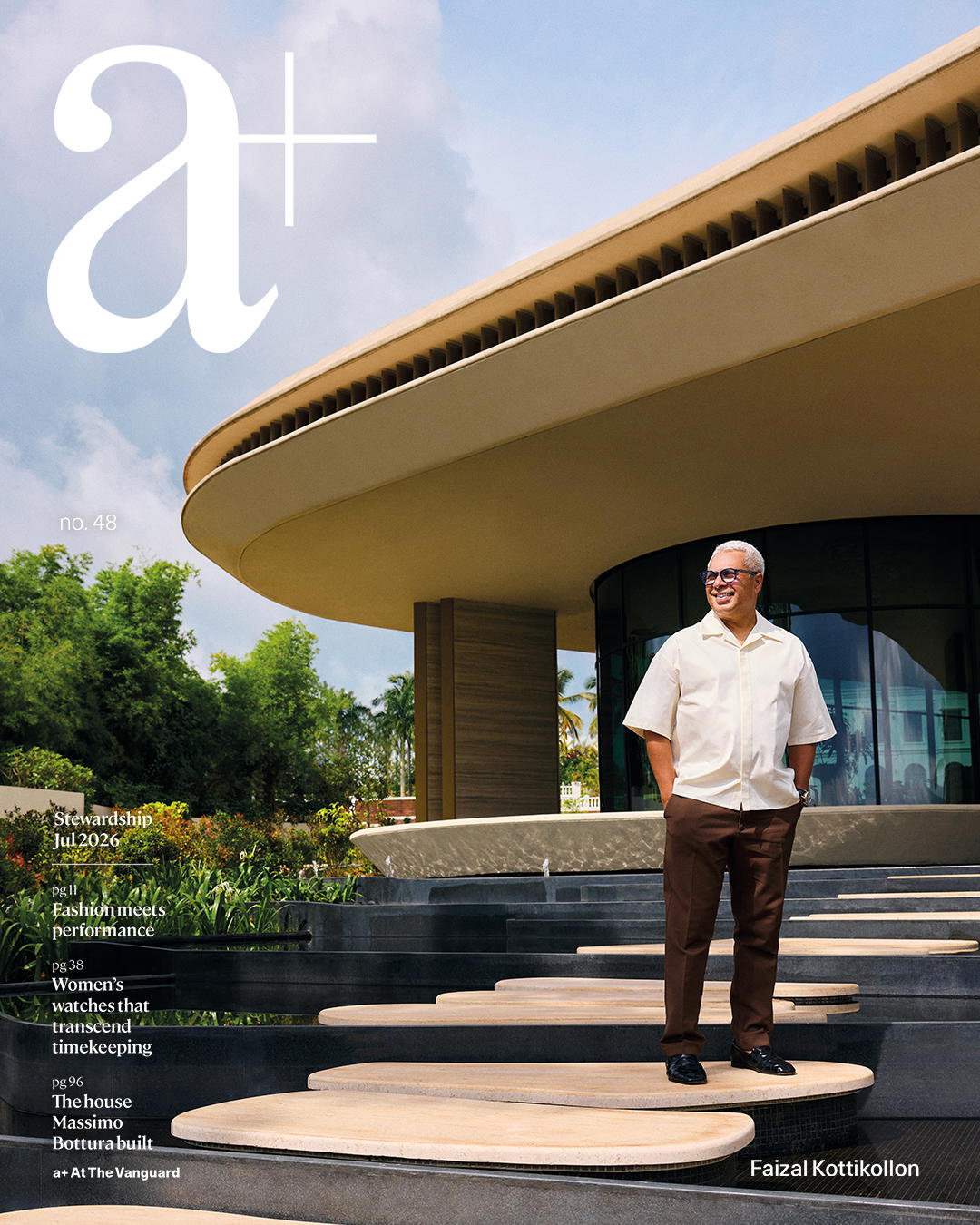
Photography Mun Kong
Art direction Chia Wei Choong
Videography Yvonne Isabelle Ling