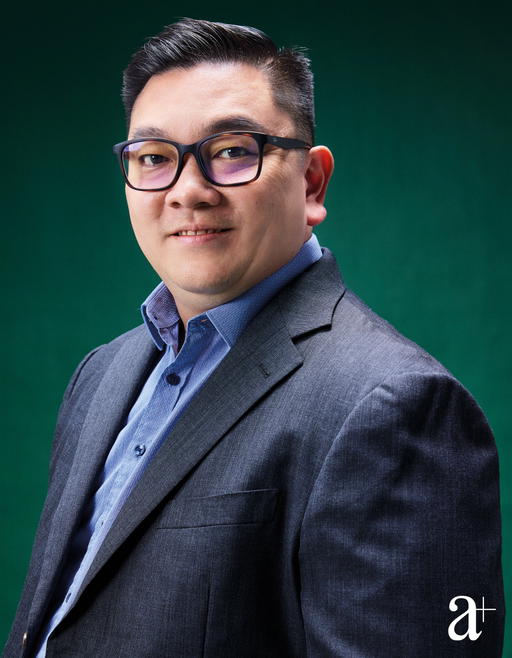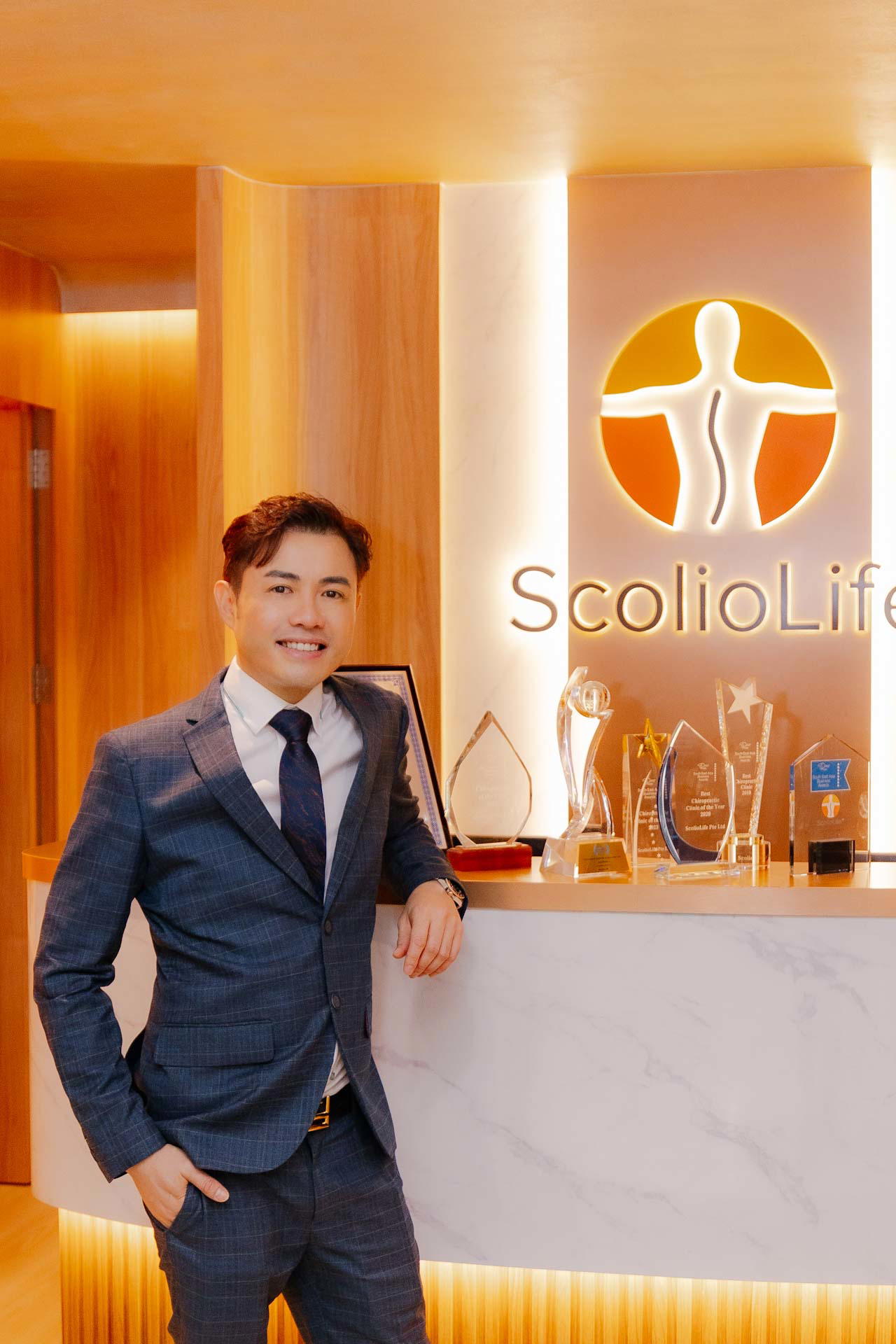
Dr Kevin Lau’s passion for scoliosis care began at a young age from a personal space. His brother, Howard, struggled with scoliosis growing up. Together, they would visit different doctors, many of whom only shook their heads and gave discouraging news. “[They] expressed that there was seemingly nothing that could be done to ease his condition,” Dr Lau says.
Motivation comes in many forms. For Dr Lau, his drive was fuelled by the seeming impossibility that scoliosis, especially severe cases, could not be treated without surgery. Most people find their purpose only later on in life. Dr Lau found his purpose within the four walls of the different clinics that he and his brother went to.
It’s been over 20 years since Dr Lau has been working with scoliosis patients at his clinic ScolioLife. In that time, he’s also been pushing the boundaries of scoliosis care, especially with non-surgical interventions. “I observed that scoliosis, if approached proactively, could be effectively treated without resorting to surgery,” he says.
One solution he designed is the ScolioAlign 3D brace. It’s a hyper-corrective brace that addresses the problem area from three dimensions. According to Dr Lau, this method actively works to correct the spinal curvature while the patient is wearing the brace.
It might seem like pseudo-mumbo-jumbo, but the proof, as they say, is in the pudding. Dr Lau recalls one young patient, Lena. She approached Dr Lau with her parents when she was nine. Her scoliosis curvature measured over 40 degrees. Typically, anything between 25 and 40 degrees is considered moderate. A curve measuring over 40 degrees usually requires surgery.
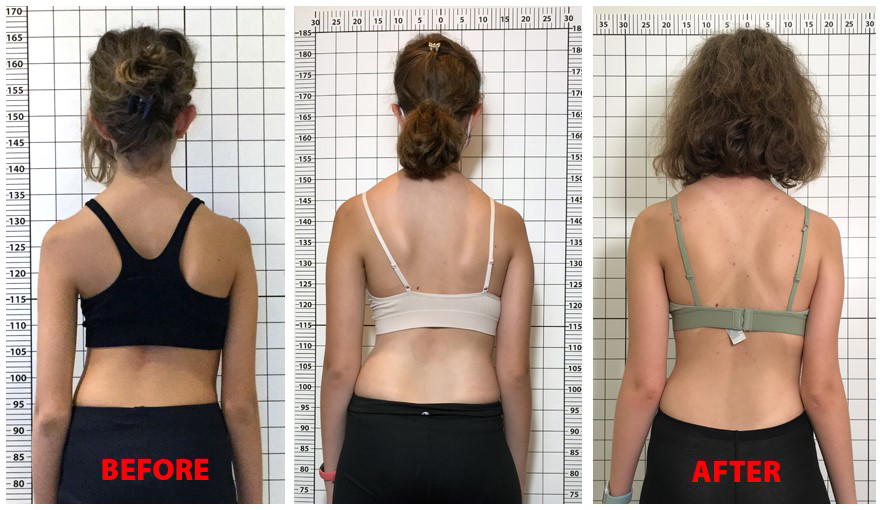
With Dr Lau’s 3D-printed brace, Lena’s curvature improved to 28 degrees (pictured, above). She’s now 16. “This extended observation period shows our success in not only controlling her scoliosis but also preventing it from worsening during her crucial growth spurt years. The significant improvements in the appearance of Lena’s back further highlight the positive impact of our approach,” says Dr Lau.
Unlike traditional Boston braces, which are usually only recommended to growing children and teenagers, the ScolioAlign 3D brace is suitable for both children and adults. The design supposedly exerts corrective pressure onto the spin, distinguishing it from other types of braces. The 3D printing technology also enables a personalised fit that enhances comfort and is far easier to wear than the older braces.
Dr Lau’s clinic offers two types. The standard model is made from thermal-moulded plastic and priced at $3,600. There is a 3D-printed version with ventilated holes that is available for $5,900. The latter is lighter. But, “despite the difference in construction methods, the end results in terms of correction and effectiveness are the same for both versions of the brace,” says Dr Lau.
Howard, too, is benefiting from his brother’s work. He enjoys a high quality of life and still diligently does the scoliosis exercises his brother taught him to maintain optimal spinal health. “Having a brother living with scoliosis emphasised to me the significance of health independence and the importance of empowering patients with the right knowledge on managing their own condition.”