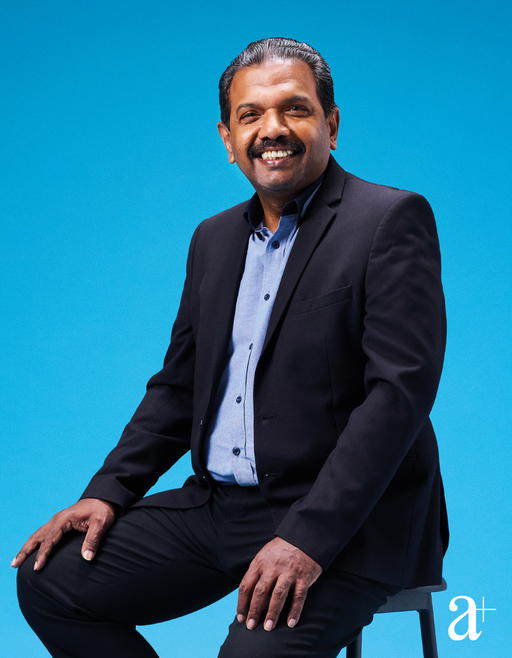

Food insecurity occurs when people lack access to sufficient, safe, or nutritious food. It is commonly associated with civil unrest, population displacement, drought, and famine, but in Singapore it mostly stems from vulnerabilities such as job loss, illness, and insufficient income, says Dr Arthur Chin.
He became executive director of The Food Bank Singapore in 2024. Before that, he spent 28 years in New Zealand holding roles such as the Head of Asian Banking at ANZ and later Deputy Chief Executive (Strategic Engagement and Partnerships) at the New Zealand Ministry for Ethnic Communities. At times, he also worked as a sheep farmer. His doctorate in business administration from Massey University was earned under the Prime Minister’s Scholarship programme.
Founded in 2012, The Food Bank Singapore strengthens food security by converting excess food into sustenance while reducing food waste by rescuing and redistributing surplus food. It operates a B2B model and currently supports 28 beneficiary agencies such as Pertapis, Sunlove Abode For Intellectually Infirmed, and Methodist Welfare Service.
While the registered charity distributed some 700,000kg of food last year, it occasionally struggles to meet nutritional needs because the types of food it rescues are dependent on available surplus, Chin notes. The problem is further compounded by preferences, such as when recipients request for white rice instead of brown rice. “Insisting on supplying brown rice even if it’s healthier could result in wastage.
“Therefore, as much as surplus and donated food form the bulk of our supplies, we purchase certain foods when the quantities fall short or when the items do not align with the needs of our beneficiaries.”
Arthur Chin on the need to accommodate preferences
Then there is food waste. Manufacturers, distributors, and retailers in Singapore have no reason to discard food because of packaging errors, limited shelf life or cosmetic imperfections when The Food Bank Singapore accepts most forms of non-perishable, edible foods, Chin avers. He hopes for tighter regulations over the disposal of food waste here, adding that in countries like France, it is illegal for large retailers to dispose of food that is still edible and they are encouraged to donate the surplus.
His two main challenges in running a large-scale food charity involve money. For one, a food bank requires plenty of storage space, which means a high rental fee. In addition, there are hefty logistics costs. Since the organisation collects and distributes food, recent global supply chain disruptions have incurred a $400-increase in the maintenance cost of the company’s diesel-powered truck each month.
“We expect logistics costs to continue to climb, which is a real concern as food cannot move itself. While we primarily rescue perishables, we also recover unserved, chilled banquet food. These efforts come with logistical costs that require careful planning.”
Later this year, The Food Bank Singapore will launch a pilot programme that allows tertiary students from low-income households to redeem meals at selected F&B outlets using online prepaid credits. Being part of The Global FoodBanking Network, an international non-profit organisation that supports food banks in more than 50 countries, has inspired it to leverage innovation to reach underserved populations.
“Youths from low-income households do not necessarily benefit in the same way as elderly recipients do with food staple rations. Addressing their needs requires a different approach, one this programme seeks to deliver,” Chin explains.
In his book, food banking isn’t merely a temporary solution and remains important. “It holds the potential to connect economic prosperity with basic human dignity to ensure no one is left behind.”
Photography Mun Kong
Art direction Ed Harland & Anna Espino Lim
Hair Sarah Tan using Goldwell
Makeup Rina Sim using Bobbi Brown
Photography assistant Hizuan Zailani