
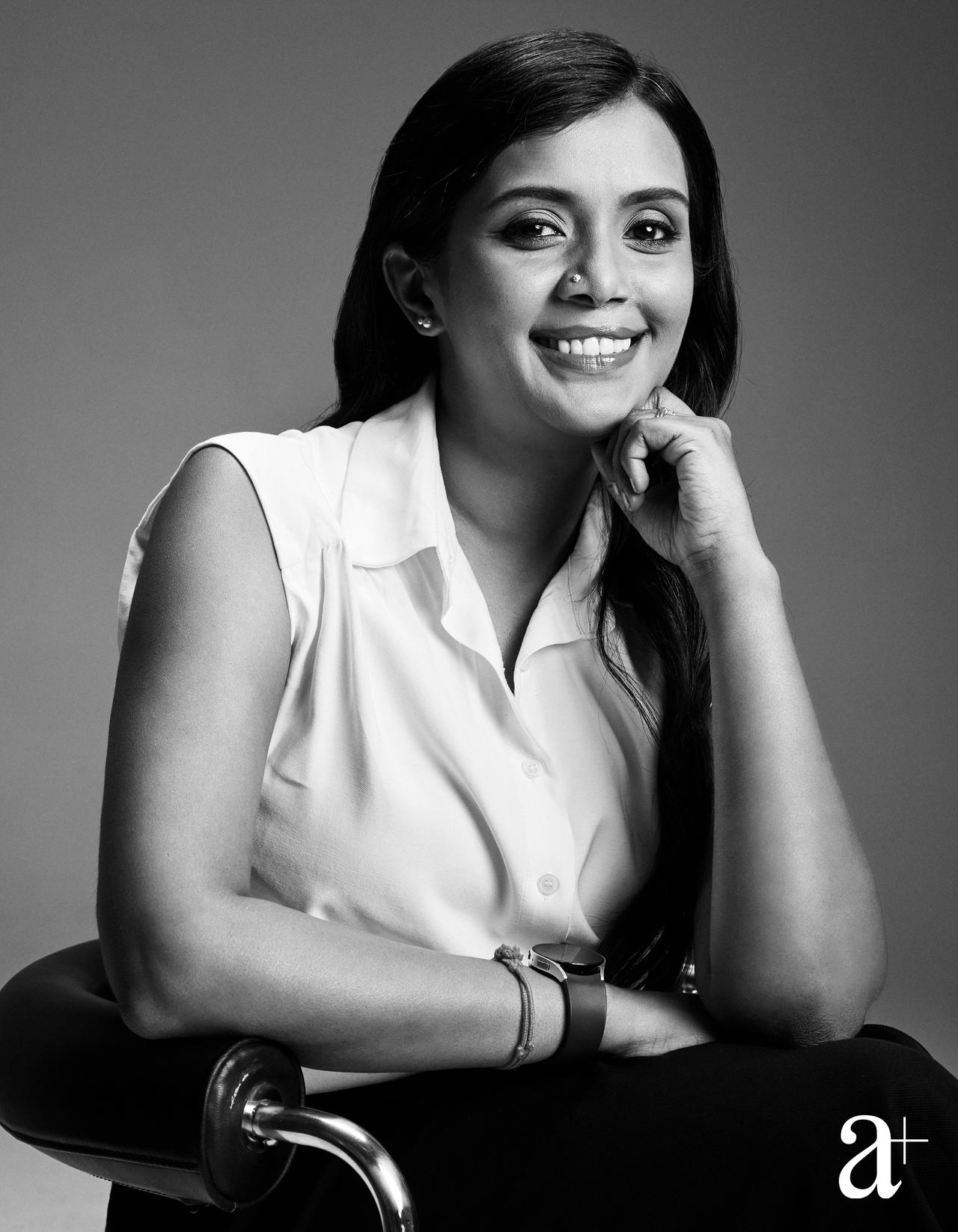
It is a misconception that the Make-A-Wish Foundation only grants last wishes. The nonprofit organisation not only supports children at the end of their lives, but also those undergoing treatment and recovery. In fact, most of Make-A-Wish Singapore’s beneficiaries go on to live full lives, says CEO Aarthi Sankar. She was formerly SPCA’s executive director and the People’s Association’s constituency director in Marsiling.
Another false notion is that it operates purely on goodwill and emotion. As with any well-run organisation, Aarthi adds, an effective charity also requires strong governance, financial discipline, and strategic leadership. In addition to her role as CEO, she acts as spokesperson and leads governance strategy.
Make-A-Wish Singapore has granted more than 2,000 wishes to children with critical illnesses since its founding in 2002. While it granted the highest number of wishes in its history last year, it refrains from viewing its ability to serve more children year on year as an indicator of success.
“This would imply an expectation of more children becoming critically ill. So, we instead look at prevalence and incidence, and whether our reach and coverage are proportionate to the number of children diagnosed with critical illnesses in Singapore,” Aarthi explains.
It is why she is cautious when talking about meeting demand. “Our focus has never been on increasing numbers year on year, but on ensuring that every eligible child referred to us has access to a wish.
“If this were simply a numbers exercise, we risk compromising the quality of fulfilled wishes.”
Aarthi Sankar on understanding priorities
Make-A-Wish Singapore currently requires some S$3 million annually to operate and provide service delivery. Contrary to popular belief, it doesn’t receive international funding and instead relies heavily on the generosity of the local community. Because advances in paediatric medicine have changed survival rates and the way in which we define critical illness, it works closely with healthcare professionals in identifying children who will benefit from granted wishes.
One of Aarthi’s key challenges lies in navigating growing complexity in governance, regulation, and risks in a time of evolving expectations and new vulnerabilities arising from global uncertainty. Another lies in fostering resilience in the face of delicate family ties, medical uncertainty, and even grief. While she doesn’t have all the solutions right now, she believes that alleviation starts with good housekeeping. “We have to be intentional about how we support our staff and volunteers, pace the work sustainably, and acknowledge the emotional labour involved.”
Her current scope of work transformed her leadership style. “When I was in the public sector, I led very much in a task-oriented way. Move fast, get things done, deliver. But the charity sector asks something different of you.
“People are here not just because it’s a job. Many of them can earn more elsewhere, but stay or keep coming back because this work means something to them. I’ve learnt to soften, slow down when needed, and take people along rather than push them forward.”
In light of the acceleration in the use of AI, Aarthi acknowledges that technology has positively impacted the way in which charities operate. Digital platforms, for example, have enabled new ways of reaching donors. But charities need to be careful in balancing technology and personal touch, she makes clear.
“A digital message is not the same as meeting a donor to say thank you. It can never replace a handwritten note from a child or family. As we adopt more technology, the question is not how much we can automate, but how we use it to support, rather than replace, human connection.”
Photography Mun Kong
Art direction Ed Harland
Hair Vic Hwang using Kevin Murphy
Makeup Rina Sim using MAC
Photography assistant Alfred Phang