

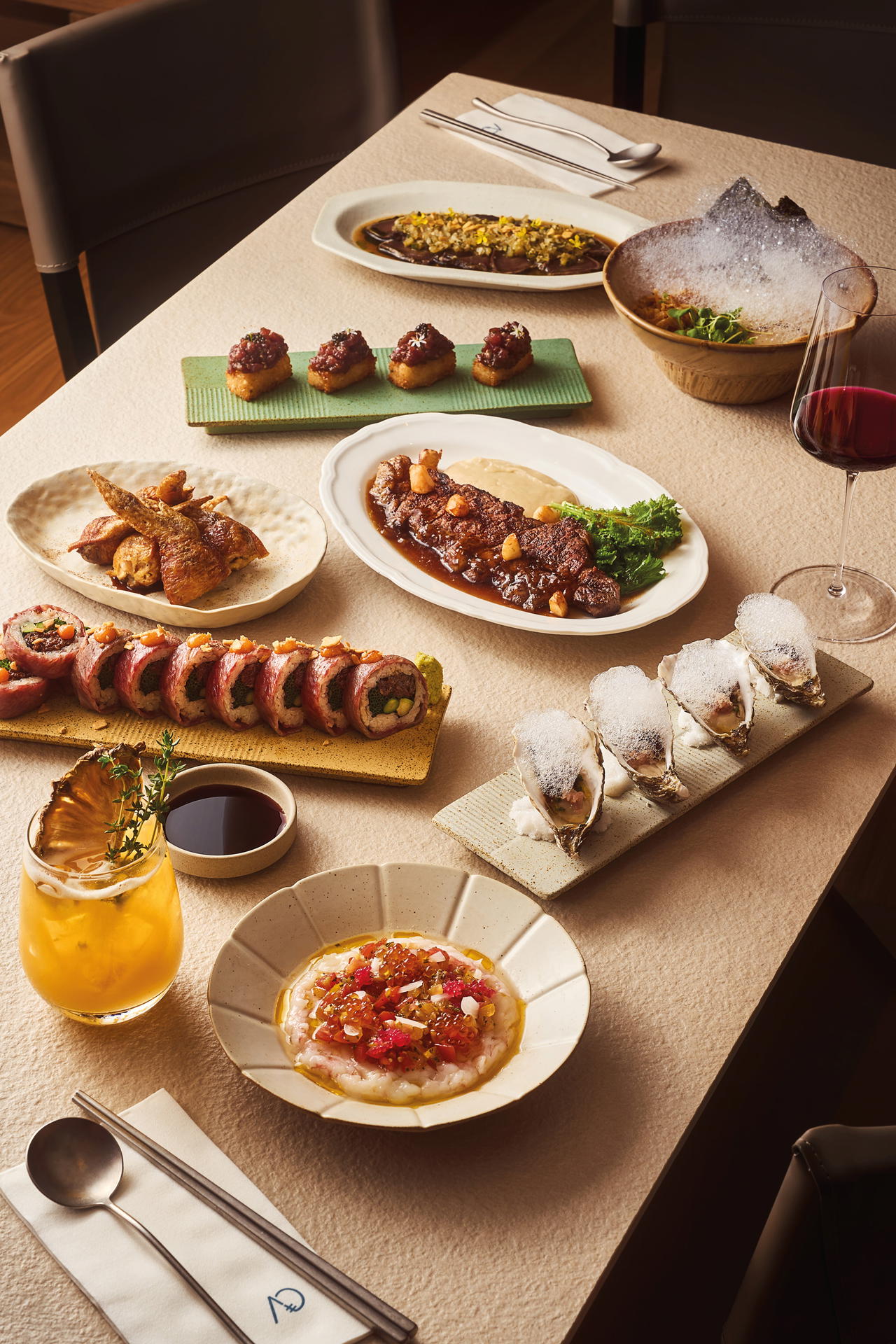
Dining at AO, I realised you can’t escape Takeshi Araki’s fine-dining sensibilities. As an elevated alternative to sashimi moriawase, the first appetiser, Wild Northern Amaebi Carpaccio, arrived beautifully plated and dressed with dashi, yuzu kosho, and olive oil. Its taste? Light, refreshing, sweet, and balanced with a clean citrus kick.
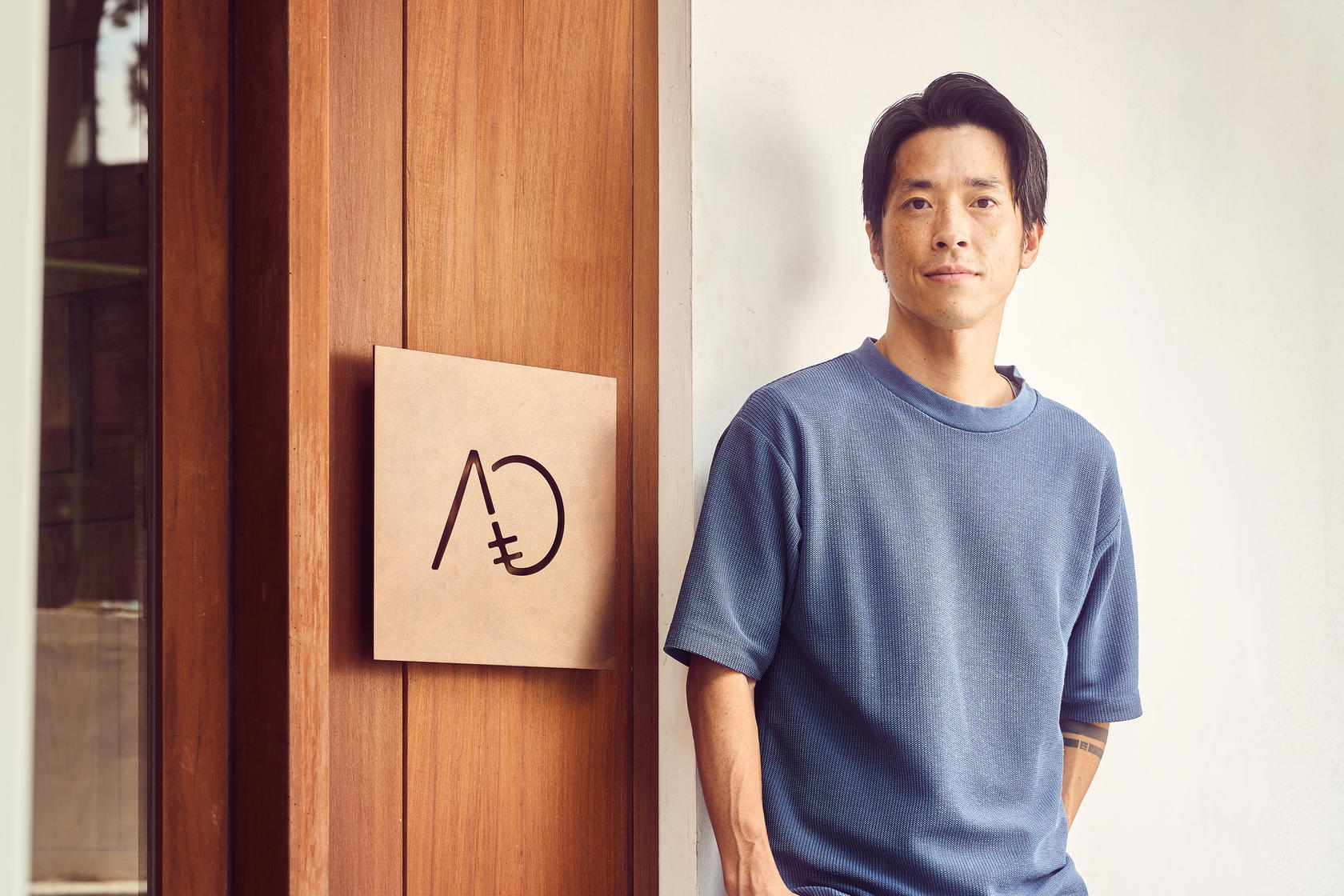
Brought to life by design firm Grafted Studio, the recently opened restaurant on Claymore Drive features a layered timber ceiling that adds movement and character, while warm light filters through the beams to create an intimate atmosphere. Pronounced “ah-oh”, AO derives its name from the Japanese word for blue, referencing the sky and sea—the wellspring of many ingredients on its menu.
Araki, Culinary Director of Cloud Restaurant Group, previously helmed the one-Michelin-starred modern kappo restaurant Esora, which closed last December. The group also operates brunch spot Cloudfields and Cloudmills Bakery.
Guests enter AO through Cloudmills Bakery, passing its counter and charcoal grill before reaching the dining room. It’s hard to ignore the freshly baked shio pan and doughnuts, but you’ll want to save room for what lies ahead.
AO’s casual, communal-style menu incorporates refined Japanese techniques. Even so, each dish reflects the culinary precision Araki mastered at Esora. The Challans Duck Rillettes & Foie Gras Terrine stood out among the sharing plates. A generous slice of rustic sourdough is topped with duck rillettes, shallots, and candied fig. With a winning combination of sweet and savoury flavours, it’s finished with shaved foie gras and orange zest. This adds a light-as-air, snow-like texture and deep, nutty notes.
Several familiar flavour combinations are also presented in an unusual way. One great example is the Sukiyaki Wagyu Maki Roll, which sees sushi rice rolled in thinly sliced wagyu chuck instead of the typical seaweed wrappers. Soya sauce, mirin, and sugar are added to chuck trimmings, along with asparagus, zucchini, and chives, which serve as hearty fillings within the roll.
“The idea for this dish came from eating sukiyaki with rice and a raw egg. We put these familiar flavours into a maki, with wagyu and egg yolk sauce. The form is different, but the flavours are familiar and work well together,” Araki explains.”
The Roasted Black Sesame Tiramisu is a twist on a classic. “It is based on a classic tiramisu, but we add black sesame because its deep roasted flavour complements coffee naturally. The combination works when you just enjoy eating it without thinking it’s unusual,” he says.
Although there is a strong Japanese influence on the menu, the sharp-eyed will also notice that Araki draws on culinary techniques from around the region. He uses a method he observed at a Hong Kong restaurant for making Cantonese crispy-skin fried chicken for the Grilled Chicken Wings with Black Truffle Mochi Rice.
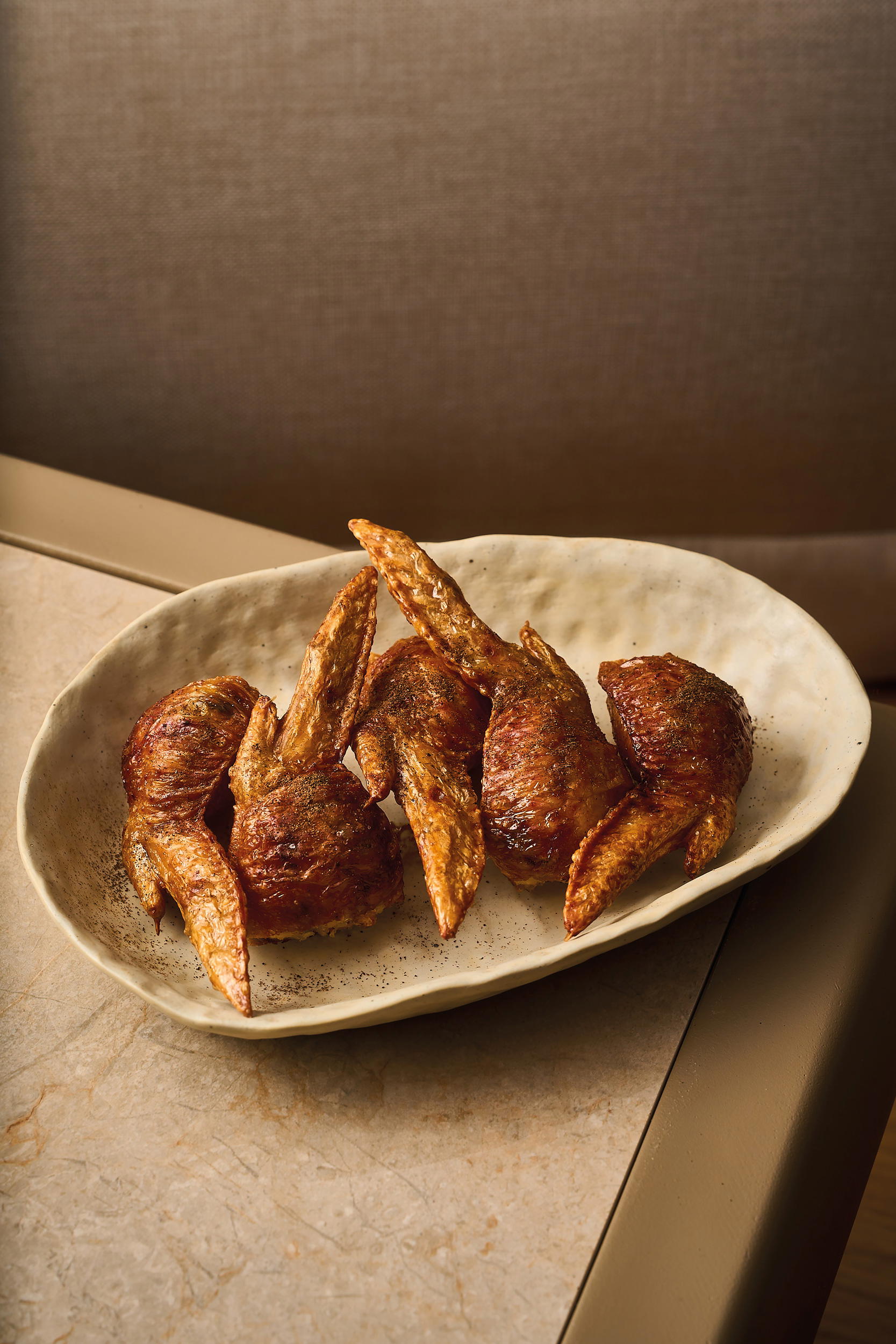
This is a meticulous, multi-stage process that involves scalding the chicken, glazing it with a maltose-and-vinegar syrup, and air-drying it for 12 hours before deep-frying it. The result? Deliciously addictive chicken wings with crunchy skin that gives way to a filling of mochi rice and regular Japanese short-grain rice cooked in a flavourful bonito stock, combined with minced chicken, carrot, burdock, and truffles.
While Araki uses a lot of technique in his cooking, some of his inspiration comes from a much more personal place. When asked which ingredients he is most excited about this season, he points not to a prized seasonal Japanese ingredient, but to noodles and the meals he shares with his children.
“It’s noodles, honestly. They are not seasonal, but they are what I am most interested in right now. My children love noodles—soba, ramen, udon, somen—and I cook them a lot. In addition to the technique, I think about the feeling of sitting down and eating noodles together. It was my goal to bring some of that experience into the AO menu as well.”
This interest manifests itself in “Sakura-dai” Sea Bream Ramen, a deeply comforting show-stopper, enhanced by black garlic oil and a creamy sea bream broth with the richness of a collagen soup. This bowl features swordfish chashu and seaweed, yuzu bubbles, kaiware (daikon microgreens), and crispy sakura ebi for an umami kick.
Araki challenged himself to create a ramen that was rich in fish rather than meat. “Sea bream bones are boiled in kombu stock for two hours with fish trimmings from the kitchen. We use swordfish instead of pork chashu. To keep the bowl balanced, there is black garlic for depth and yuzu for freshness. It’s still ramen for me, but I wanted to explore how I could build the whole bowl around fish.”
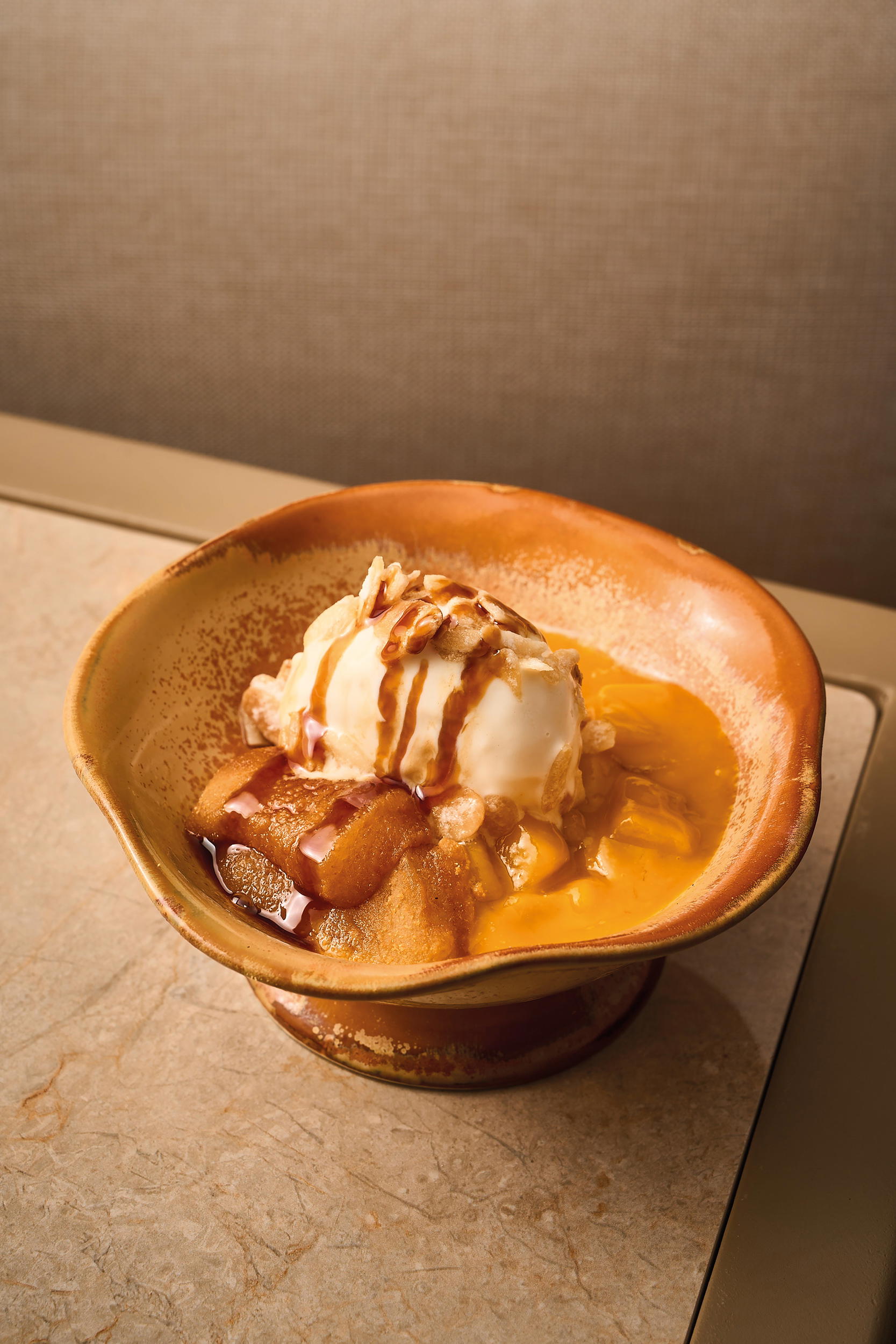
AO’s Tofu Ice Cream – Three Ways is another delicious way to end a meal besides the Roasted Black Sesame Tiramisu. Tofu ice cream has a milky flavour reminiscent of fresh soya bean milk and a velvety creaminess similar to a light dairy soft serve. It’s topped with mango, warabimochi, and kuromitsu (Okinawan black sugar syrup). Strawberry sauce, red bean, and shiratama dango (mochi balls) are also popular topping combinations, as are kaya sauce, shiratama dango, and gula melaka syrup.
Araki, however, is more concerned with what diners remember than if they recognise the technique behind each dish. “I’m happy if they leave thinking the food was delicious, a little surprising, and they had a good time.”