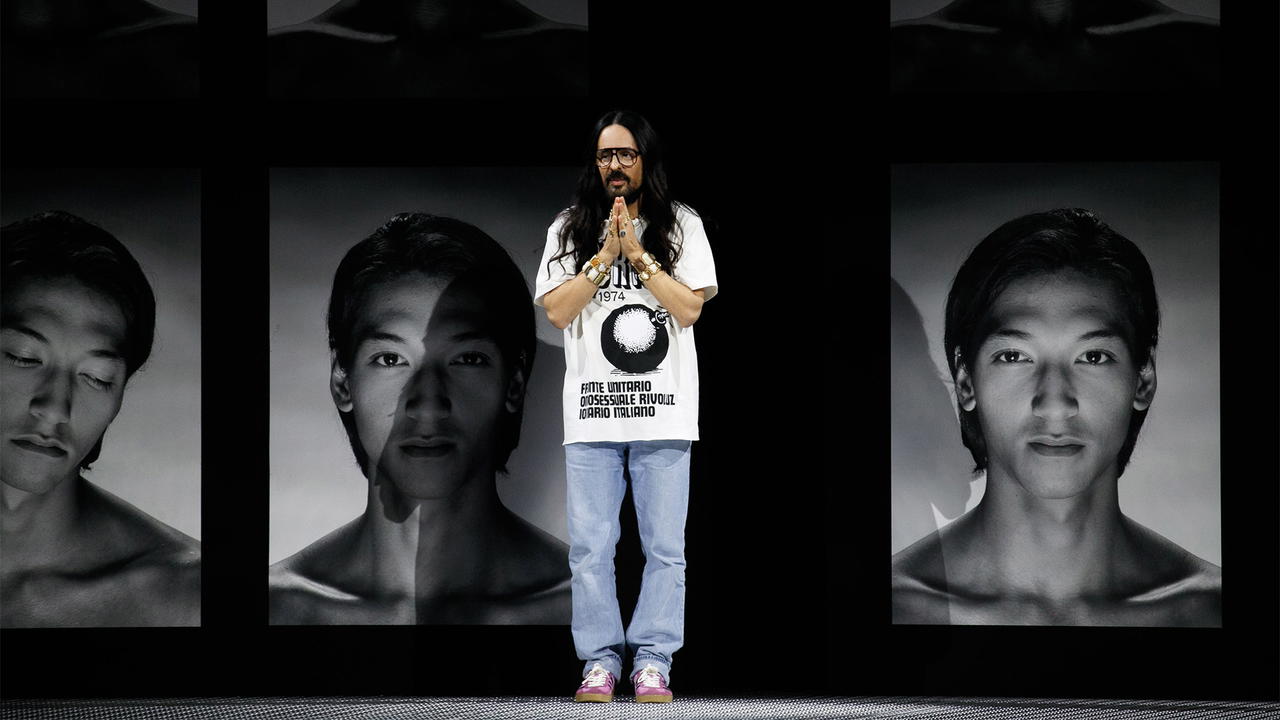
I remember Gucci’s autumn/winter 2015 menswear runway show as though it was yesterday. It was announced that Frida Giannini was to step down from her role as creative director about a month before the show, with it being her last collection for Gucci. But less than a week leading up to it, her entire collection was effectively scrapped. Alessandro Michele—then an associate designer to Giannini—was tasked with designing the autumn/winter 2015 menswear collection from scratch.
Michele’s vision was a monumental shift in more ways than one. It was a stark departure from Giannini’s more muted, almost minimalist approach that banked on traditional fashion design tropes. In a matter of five days, it seemed as though Michele took a deep plunge into Gucci’s archives and unleashed it in its entirety—playful, romantic gestures with nods to 1970s menswear supplemented by a soft-boy aesthetic.
It was unlike anything that was featured on any other menswear runway for that season. Nor was it the case for the proceeding womenswear show season when Michele officially debuted as Gucci’s new creative director.
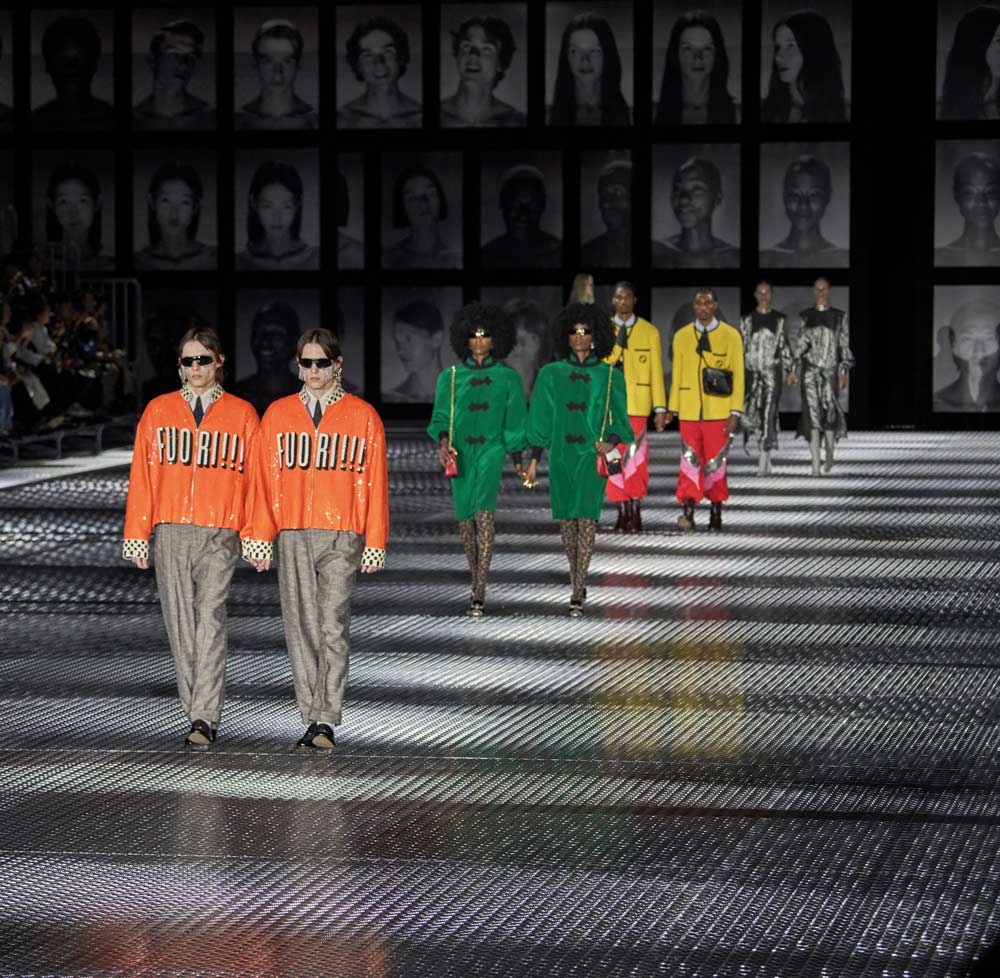
The creative shift was a success, proven time and time again by the Michele-esque influences that rippled throughout the fashion industry across all levels. Fast fashion brands leaped onto the romantic nuances, leaning towards the nu-vintage vibe while luxury fashion brands revived old monograms (or created new ones) to tap on the sudden hunger for maximalist fashion.
The impact was felt culturally. Michele’s Gucci provided a style outlet for non-traditional expressions of masculinity, with Harry Styles, Jared Leto, and Kai as its most popular faces.
Sales also surged tremendously since. The Kering-owned fashion house remains the brand that earns the group a bulk of its profits. Gucci alone earned almost 10 billion euros in 2021—more than half of Kering’s total revenue from its luxury houses.
But the problem lies in its rate of growth. While Gucci continues to increase its revenue year-on-year, it’s lagging behind other Kering-owned brands. Gucci’s revenue for 2022’s third-quarter saw an increase of 9 per cent compared to the previous year, which is far behind Saint Laurent and Bottega Veneta at 30 and 14 per cent respectively. The consensus by industry insiders and analysts is that consumers are suffering from brand fatigue.
It could be said that Michele’s ascension as one of fashion’s greats mirrors that of Riccardo Tisci and Daniel Lee.
Not an unknown by any accounts, Tisci’s 12-year run at Givenchy was followed by a role at Burberry. It was here that he managed to revive the British brand with fresh inflections of modernity albeit deviating from its two-century-old British heritage. Tapping on the power of famous faces such as of Naomi Campbell, Adam Driver, Bella Hadid, Billie Eilish and more, Tisci was able to appeal to a more international audience. He also introduced a monogram called TB—the initials of founder Thomas Burberry—designed by Peter Saville who also redesigned the Burberry logo.
Buoyed by the success of the Lola bag (a design that’s approved by the global influencer community), early financial statements reported promising receptions towards Tisci’s vision. Burberry reported like-for-like revenue growth of 4 per cent since the collection first hit stores, doubling analysts’ estimates. Sales also grew in Asia Pacific, largely driven by the China market.
Yet, unforeseen circumstances such as the Covid-19 pandemic and Brexit were factors that ultimately led to his exit from Burberry. As compared to luxury fashion rivals like the LVMH umbrella of brands, Burberry was lagging behind in its pandemic recovery. Marco Gobbetti—the then-CEO of Burberry who hired Tisci—left the brand for Salvatore Ferragamo in 2021, leaving it to current CEO Jonathan Akeroyd to shake things up in hopes of boosting revenue.
In comes Bottega Veneta alum Daniel Lee. Like Michele, Lee was a relative unknown working behind the scenes at Phoebe Philo’s Céline as its ready-to-wear director. His appointment at Bottega Veneta reinvigorated the Italian brand with hit design after hit design. Lee modernised the brand’s iconic Intrecciato technique and translated it into a slew of iterations, as well as created statement pieces such as the Puddle boots.
Lee’s true mark of creative genius was making the colour green synonymous with Bottega Veneta, where its signifier was previously only the Intrecciato.
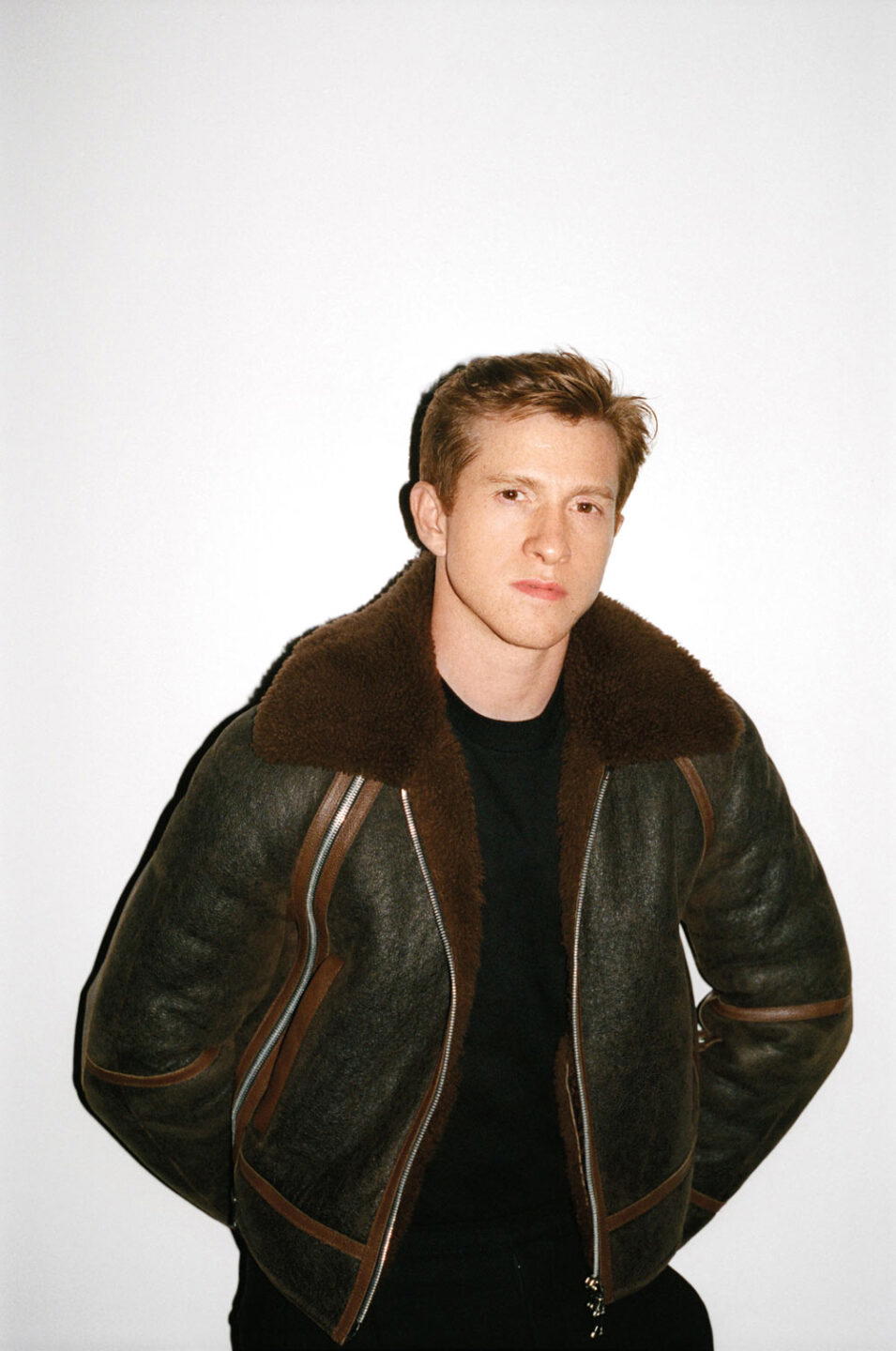
Although Lee’s tenure was unexpectedly cut short—Kering issued a statement to say that it was a “joint decision”—he’s set to showcase his vision for Burberry next month during London Fashion Week. Akeroyd is hoping to repeat the success that Lee helped to craft at Bottega Veneta, for Burberry. Lee and Akeroyd have already expressed in interviews that the focus will be to highlight Burberry’s Britishness. In fact, as Lee tells Vogue, the newly appointed chief creative officer reveals that his connection to Burberry runs deep. His hometown is close to where Burberry’s trench coats are manufactured and he had family members who worked in factories supplying for the brand.
Undoubtedly, fashion’s reputation for cutthroat firing of its creatives has been a key way of keeping a luxury fashion brand relevant. It’s common nowadays for creative directors to be held to a three-year contract. And it’s within those three years that they’re expected to drive change and sales with their vision. While it may sound as though brands are bent on keeping things interesting with newness injected on an almost predictable rhythm, it comes at the expense of the unique identity of a brand.
Fashion designers, like most creatives, come with an already defined aesthetic. Stakeholders seem to regard a fashion brand—whether they’re storied luxury houses with decades of history or not—as blank canvases where a new creative can be tasked with shaping it into their own vision, and hopefully with ties to the history of the brand. It has come to a point where brands become hardly recognisable as they’re passed from creative director to creative director.
It’s curious then how brands like Chanel and Hermès have continued to outperform year on year, especially when there have been little creative changes in the past decade or so. Chanel may have found a successor to the late Karl Lagerfeld in Virginie Viard but having closely worked with the Kaiser since 1987, she’s barely deviated from the aesthetics laid by her mentor. The same goes for Hermés—both of its artistic directors have worked for the brand for more than 5 years, with artistic director of the men’s universe, Véronique Nichanian, into her 34th year.
The difference lies in how these brands refuse to partake in commercial trends. Opting instead to stick to and build upon their own heritage and values, brands like Chanel and Hermès have rarely (if ever) succumbed to offbeat collaborations meant to create buzz and hopefully, cater to a whole new audience. Collaborations may be quick, surefire ways to widen a brand’s reach and spike revenues, but they rarely inspire brand loyalty.
Michele’s tenure at Gucci was replete with collaborations with brands such as adidas, Palace, North Face, and even Balenciaga; the same goes with Tisci’s Burberry. They occurred at least 4 times a year and contributed to a confusing state of reality. While these collaborations were talked about for the period, it’s almost as though they were bigger than and took precedence to the brand. It especially isn’t helpful when consumers are only beginning to understand and get accustomed to a new creative director’s vision.
There may be no one formula to the continued success of a luxury fashion brand, but like most things in life, it takes time. Just like how it takes time to craft a new narrative and vision, the same should be applied to the eventual confluence of both vision and reception.
We’re so accustomed to the speed of newness that we often fail to grasp that short-term gains don’t necessarily equate to longevity. And for luxury fashion brands to act as though they’re in the business of speed versus substance, there probably won’t be an end to this vicious cycle where a brand’s rich story truly matters.