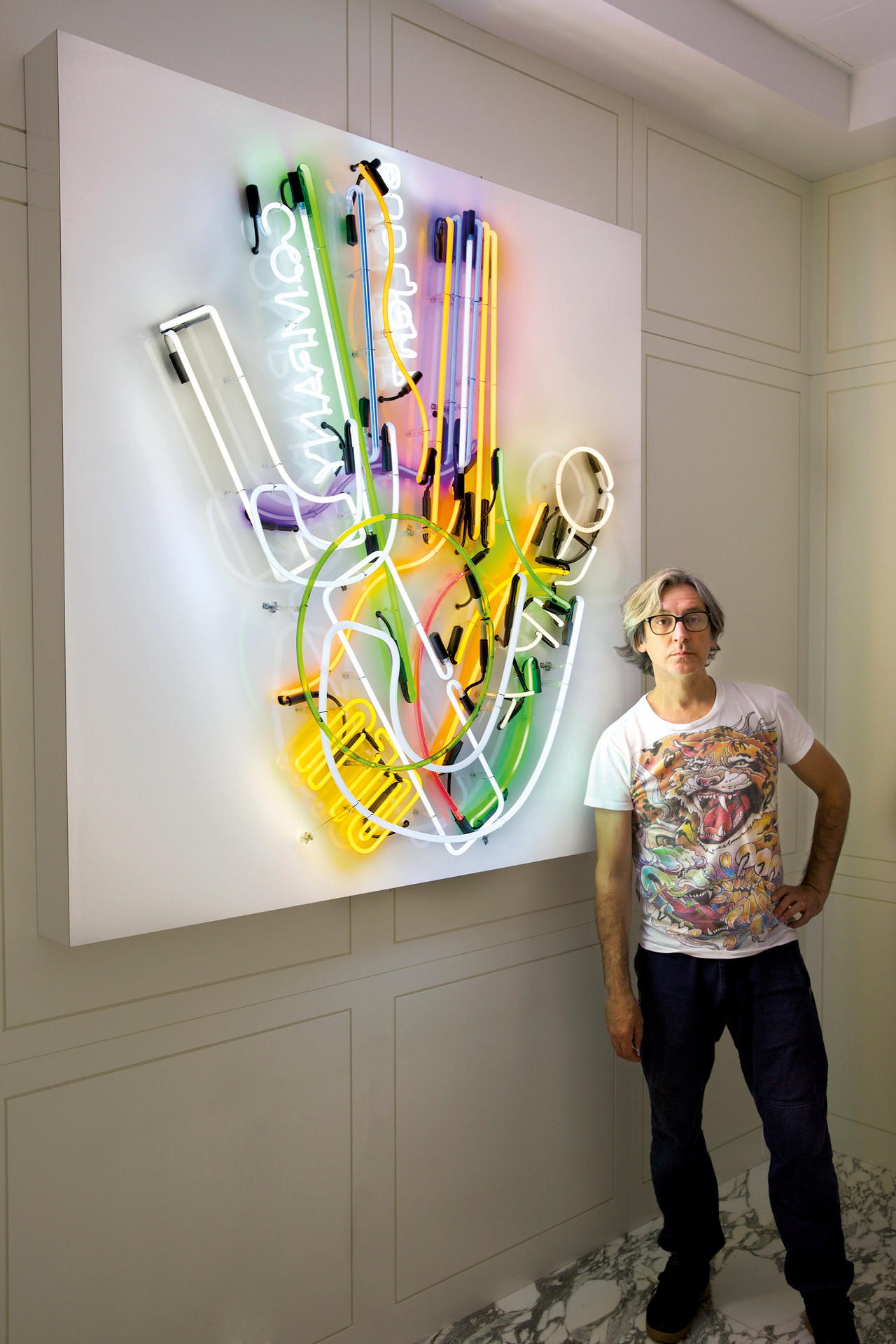
Iván Navarro’s “Cyclops” at Galerie Templon in Paris fuses Greek mythology with contemporary trauma, offering an exhibition that defies convention.
The Brooklyn-based Chilean artist is no stranger to using light as a medium and a metaphor. Pulsing with dazzling clarity— technically, conceptually, and politically—his latest solo show proposes a world in which cosmic wonder, social unrest, and personal memory refract off mirrored surfaces and recycled neon parts. The overall effect is both disorienting and enlightening.
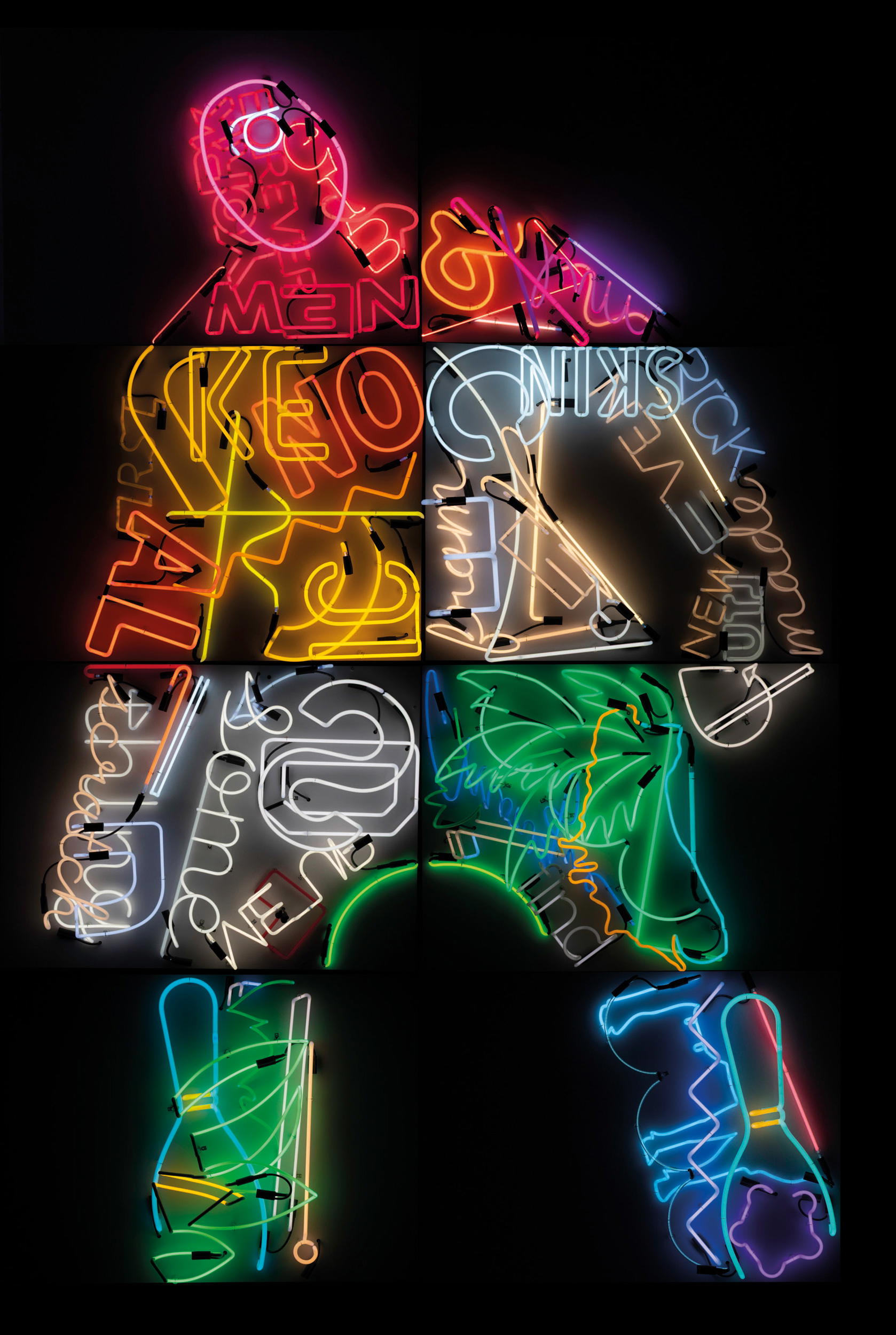
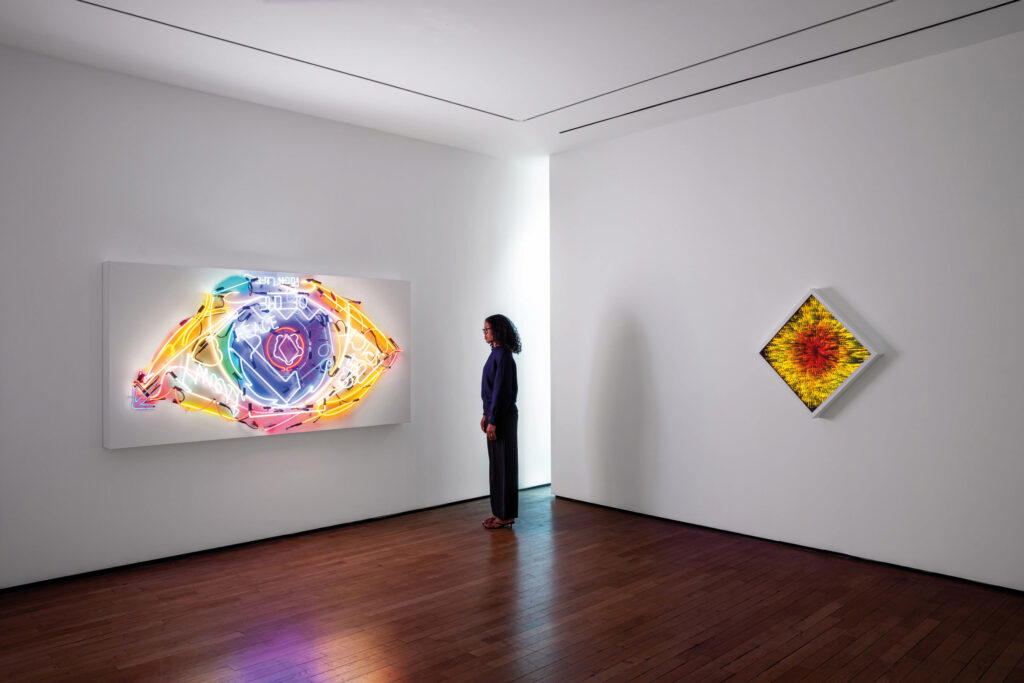
At its centre stands ‘The Cyclops’, a towering 3.6-m sculpture of a one-eyed giant, lit with multicoloured neon words and visuals salvaged from old Fifth Avenue shop signs. It is his first significant piece built for daylight viewing yet it glows with a nocturnal intensity—like a god refusing to dim in the sun.
“The cyclops is a force tied to lightning and thunder,” Navarro explains. “It symbolises natural energy and destruction—like a dictator who uses light not to reveal, but to control.”
The metaphor is personal. Navarro grew up under Pinochet’s dictatorship, when electricity was used for torture and blackouts suppressed dissent. He has long wrestled with the double edge of light: illumination and persecution. ‘The Cyclops’ illustrates this duality, especially in four works responding to the protests and riots that took place between 2019 and 2020 in Chile.
During the uprisings, police deliberately targeted protesters’ eyes, leaving hundreds blind or injured. Navarro channels that violence into his ‘Eye Charts’, a set of optometrist-style eye charts where the rows spell out words like “oppress”, “revolt”, and “rebel”. He says, “It’s about how we see the world and how our vision can be taken from us. These were people trying to see a better future and were punished for it.”
Navarro’s artistic scope extends beyond politics. Born in 1972 in Chile, a country renowned for its pristine skies and astronomical observatories, he was fascinated with the cosmos early on. “My mother loved to come outside at night to look at the stars,” he recalls. “Just looking up at the sky, I saw shooting stars, eclipses, constellations.”
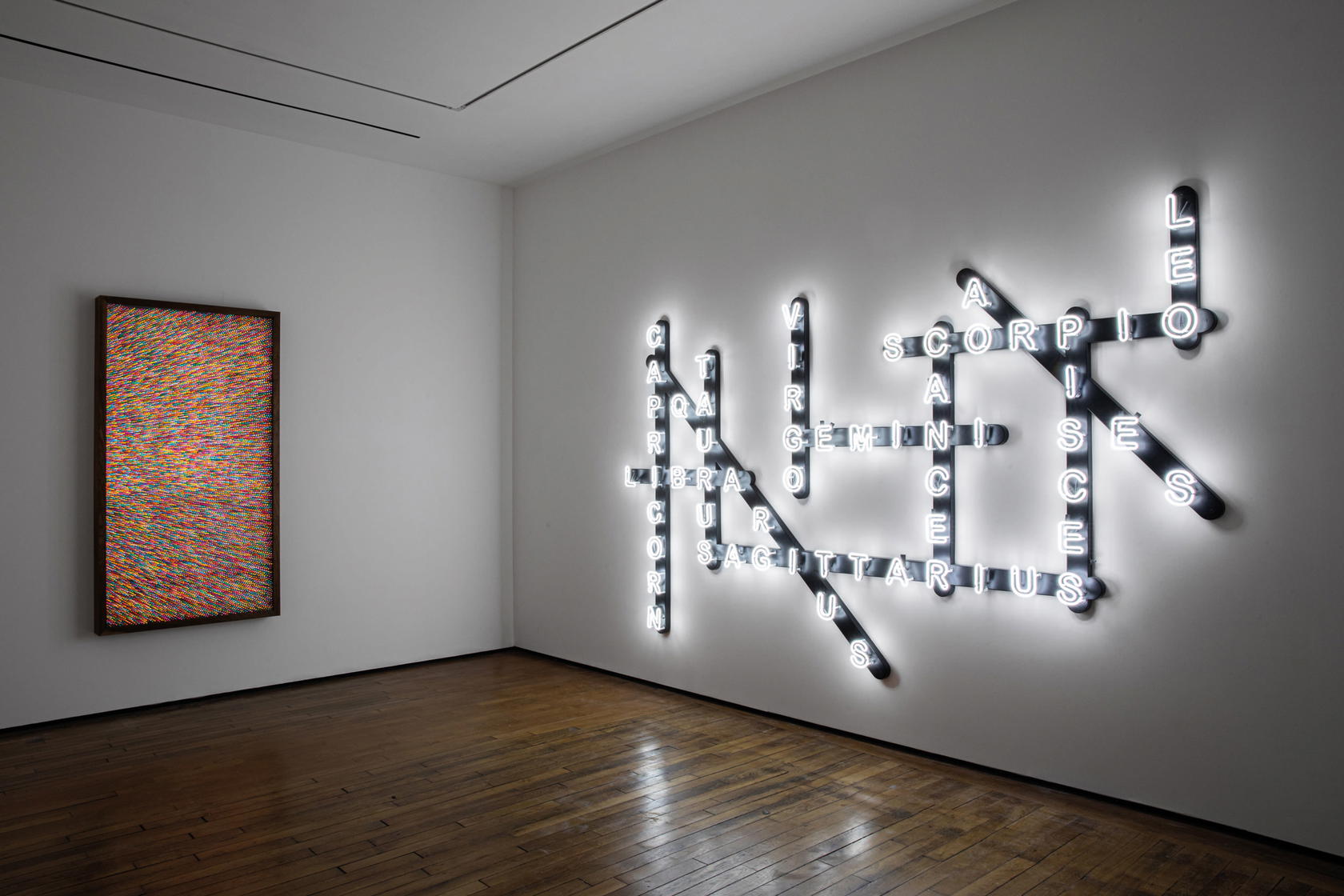
That childhood fascination finds striking form in celestial works today. In ‘Zodiac Constellations’, mythical animal forms and deities are laser-etched onto metre-long mirrors, linking astronomy with humanity’s earliest stories.
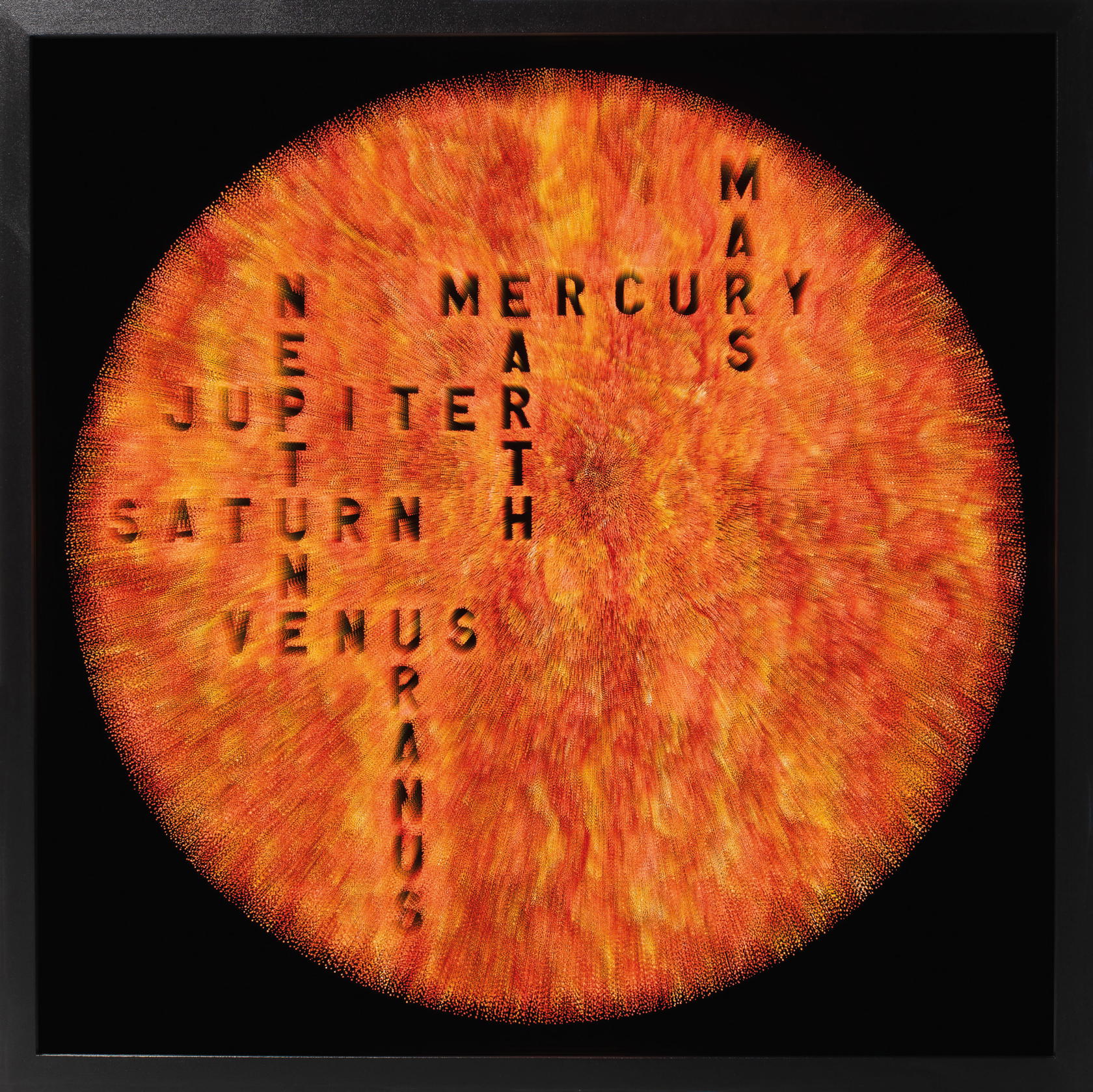
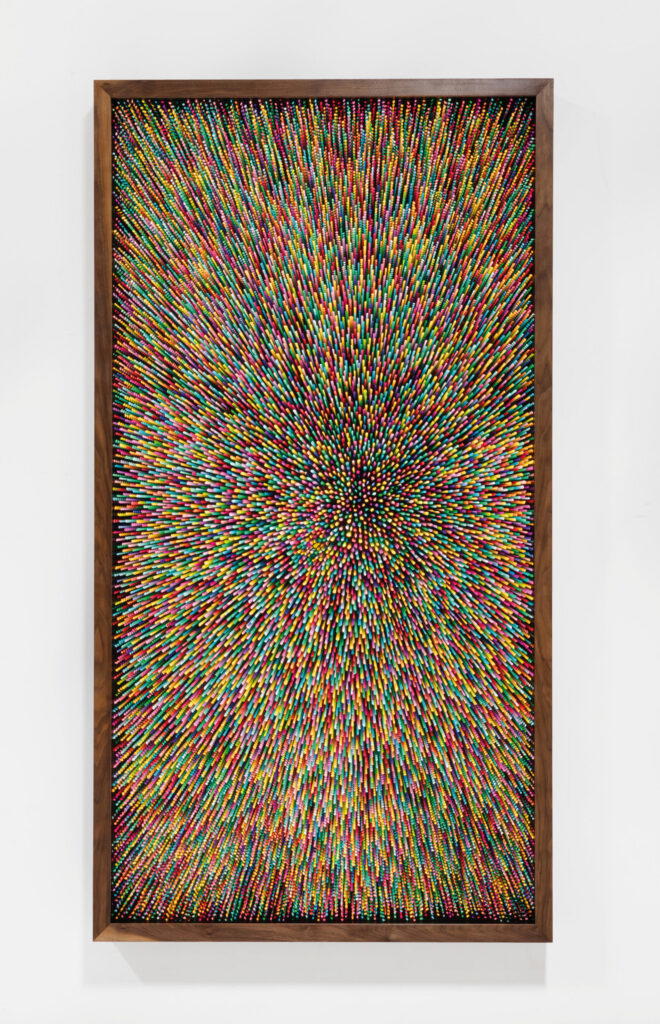
Other pieces like ‘Lepton II’ and ‘Solar System’ feature hand-painted coloured dots on mirrors, evoking the vastness of space. A more ominous tone surfaces in ‘Sun Traffic’, where a rotating traffic light repeatedly flashes the word “sun”—suggesting how even the natural world has been systematised and controlled.
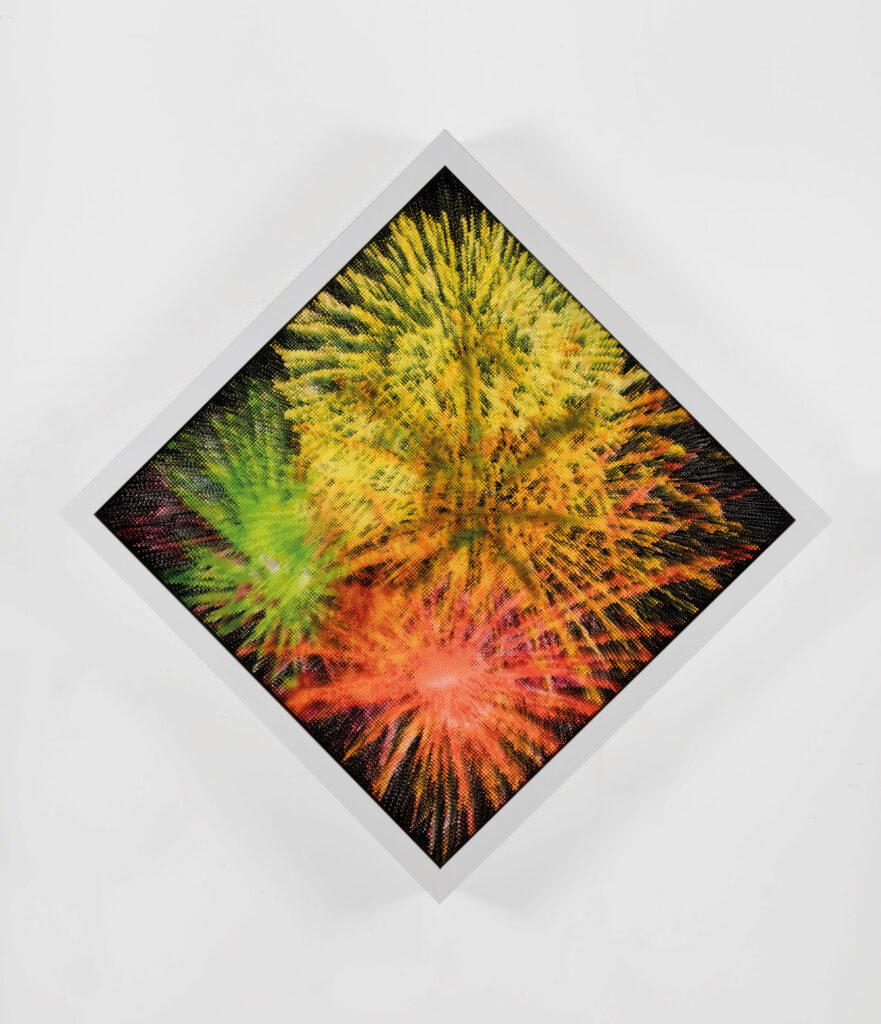
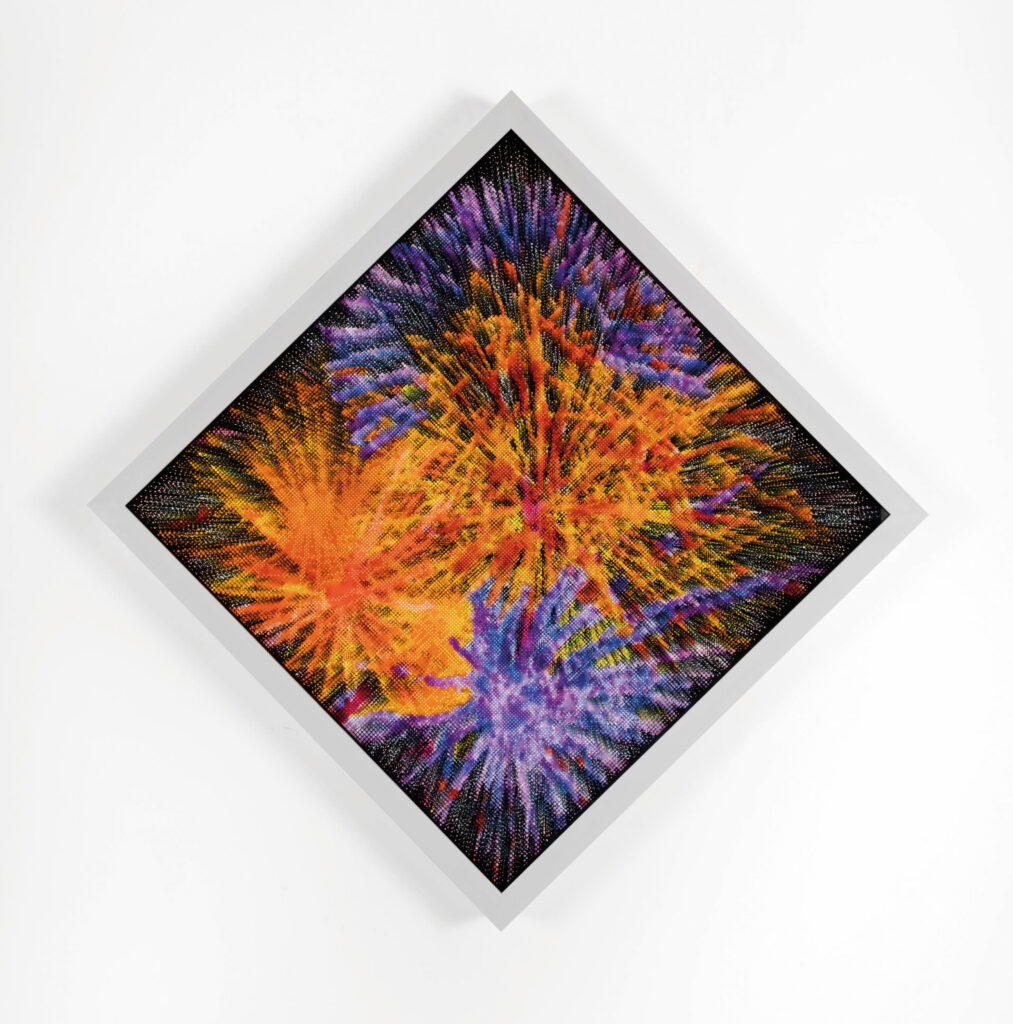
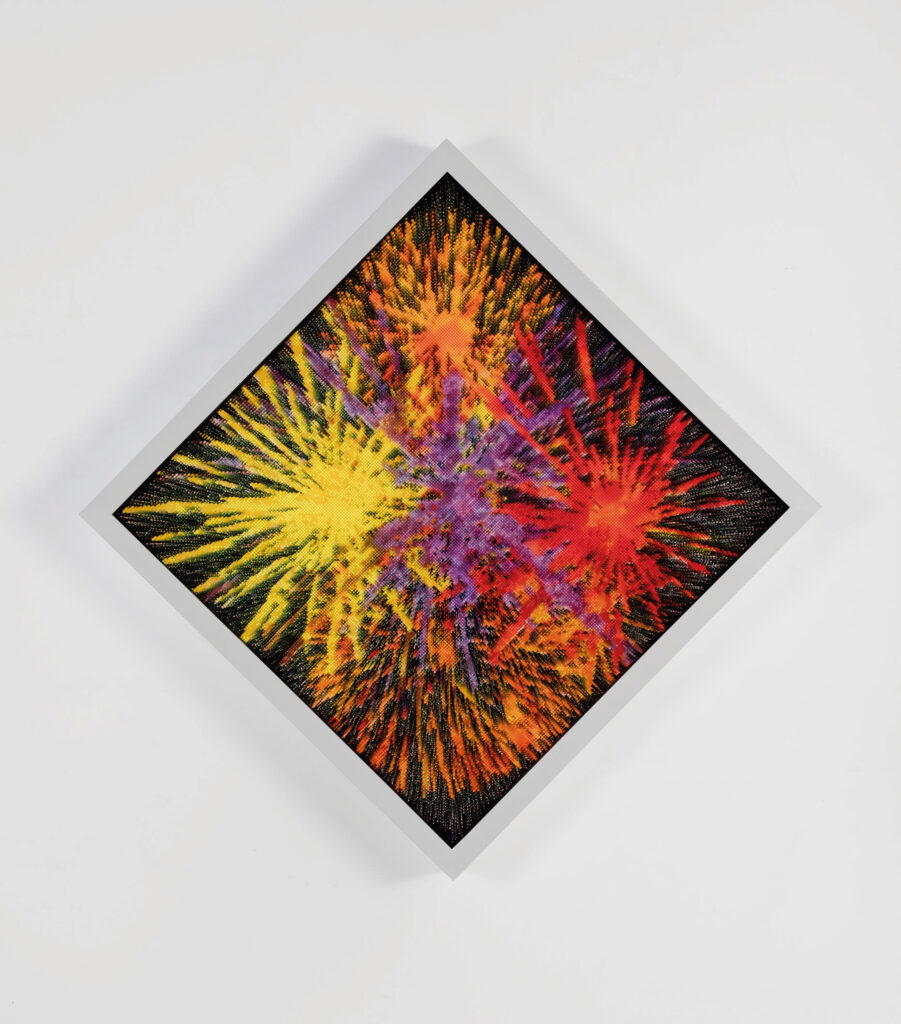
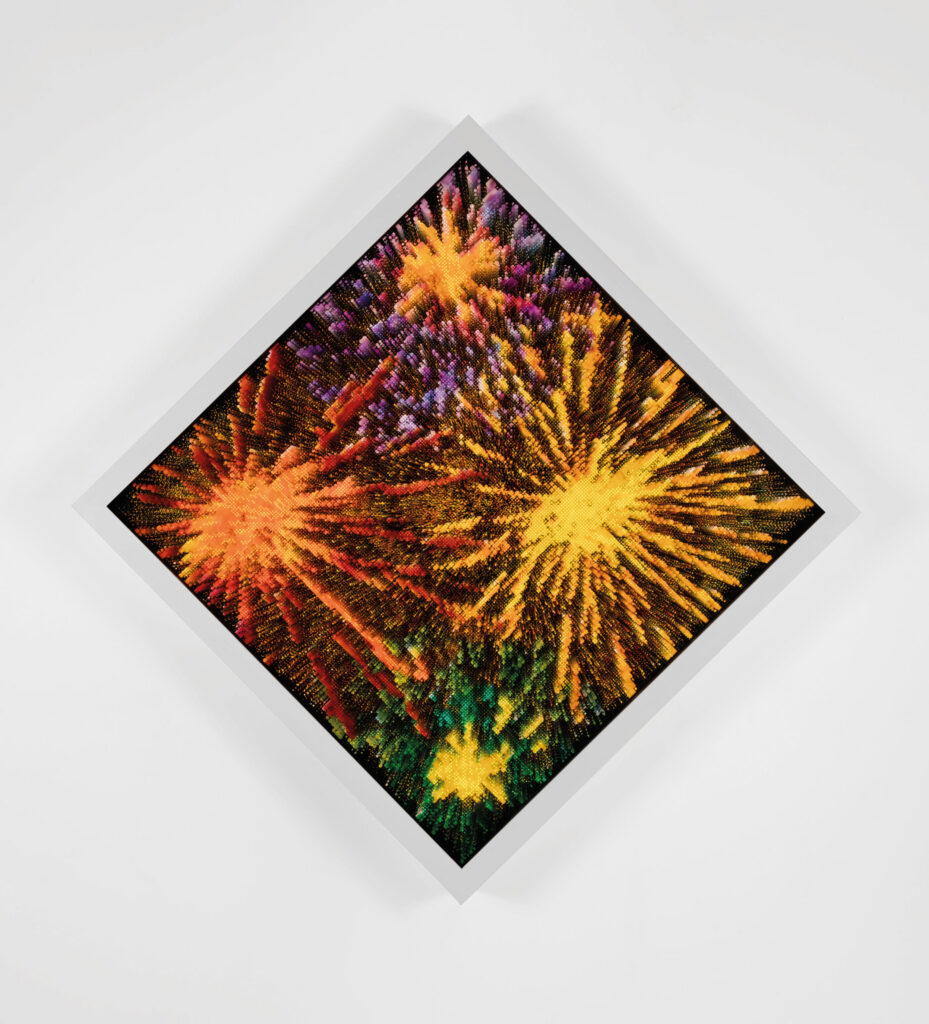
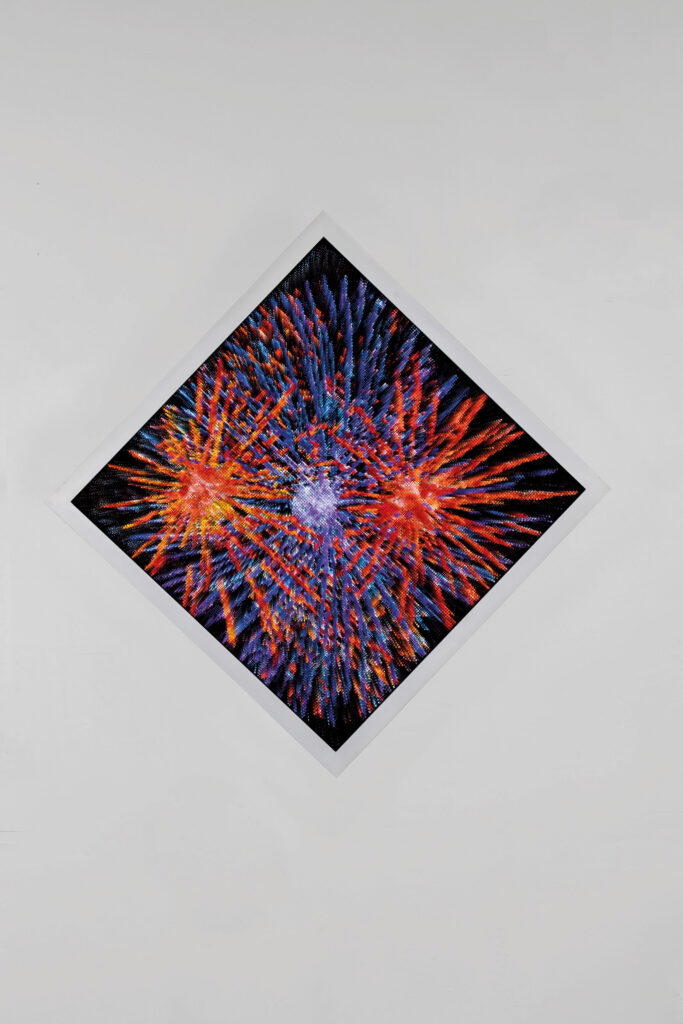
The ‘Shell Shock’ series, exhibited in Paris for the first time, adds another layer of complexity. Using laser-cut, diamond-shaped mirrors, Navarro uses existing fireworks imagery to reflect literal explosions and internal ruptures.
His works speak to the psychological fallout of dictatorship, protest and trauma. “‘Shell Shock’ references the disasters the cyclops creates; it’s about hearing explosions in your head long after they’ve ended. In South America, narco traffickers shoot fireworks to announce the arrival of drugs, when somebody dies, or to celebrate making a lot of money.”
This spirit of experimentation defines his process. During the pandemic, he returned to solitary hands-on methods, creating unique works without the help of assistants or fabricators. He found the process both meditative and grounding.
Throughout Navarro’s work, contradiction remains a constant. His sculptures and installations balance monumentality and fragility, allure and aggression, light and darkness. He is fully aware of the seductive power of neon. “It’s like a neon sign in the street,” he says. “You look because it’s beautiful. But beneath that surface, there’s always a message.”
Some of these messages are hidden in plain sight. In ‘The Eye’, one can read the word “peace” woven into the neon. Navarro intentionally selected these words, testing how viewers would react to them.
This spirit of experimentation defines his process. During the pandemic, he returned to solitary hands-on methods, creating unique works without the help of assistants or fabricators. He found the process both meditative and grounding. “It became very therapeutic and meditative,” he discloses. “Without assistants, fabricators or access to my usual materials, I returned to working with my hands and making unique pieces—the only things I could do. I sometimes like to question the way I work.”
Navarro’s reach also extends into public space. In 2026, he will unveil “Sundial”, a permanent exhibition displayed at the Villejuif – Gustave Roussy metro station as part of the Grand Paris Express. Created in collaboration with French architect Dominique Perrault, it will feature 57 light boxes embedded into the ceiling of a circular station 48m underground.
Each box is engraved with the names of several stars selected from 350 of the brightest stars historically named by various cultures and illuminated in yellow and written in multiple languages.
The installation offers a symbolic sky for travellers moving through a subterranean world. “It’s a way to bring the sun and stars of the universe to the darkness deep underground, where you can’t see them.”
Navarro does not seek to provide answers. He challenges us to reconsider how we view things, what we overlook, and what is hidden in plain sight. He reminds us that vision extends beyond physical perception, whether it evokes myths, confronts political brutality, or illuminates the universe. It’s a way to understand power, beauty, and resistance.