
Christopher Young describes his role at Tiffany & Co. as “a blessing and a curse”. The Vice President of Creative Visual Merchandising, Events, and The Tiffany Archives straddles two seemingly opposite realms: the ephemeral world of the brand’s window displays and the permanence of the Tiffany Archives.
His task, he says, is to bring them into a single creative vision. “I started designing windows at Tiffany in my 20s,” Young recalls. “Every time I wanted to come up with something new, I went to the archives. The truest way to create is to ask where have we been?”
His instinct for research and storytelling eventually broadened his role. So, what began as a career in designing riveting window displays now includes the preservation of Tiffany & Co.’s history.

INFORMING THE FUTURE
In his view, heritage is never static. “The role of the Tiffany Archives is not to serve the past; it is to inform the future.” This philosophy is evident in his exhibitions, which are more like stories than dry chronologies as they feature themes and discoveries visitors are encouraged to interpret for themselves.
“If you explain everything, there’s nothing left to find. If I do a good job, perhaps you can discover things on your own and translate them into your own meaning. Just like Audrey Hepburn felt a personal, emotional connection when looking in the windows at Tiffany’s, this essence is what makes the brand special.”
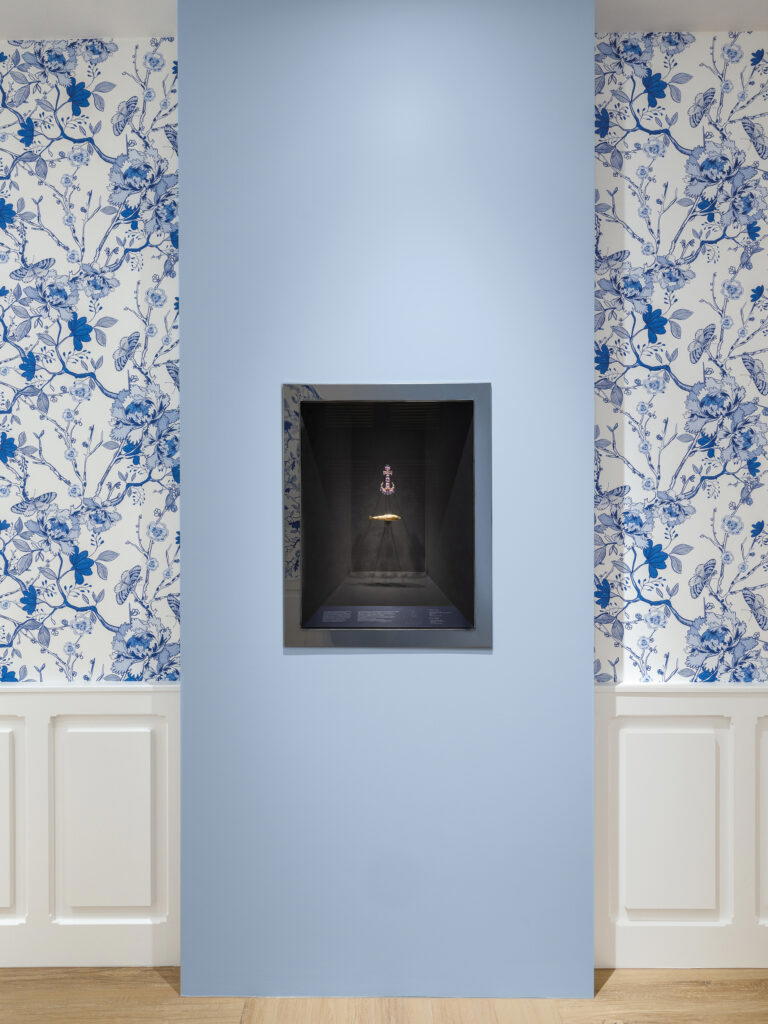
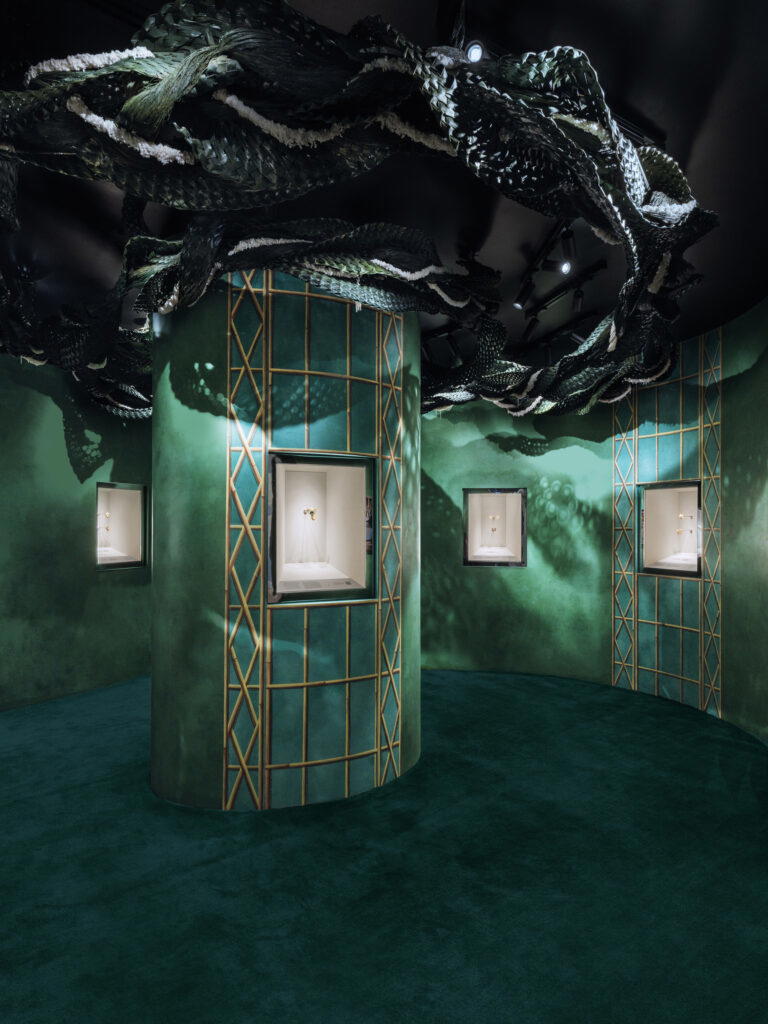
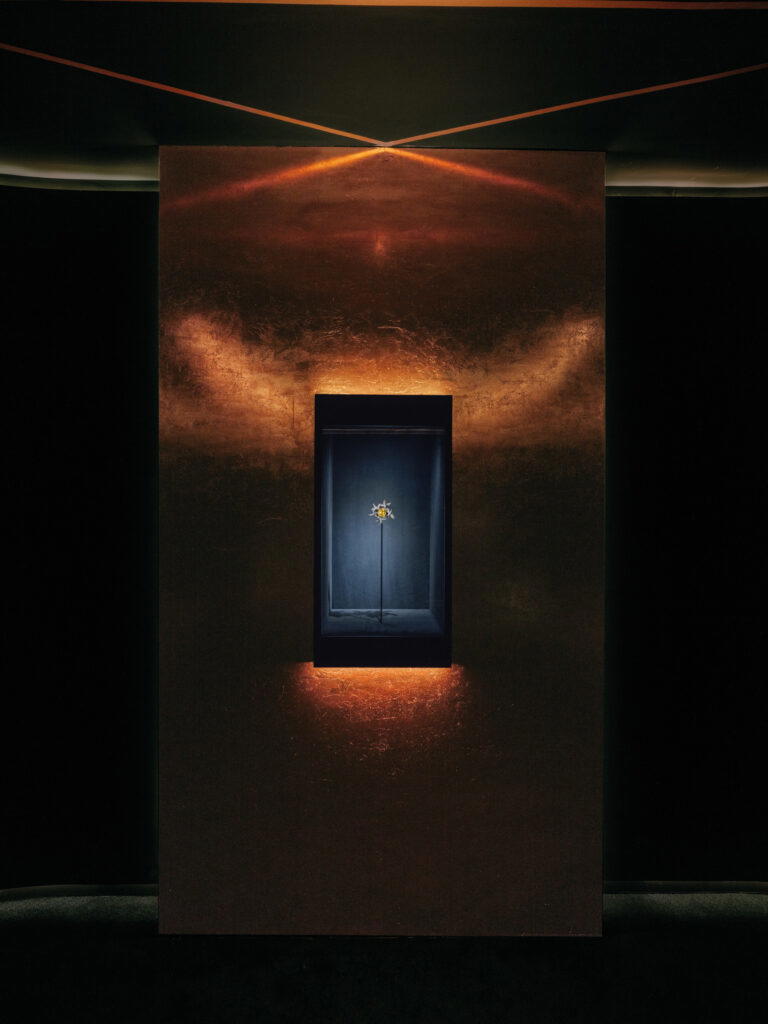
At the recent “Legendary Legacy” exhibition dedicated to Jean Schlumberger in Bangkok—the first of its kind for the house in this city—Young chose not to adorn the walls with black-and white portraits of Schlumberger’s glamorous clients. Instead, he created environments that emphasised the gifted artist’s design genius. These included the tropical island of Guadeloupe, which inspired his early creations, Bunny Mellon’s private gardens, and an underwater universe filled with amorphous creatures.
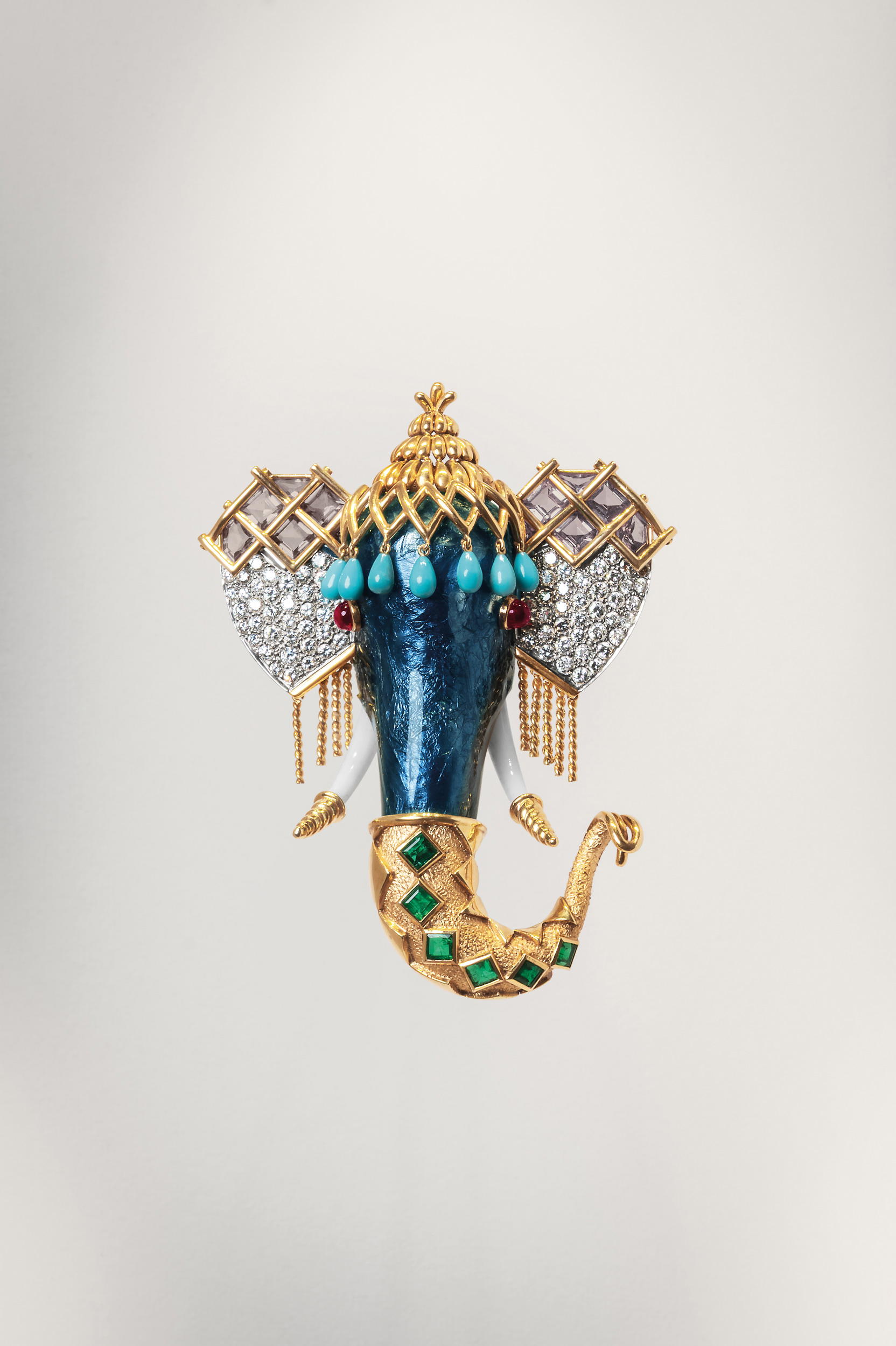
Among the exhibits were rarely seen archival pieces, some on loan for the first time from private collectors, such as Joan Quinn’s ‘Elephant Head Clip’ (1968), which debuted in a Tiffany advertisement the same year. It exemplifies Schlumberger’s wit and technique with vibrant enamel, jewelled accents and exceptional gold work shaped into a motif he knew well from his travels in Southeast Asia, where the elephant signifies strength, resilience and royal power.
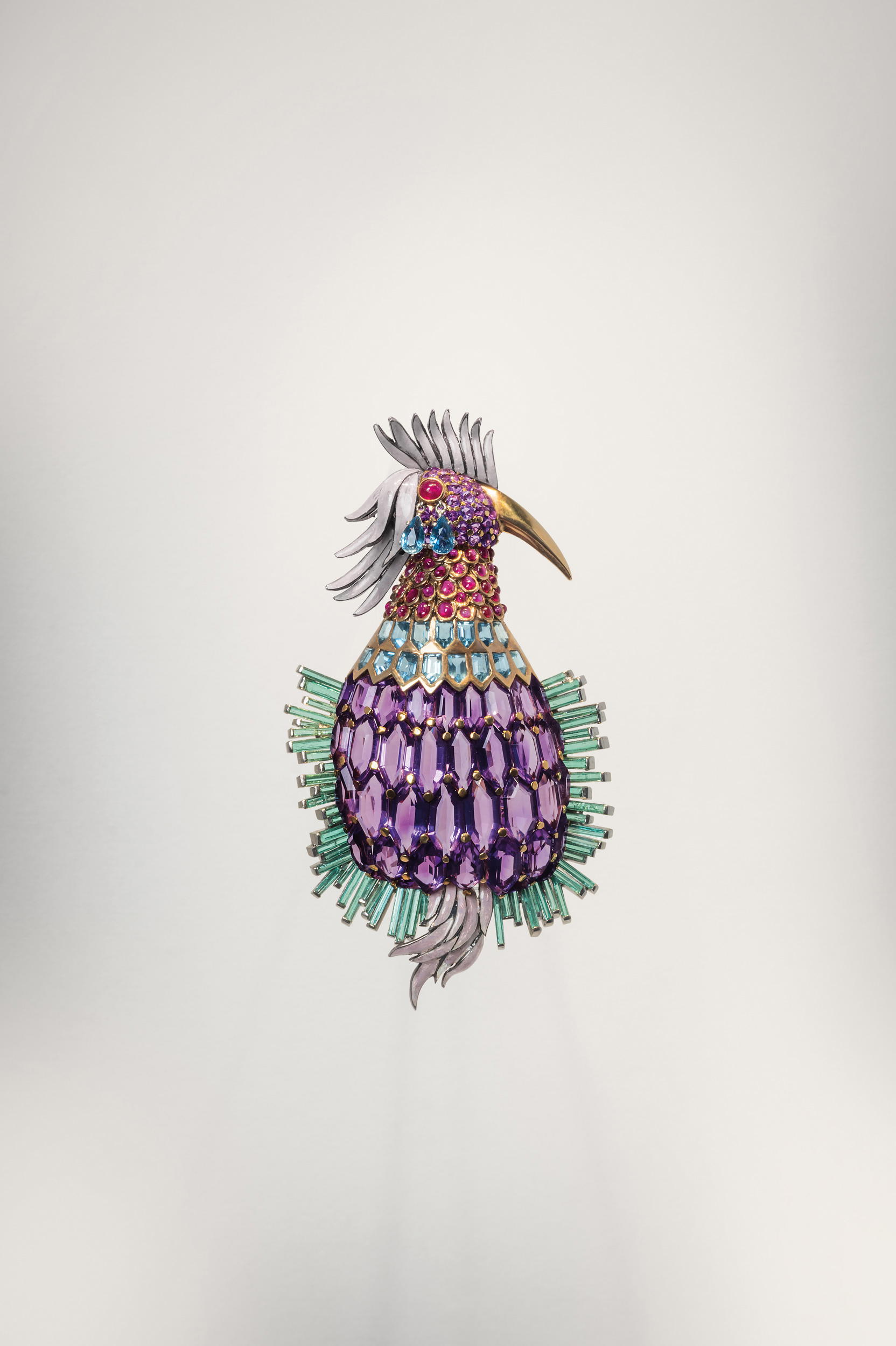
The ‘Trophee de Vaillance Clip’ (1941) shows his early command of colour and willingness to mix materials, not all precious, to serve a precise artistic idea. Diane Vreeland commissioned it before he joined Tiffany & Co. “I didn’t want to showcase another image of a white socialite from 1950,” Young explains. “In Thailand in 2025, it felt more relevant to express Schlumberger’s colours, flora, and fauna, as well as his appreciation of nature as art.”
The decision was not about choosing between nostalgia and novelty; it was about relevance. By emphasising themes rather than specific iconography, he presented history as a lived experience, allowing the journey through the exhibition to evoke the emotional connections he advocates.
REVELATIONS FROM THE ARCHIVES
Young’s archive is more than a library; it’s a laboratory as well as there are discoveries that continue to challenge assumptions about what Tiffany & Co. has been and what it might be in the future.
One significant discovery was the Medusa pendant designed by Louis Comfort Tiffany in 1904, which was believed lost until it reappeared at an auction. After Tiffany & Co. reacquired it, Young examined its gemstones and was astonished by what he found. Tests revealed that the five stones surrounding the central free-form opal were actually sapphires, not opals. “It completely blew my mind,” he says.
The surprising revelation was that despite having access to gemmologist and mineralogist George F. Kunz for expert advice, Louis Comfort Tiffany still manufactured these stones himself. He used three slices of sapphires fused together as part of his artistic vision of the jewel.
Other discoveries are quieter, but no less revealing. In the archives, Young found the burgundy presentation case Tiffany & Co. used at the 1893 Chicago World’s Fair. Years later, while visiting a celebrity collector in Malibu, he found the same burgundy lining, perfectly preserved. Such details, he says, remind designers that even colour can convey continuity and surprise.
Then there is Elsa Peretti. “She changed the course of design history,” he says with awe. Peretti introduced the idea that jewellery, like ready-to-wear, could come in sizes: small, medium, and large. Her Diamonds by the Yard and sculptural Bone Cuffs allowed women to self-purchase luxury on their own terms. “It blew my mind that Tiffany was open to such simple, sensuous designs in the 1970s. At the same time we were selling Schlumberger’s fantastical birds and beasts.”
Young says that Tiffany & Co. is capacious enough to handle contradictions. “Nobody else names their designers, but we can. We’re big enough.”
REINVENTION WITHOUT NOSTALGIA
That capaciousness extends to today’s reinventions. Young points to the recent Bird on a Rock by Tiffany Wings series, which was presented at a private viewing and reimagines Schlumberger’s iconic brooch in a lighter, more approachable design. With diamonds in hidden settings and scalloped edges that fit together perfectly, it offers rings, earrings, bracelets, and necklaces in more abstract interpretations.
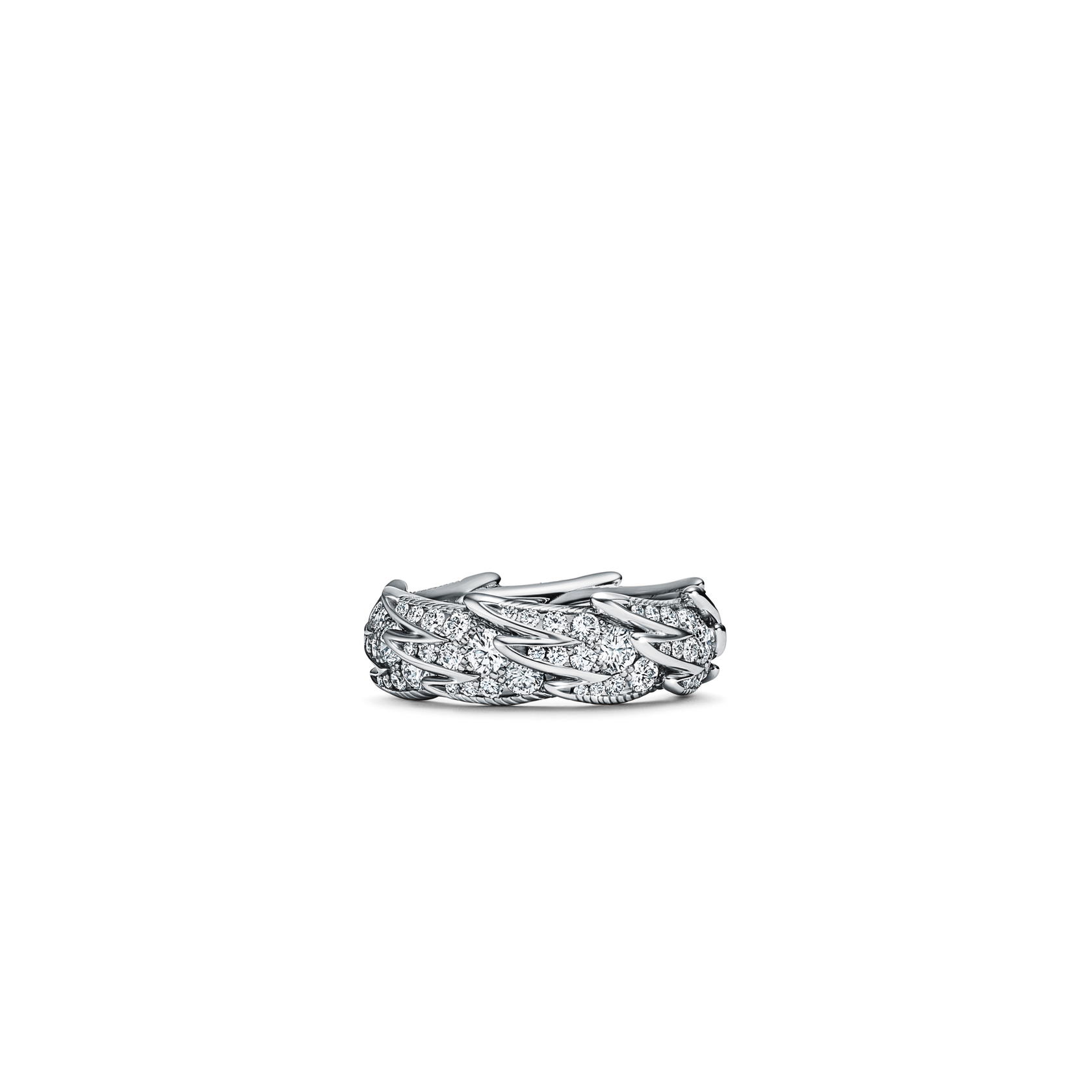
He notes that the surprise is not only in the scale but also in the gender neutrality of the designs. “Men never wore Jean Schlumberger in the 1950s, ’60s, or ’70s. The idea that men can now wear them is a new and exciting twist,” he explains.
Tiffany & Co.’s President and Chief Executive Officer, Anthony Ledru, and Young himself wore Bird On A Rock brooches at the exhibition’s press conference. Ledru’s brooch was set with a yellow diamond, while Young’s featured a white diamond weighing around 10ct.
“I believe it’s about having the fearlessness to do something others typically don’t do. I can’t think of another jeweller where the president wears a piece like this.”
For Young, such reinterpretations are more important than literal revivals. “A surprising path” is what he hopes Tiffany & Co.’s next generation of designers will follow. “I want twists and turns, not predictable recreations.”
Ultimately, he argues that continuity depends on living archives. “It’s my job to ensure Tiffany’s designers will have materials to draw on in 20, 100, and 200 years. Archives are for the future.”