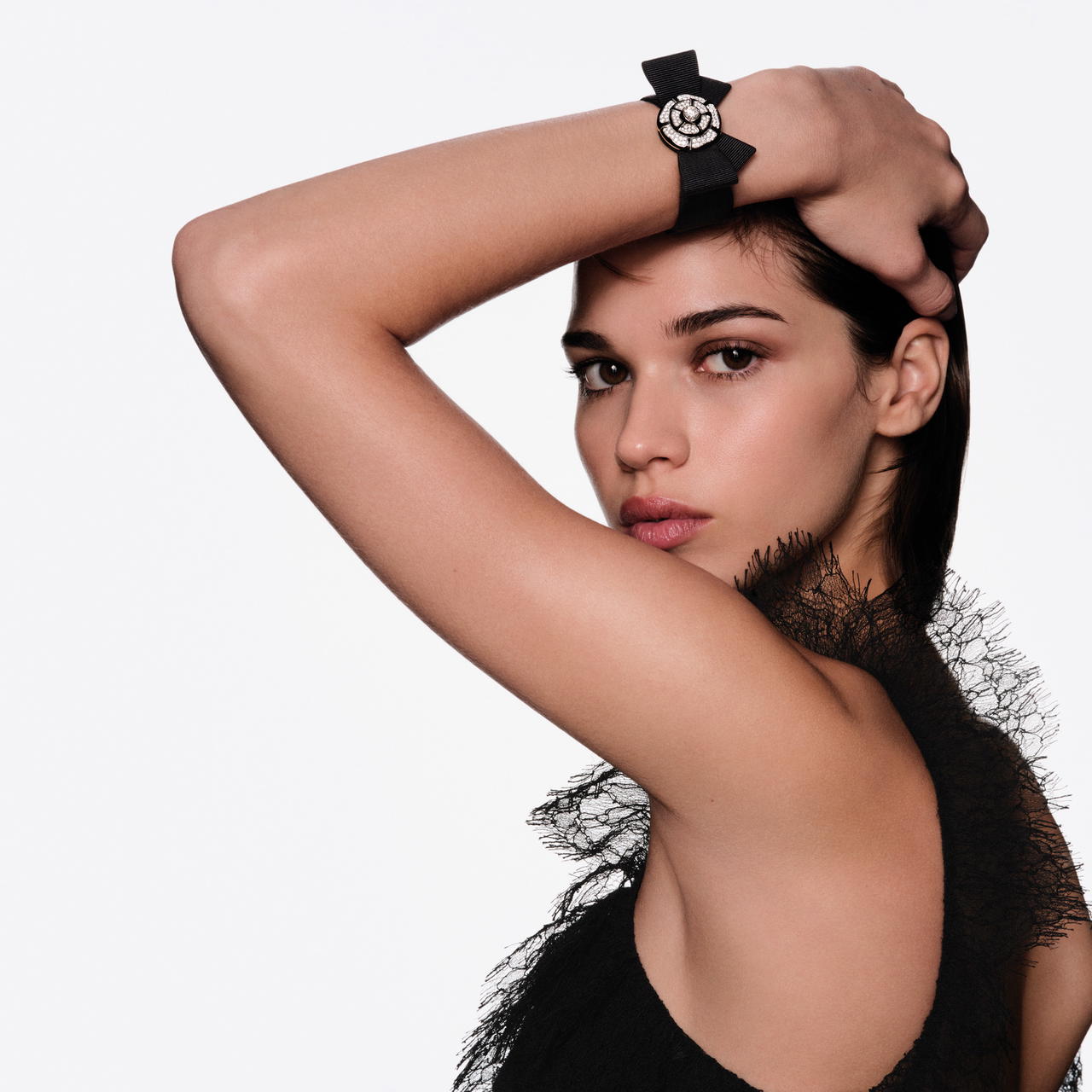
Chanel’s most recognisable symbols rarely need an introduction. In Noeud de Camelia, the camellia and the ribbon unite in a collection of four secret cuff watches and a ring.
Each piece conceals its dial beneath a diamond-set camellia, while the ribbon provides the design’s structural backbone, appearing in embroidered leather, sculpted gold, or pave-set diamonds. The collection ranges from an embroidered leather cuff limited to just 20 pieces to a unique high-jewellery creation with 3,306 diamonds.
The pairing feels natural. Introduced by Mademoiselle Chanel in around 1913, the camellia became a house emblem for its clean, almost-symmetrical form and enduring versatility. Its feminine silhouette is beautifully captured in jewellery through techniques such as carving, pave setting, snow setting, and bold graphic line detailing.
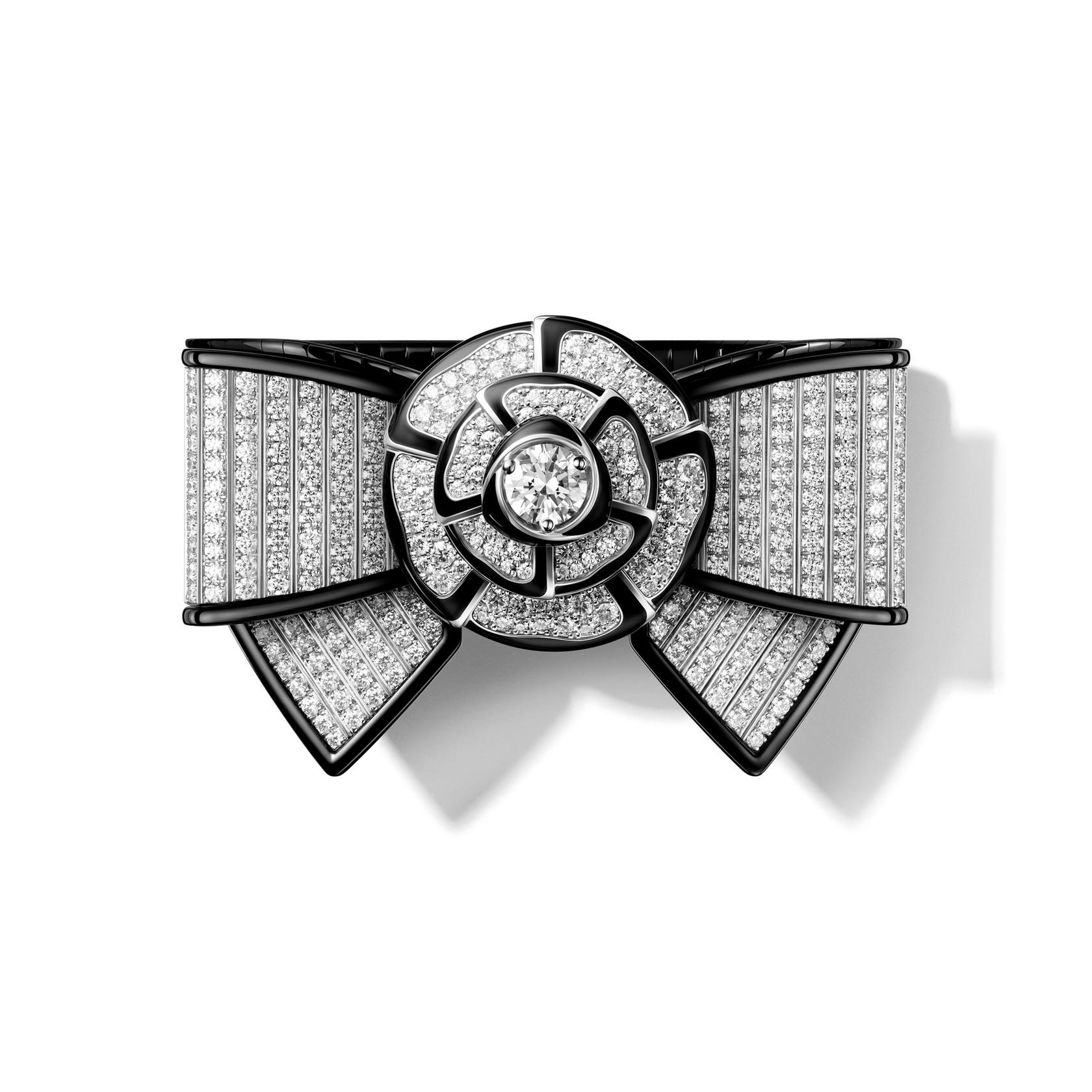
The ribbon’s connection to Chanel runs even deeper. Long before it appeared as a decorative bow, grosgrain ribbon was used in Mademoiselle’s millinery workshop to shape hats, valued for its distinctive ribbed texture. It later resurfaced as a trim on tweed jackets and as bows throughout the house’s fashion collections, ultimately inspiring the Ruban—Chanel’s diamond bow jewellery creations.
In Noeud de Camelia, the motif plays a pivotal role. Not only is it decorative, but it is also integrated into the cuff, defines the camellia cover, and shapes the finishing details of each piece. These range from matte grosgrain and embossed leather to polished gold and diamonds.
Together, the two motifs establish the collection’s design language: the camellia conceals time, while the ribbon adds volume and movement. The result is a seamless fusion of couture craftsmanship and high jewellery execution that remains true to Chanel’s visual identity. The two leather cuff watches epitomise the house’s couture heritage.
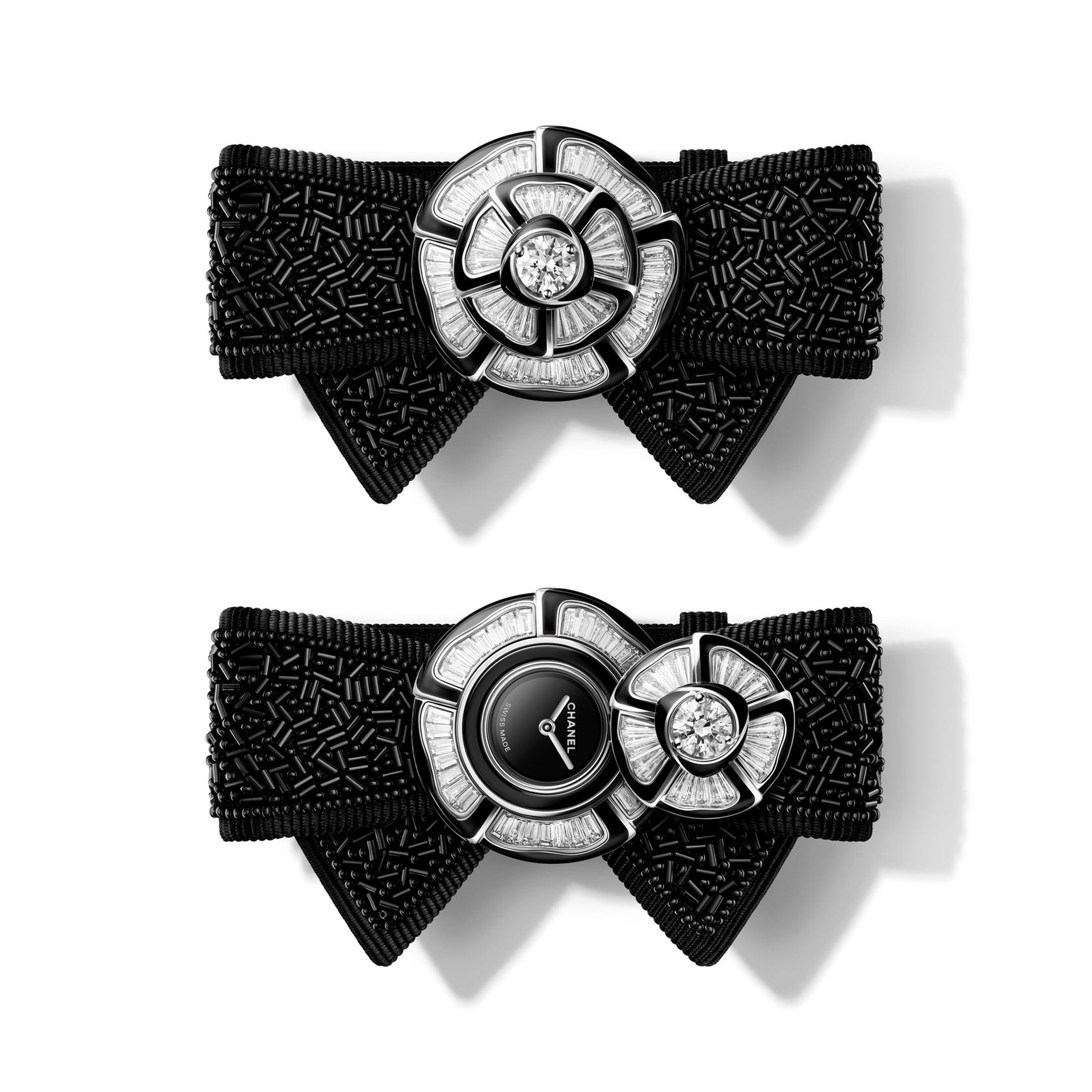
One is a limited-edition embroidery version created with Lesage, which the brand acquired in 2002. Black sequins are stitched across a matte grosgrain bow, while the camellia is crafted in white gold and outlined with 60 baguette diamonds. Chanel preserves the crisp outline of each petal, rather than covering them with pave, giving the motif graphic clarity.
The second cuff adopts a softer approach. The camellia is snow-set with 105 brilliant-cut diamonds and accented with black lacquer, while the embossed leather bow is textured to mimic grosgrain ribbon. On both models, a 0.70-ct diamond serves as the centre of the flower and pivots open to reveal the dial.
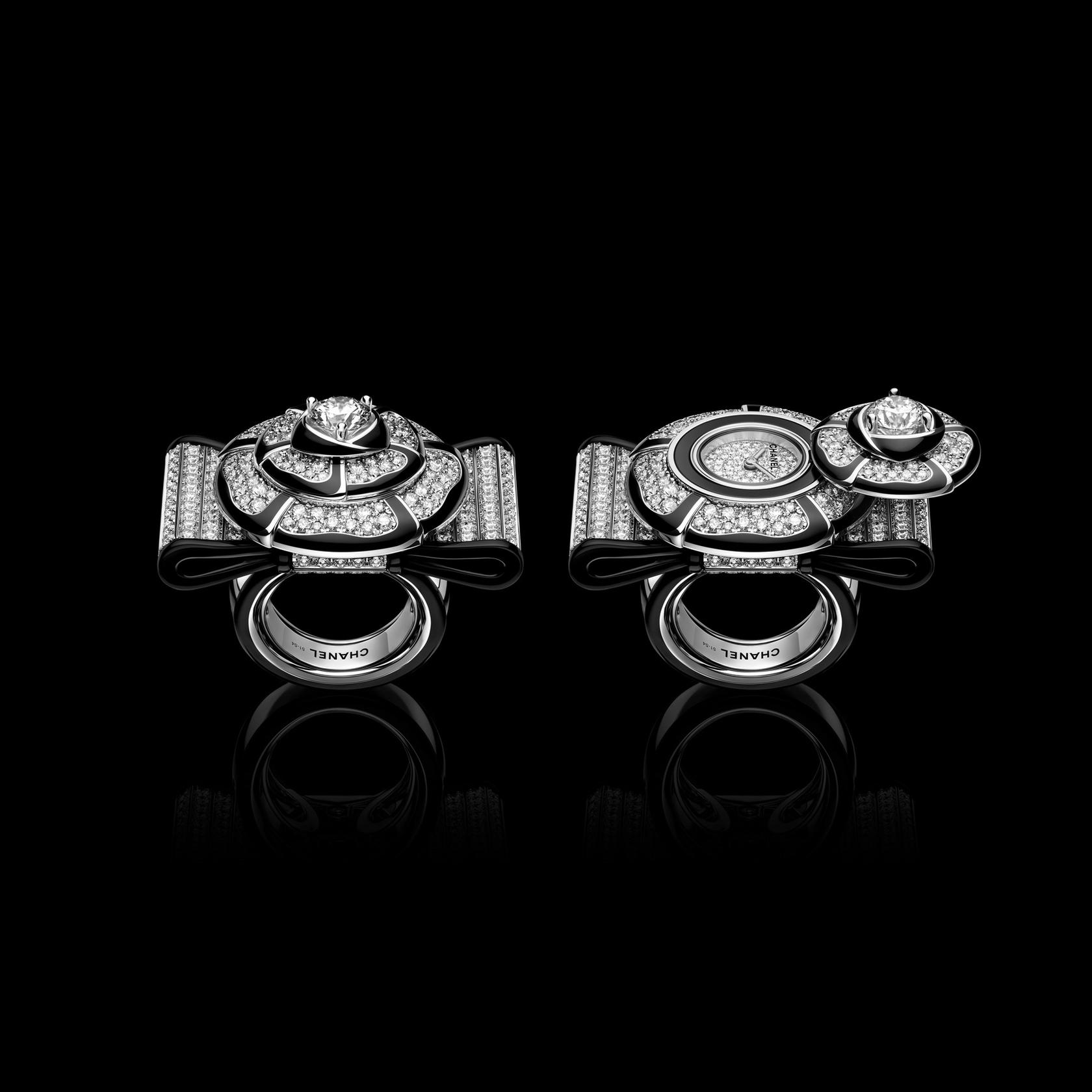
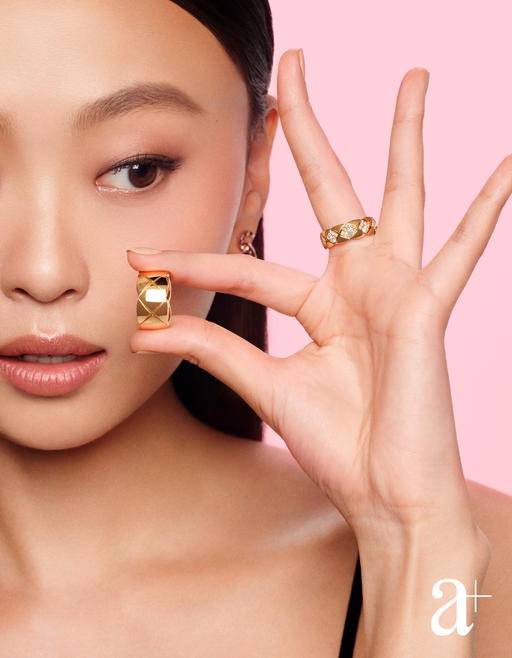
The limited high jewellery cuff and ring, each produced in editions of five, translate the same design into gold and diamonds. Black gold piping traces the bow, defining the gem-set surfaces. Snow-setting across the camellia builds visual density, while rows of line-set diamonds along the band nod to the grosgrain ribbon’s ribbed texture.
The cuff is set with 1,159 brilliant-cut diamonds totalling approximately 21.35ct and features a 1-ct centre stone. The ring follows the same design language, bearing 373 diamonds alongside its own 1-ct centre stone.
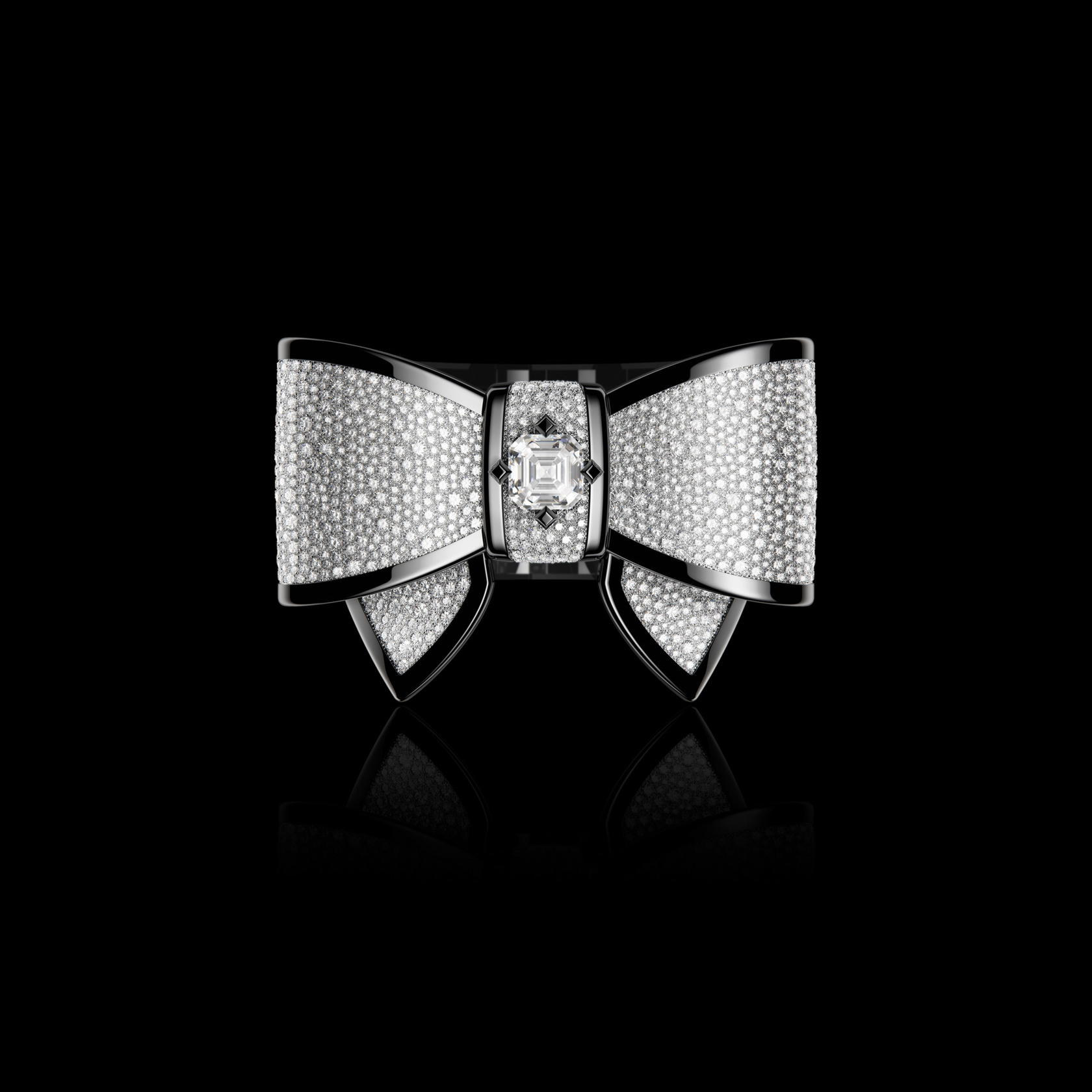
The undisputed showpiece is the Noeud de Diamants cuff, conceived as a fully jewelled masterpiece celebrating the two motifs. At its centre is a 5.23-ct Asscher-cut diamond set on a blackened titanium cover that opens to reveal a diamond-set dial beneath, while the oversized bow and articulated bracelet are adorned with 3,306 brilliant-cut diamonds totalling 45.43ct. Here, the inspiration moves furthest from its textile roots, shifting the emphasis towards gem setting and exquisite construction.
All five creations are powered by high-precision quartz movements displaying hours and minutes and are water-resistant to 30m. As with most jewellery watches of this calibre, the emphasis is on craftsmanship—the diamond setting, the secret-watch mechanism, and the transformation of iconic Chanel motifs into precious timepieces.