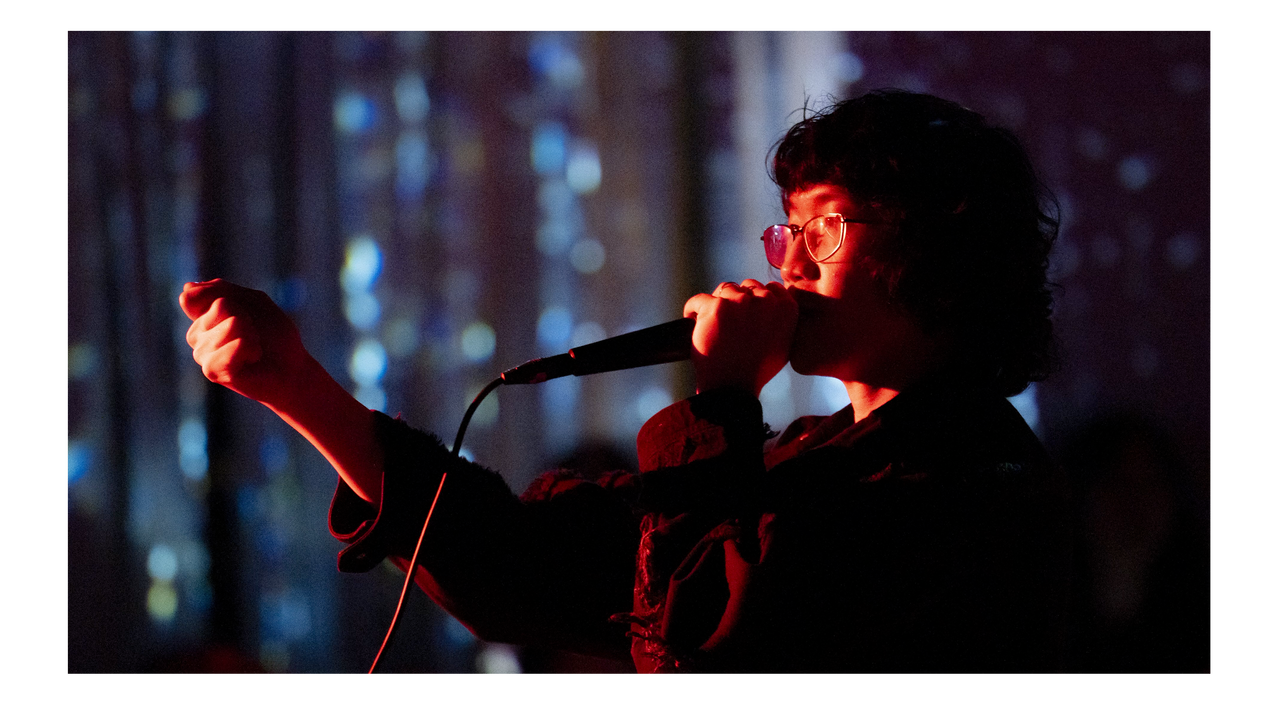
Beatboxing has no endpoint, says Vietnamese beatboxer Trung Bao Nguyen. Rather than following a rule book, his musical art form is a living language that must be constantly reinvented.
It’s an expert take: the 28-year-old won the solo championship at the World Beatbox Camp in 2017 and was named to Forbes Vietnam’s 30 Under 30 in 2020.
Nguyen began beatboxing 17 years ago in Hanoi’s hip-hop and street culture. Encounters with artists across disciplines widened his creative vocabulary, shifting his focus towards sound, visuals, light and technology. Today, he is also a visual designer and creative technologist who works across mediums.
Beatboxing pushed him to explore plucks, implosions, and other textures embedded in his native speech. He learnt to exaggerate those sounds, blend them with established techniques, and transform the idiosyncrasies of Vietnamese phonetics into his own sonic language.
His environment even shaped his approach to complexity. As Nguyen describes it, Hanoi is dense, layered, and full of contrasts. It is where generations, rhythms, and ways of living coexist, sometimes uneasily. He has learnt to inhabit these tensions instead of trying to resolve them.
“That made me comfortable with complexity rather than always trying to simplify it.”
Trung Bao Nguyen on embracing nuance
That instinct extends to his fascination with the human body. He came of age at a time when electronic music, as well as digital audio workstations, were sophisticated enough to create virtually any sound. However, the technological possibility of creating anything only heightened his curiosity as to what the human body could accomplish without assistance. “The most interesting thing is that you know the body has its limits, but you don’t actually know where they are.”
His visual practice adds another dimension to his work. Nguyen sees disciplines as distinct systems, each with their own language, logic, and constraints, but he believes that the sensitivities cultivated in one can be adapted to another. He considers both music and visual art to be concerned with the same issue: how time and space are organised through perception. “Even when the final piece is purely sonic, I am always thinking visually.”
After years of understanding the voice through its physical mechanics, Nguyen began wondering what could happen to a voice when it is translated into data. To answer that question, he co-created Voice Gems, a generative art and archival project, with British vocal experimentalist Harry Yeff. The system analyses voice characteristics and translates them into digital and physical sculptures. “Suddenly, the ephemeral and invisible become tangible and visible. That changes our relationship with the concept of voice itself.”
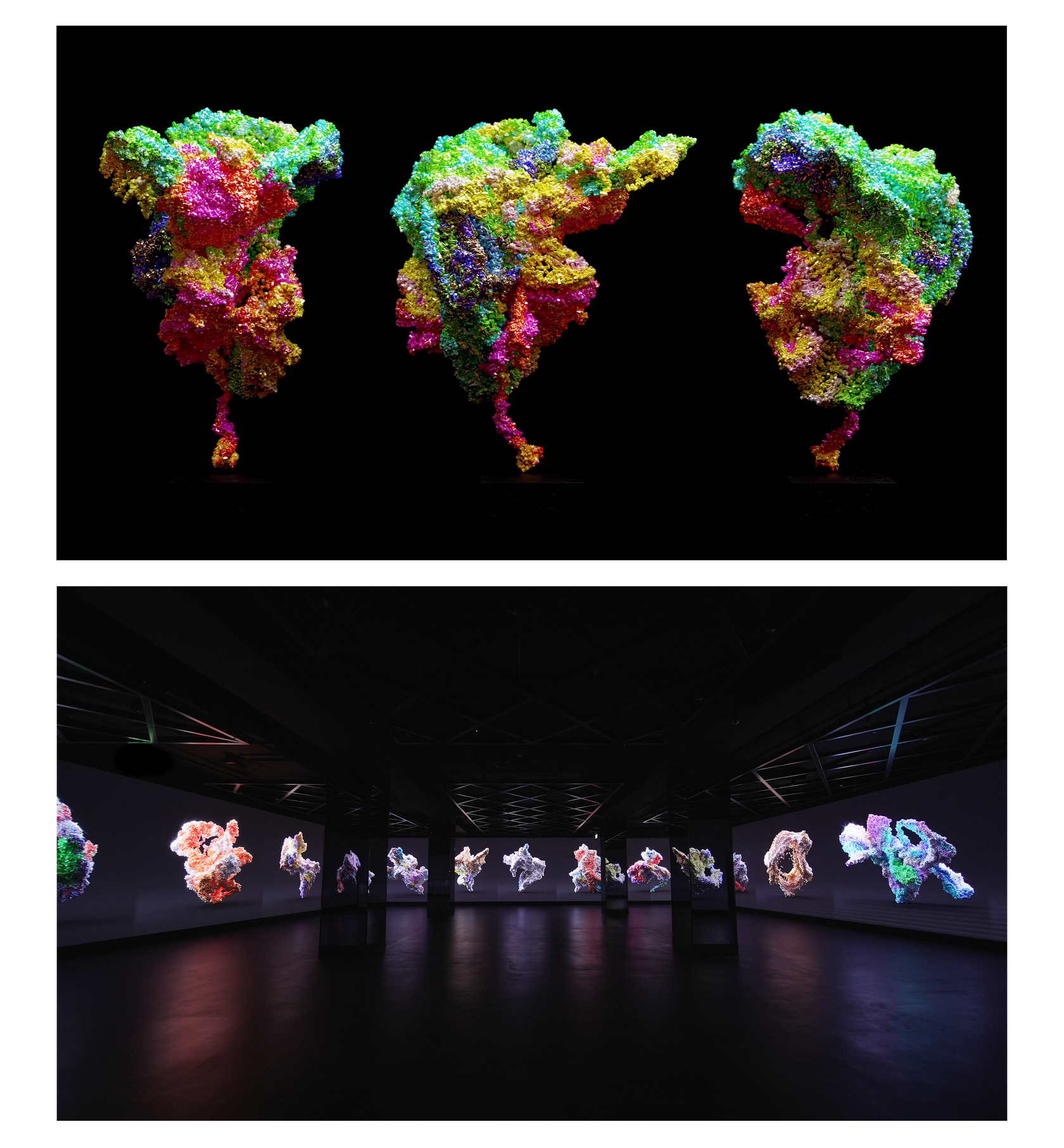
Artificial intelligence and programming have since accelerated his experimentation, enabling his team to build bespoke software, modify systems and prototype improbable connections between mediums. Even so, technology is a lens, not the destination for Nguyen: “I am still most interested in what happens when computational systems allow me to look more closely at that physicality, not replace it.”
That cross-disciplinary movement across boundaries also informs his participation in Apple’s Here’s to the Dreamers campaign, in which he represents Vietnam alongside other Southeast Asian musicians, developers, artists, and visionaries.
Nguyen’s advice to younger creators: be willing to become a beginner again and again. Enter unfamiliar territory, sit with uncertainty and stay long enough to be changed by it. It is a skill that can pay off in spades. “When you spend long enough with one discipline, you begin recognising patterns underneath the content, or the sound, and most fascinatingly, you begin to understand how you learn.”
While he now works across multiple disciplines, he no longer feels like he’s starting from zero every time. “I still become a beginner, but the process gets easier. You learn how to learn. It has greatly expanded my definition of mastery.”
Play, too, remains essential as creative culture becomes increasingly professionalised and optimised. It provides space to explore without measuring outcomes immediately.
Ultimately, Nguyen views technology as a translation device that makes the familiar newly perceptible by transforming voice, breath, or gesture. Its real value, he believes, lies in the possibilities it creates between people. “If the work can create that kind of heightened awareness and connection, I think it has succeeded.”