
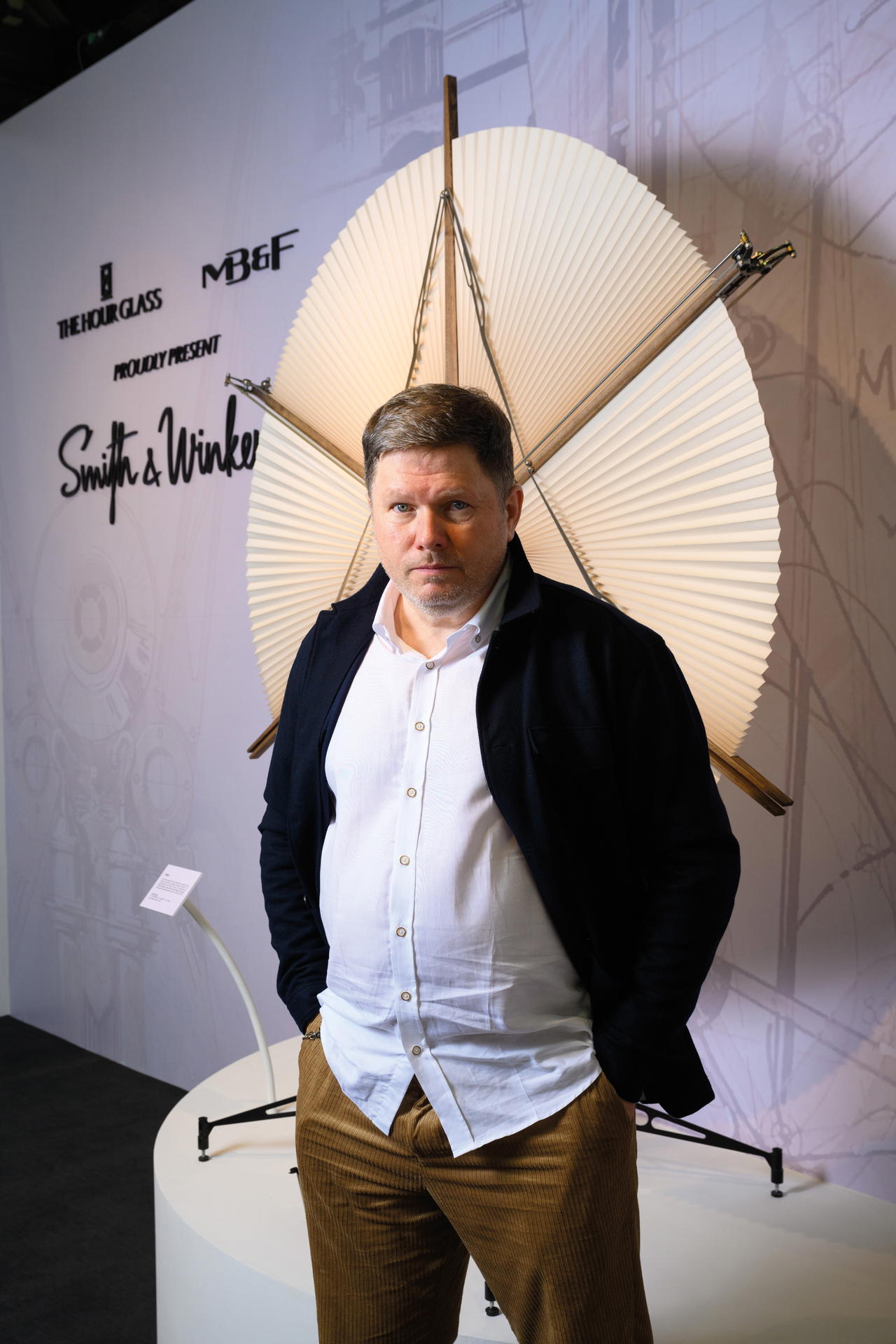
Valeriy Kuznetsov and Otto Winken, also known as Smith & Winken in the art world, create art pieces that use ordinary materials to explore the relationship between mechanics and bionics.
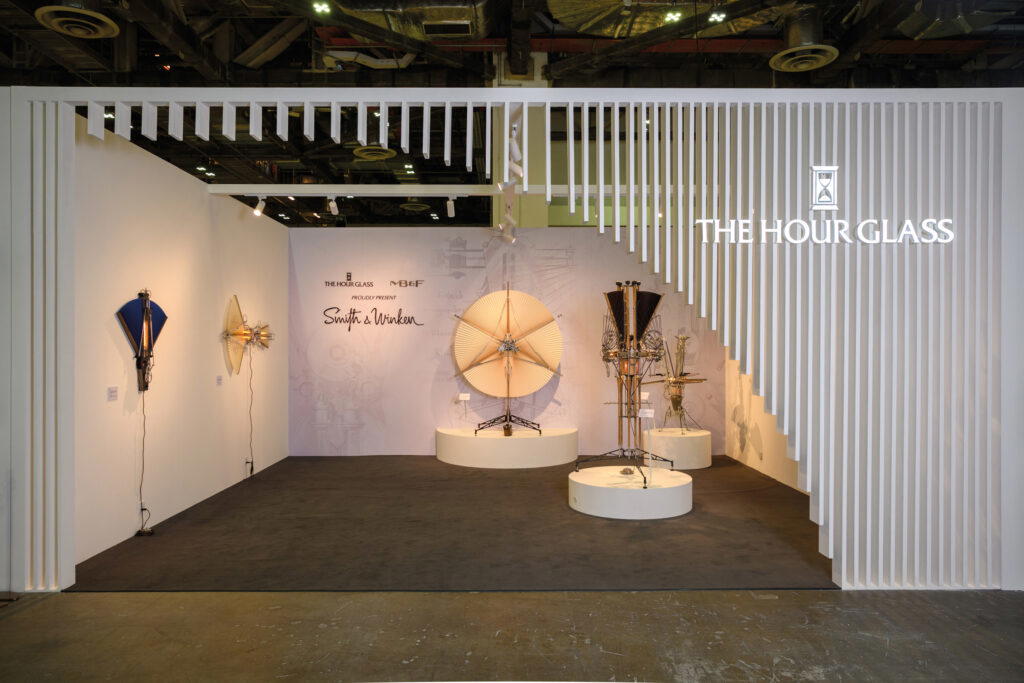
Their latest Endless Movement collection incorporates wood, textiles, and metal into 20 limited-edition kinetic sculptures that are animated using custom-designed electric mechanisms.
The Hour Glass and MB&F Lab presented seven of these at a joint exhibition during Art Sg 2024. Smith & Winken made their Singapore debut with this exhibition, which was facilitated by The Hour Glass, the fair’s associate partner for the second year.
How does the legacy of early space exploration in Dnipro, Ukraine, the historic centre of the Soviet space industry and your hometown actively shape your work?
It had a profound metaphysical effect on me. It was pervasive. I was fortunate to have been raised in such an environment as it greatly influenced my thought process.
I was born during the Soviet era when free thinking was discouraged. With time, however, people began to fight for freedom, which led to the dissolution of the Soviet Union and the emergence of independent countries such as Ukraine.
There has always been resilience and creativity among our people, and the ongoing struggle in Ukraine is not just about freedom for us but for all of humanity as well.
Despite the challenges, I believe being born in the Soviet Union had its advantages. The limitations forced me to become even more creative, pushing me to find new ways to implement my ideas. In a way, it provided me with the motivation to excel.
You’re inspired by colours used by the Dutch masters. What effect do these classic colour palettes have on the visual aspects of your work?
Whenever I study Rembrandt’s works, I sense light emanating from hidden places. I infused this feeling into my creation “Gemini”. The way light appears seemingly from nowhere but overwhelms is akin to a rescue through painting.
Movement and light are my instruments, much like brushes for a painter. Through these elements, I can craft my work. Can you imagine the impact of displaying 100 pieces of “Skipper” at once? It would evoke strong emotions and prompt deep reflection.
We often use basic colours that are close to nature, drawing comparisons to the Renaissance. As Leonardo da Vinci did with his mechanical inventions, we also align our artistic vision with scientific exploration.
What kind of experiences do you want your audience to have when they engage with your art?
I genuinely appreciate the reaction of children because they are honest and sincere. Modern art typically requires some kind of explanation, right? Unlike adults, children don’t need explanations because, regardless of what you tell them, they see what they see. They share their true emotions, which is incredibly valuable.
The most exciting aspect is that both children with no background in mechanical things and adult professionals in the field are equally fascinated. It appeals to everyone, regardless of their background or expertise. The power of our objects lies in their ability to initiate intuitive emotions. They can evoke genuine feelings that are untouched by cultural influences.
What is your perception of time and how does it affect your art?
The objects I create could have existed 100 years ago or even a century from now. They transcend time, existing beyond our definitions of the past, present, and future. Like watches, my creations represent time but in an infinite manner.