

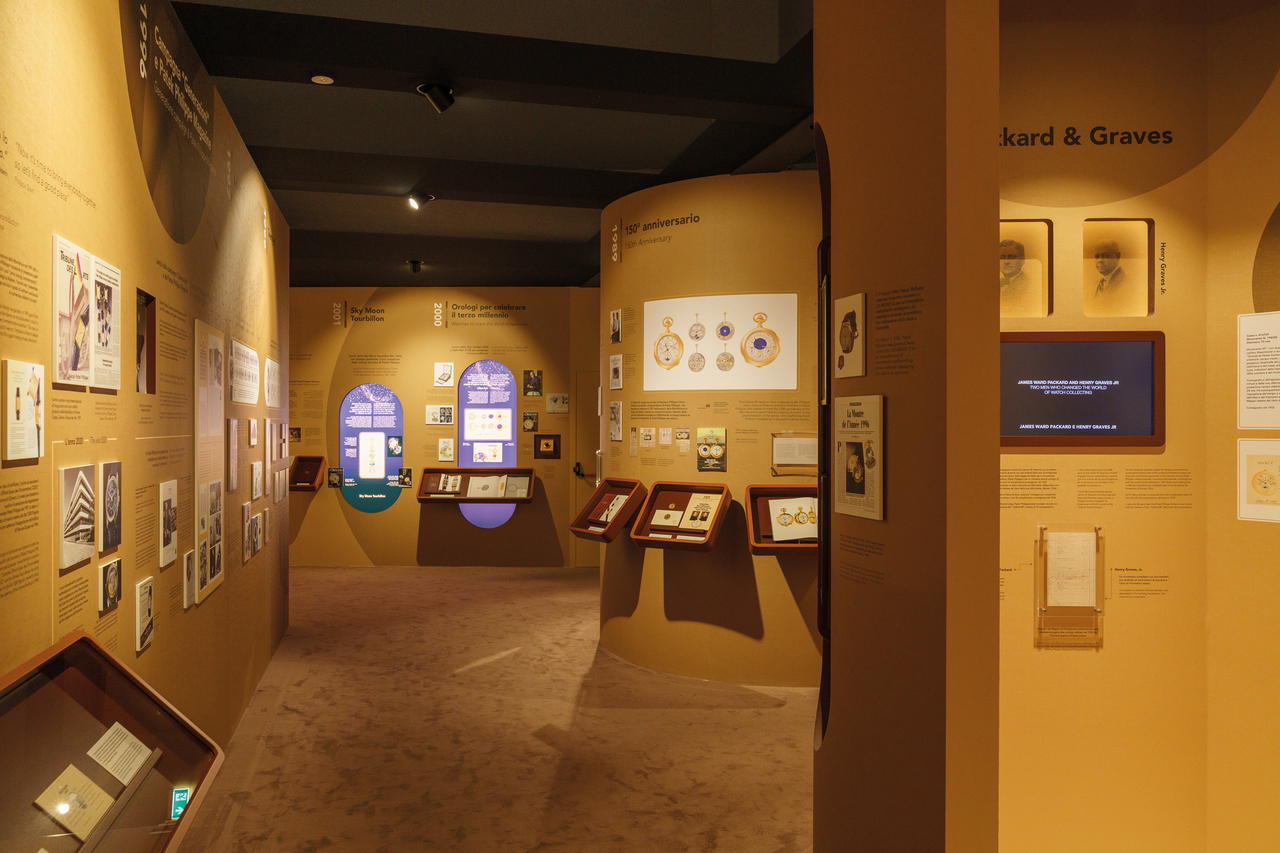
Under the 30-m dome of Milan’s CityOval, 2,028 glass droplets hung 9m above the ground in the shape of Geneva’s Jet d’Eau. Clients can see the real fountain from the windows of Patek Philippe’s salon on the rue du Rhone. This one stood inside the former Palazzo delle Scintille in the CityLife quarter. From some angles it resembled a giant stiletto, a fitting image for Milan.
The Watch Art Grand Exhibition, which took place from 2 to 18 October, was the first in Italy and the seventh in a series that began in Dubai in 2012. Featuring over 500 watches and objects, it was also the largest, covering more than 2,900 sq m.
The exhibition brought 80 pieces from the Patek Philippe Museum in Geneva to Milan. Among them were watches made long before the company was founded in 1839, including the oldest, the “Compass Rose”. It was attributed to German watchmaker Caspar Werner and dated 1548. The collection also included Patek Philippe’s own work, such as the first known perpetual calendar wristwatch, completed in 1925, and a Ref 1415 HU World Time from 1948.
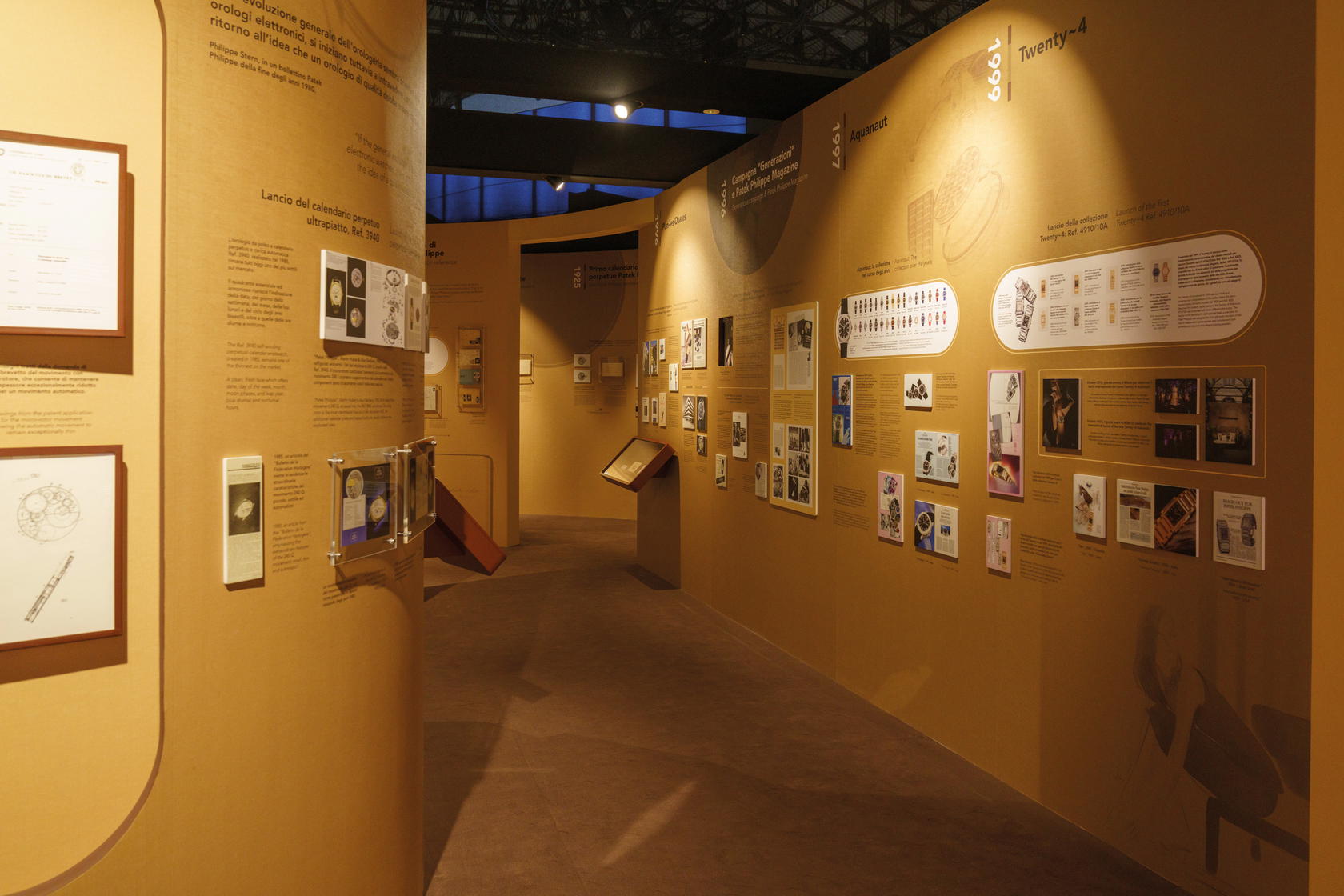
For the first time at such an exhibition, the manufacture also displayed its archives, arranging company records and documents chronologically. As they traced the decisions that shaped the company, they added context to the watches on display and the relationships behind them.
Those relationships were brought into sharper focus by watches once owned by historically prominent clients, such as Oscar II, King of Sweden and Norway, Queen Louise of Denmark, and Queen Victoria of England. Among the pocket watches, there were those of Kings Umberto I and Vittorio Emanuele III of Italy, as well as one that belonged to Pope Pius IX. The collection also included watches owned by celebrated collectors, including American industrialist James Ward Packard and banker Henry Graves Jr.
The latter commissioned the watch that set the record for the world’s most complicated watch for 56 years. Calibre 89, created for the manufacture’s 150th anniversary, surpassed it in 1989. With 33 complications and 1,728 parts, it held the record for 26 years. It was displayed in Milan with the Star Calibre 2000 and the Grandmaster Chime, which became the brand’s most complicated wristwatch in 2014 with 20 complications.
Patek Philippe’s full range of movements was also presented, from manual-winding calibres to grande sonnerie and split-seconds chronographs. The Advanced Research watches were displayed alongside them. The department was established in 2005 to explore new materials and technologies for mechanical watchmaking. Its early work focused on Silinvar, a silicon based material used in the movement’s regulating mechanism. Spiromax, a silicon hairspring designed to improve timekeeping precision by producing more consistent oscillations, was its first major achievement.
Patek Philippe introduced it in the Ref 5350 in 2006, and it has since been incorporated into most of Patek Philippe’s current movement families, including the calibres 240, 215, and 324. A highlight of the exhibition was the Rare Handcrafts room, where gem setters and engravers sat alongside marquetry and guilloche specialists, all in full view of visitors. Anita Porchet, whose enamel work has featured on the manufacture’s dials and clocks for many years, wasn’t working when we visited.
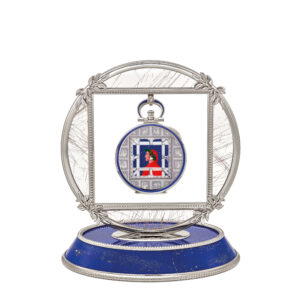
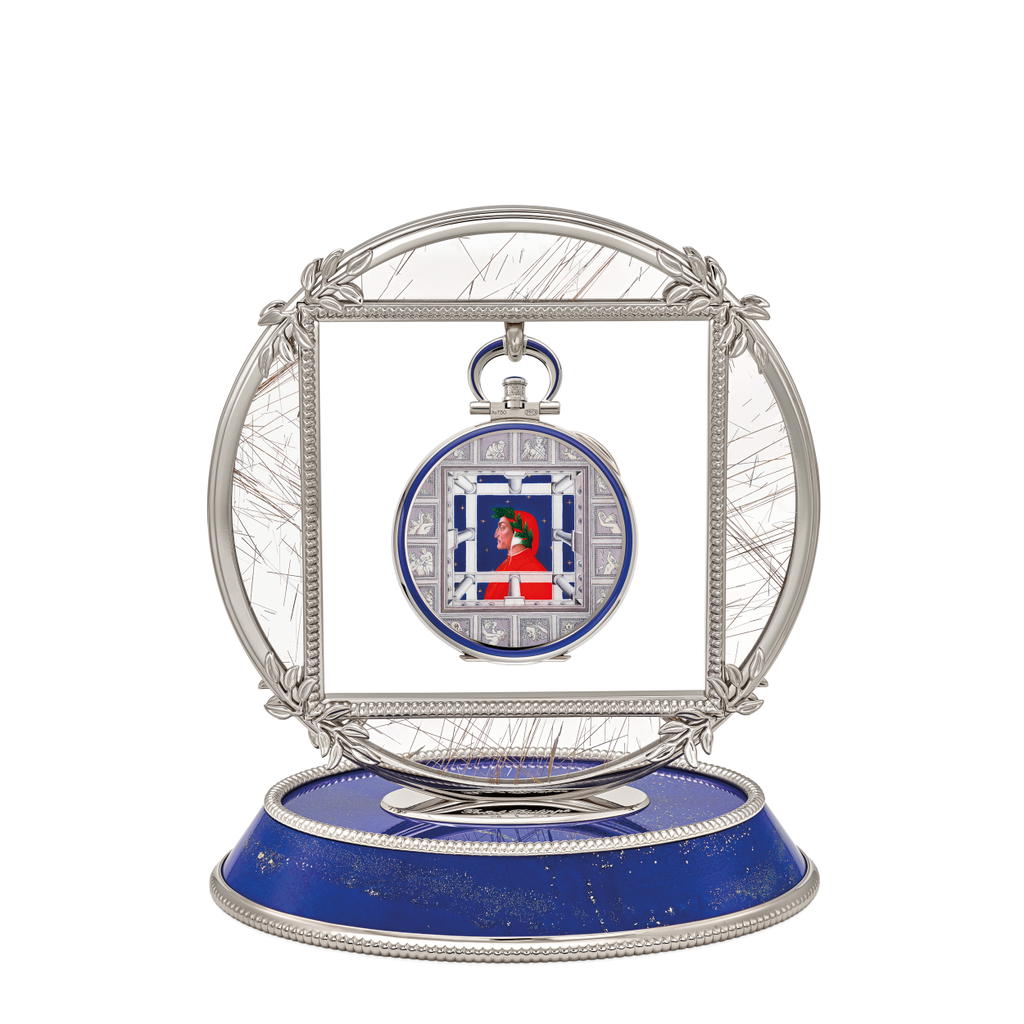
A small crowd had gathered around her bench as she spoke slowly and quietly, turning the pages of a thick folio of watches she had created for Patek Philippe over the years. In front of her was a display case with a unique pocket watch inspired by Dante Alighieri. It was one of 25 Rare Handcrafts pieces made for the exhibition, all inspired by Italy, and the only one she had decorated entirely herself.
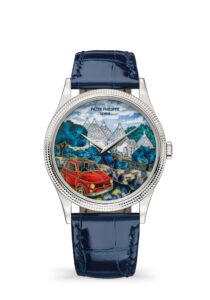
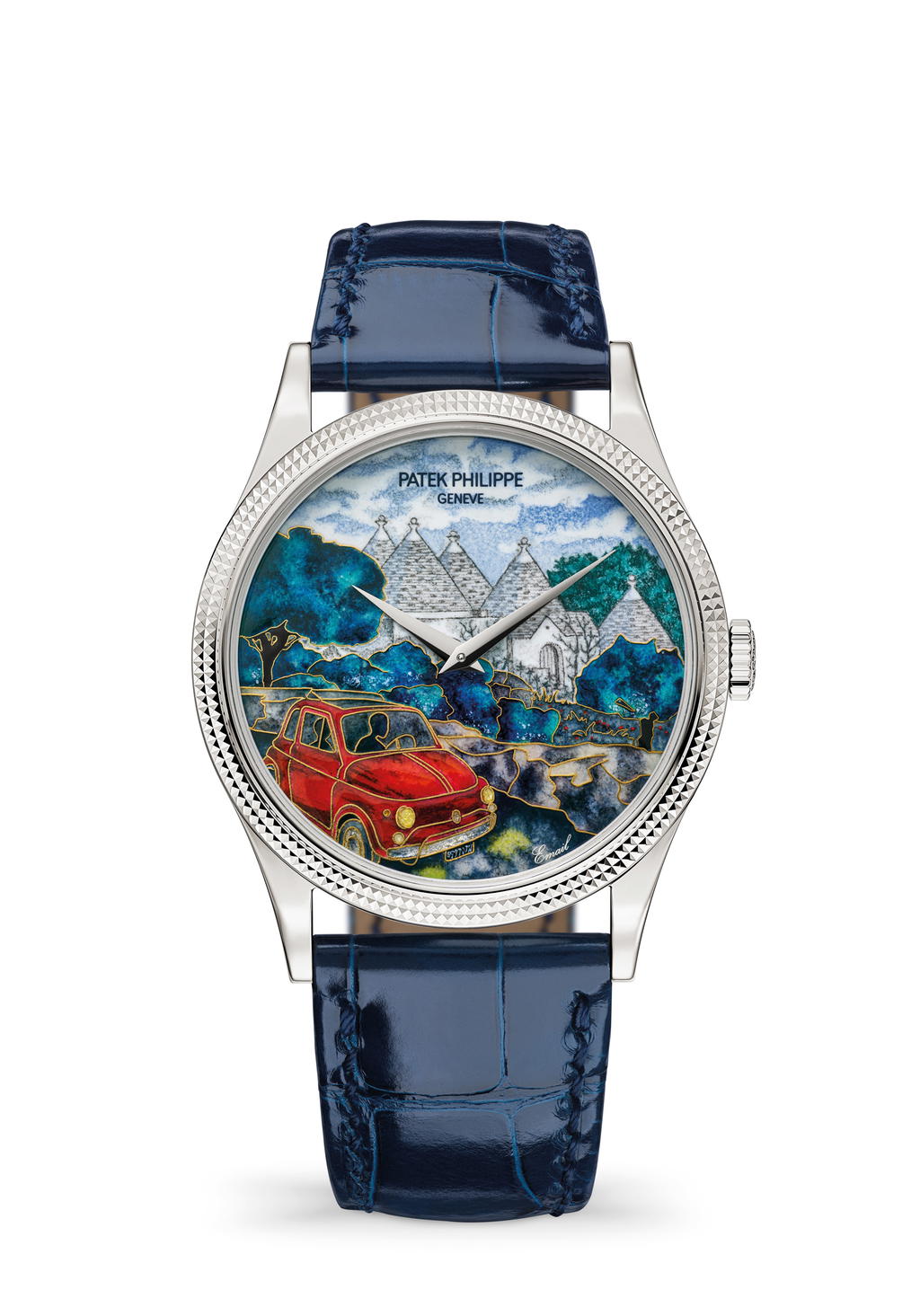
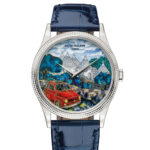
The other 24 pieces were paired with large images of the Italian scenes and crafts that inspired them, drawing the eye from dial to source and back again. A group of Calatrava wristwatches featured dials in champleve paillonne enamel, with tiny pieces of gold foil set beneath translucent enamel and engraving that imitated Burano lace.
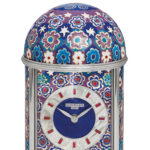
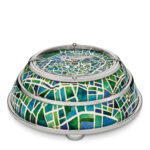
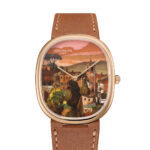
On dome clocks, cloisonne enamel recreated patterns from Murano millefiori glass and Byzantine mosaics, with colours fired into cells formed by fine gold wire. A set of four watches followed a Fiat on a drive through some of Italy’s best known regions. On a Golden Ellipse, Tuscany’s golden hour was rendered in wood marquetry, with each tone cut from a different veneer.
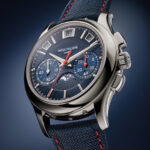
Additionally, the exhibition introduced seven limited editions for Italian clients. Three Calatrava watches, modelled after the Ref 6007, incorporated the Italian flag colours. The Aquanaut Ref 5167 came with a blue sunburst dial shading to black, finished with a red minute track. There were also two versions of The World Time Minute Repeater, one with a cloisonne centre showing central Milan by day Ref 5978P is the first Patek Philippe to combine an instantaneous perpetual calendar with a manual-winding chronograph and the other with a night version. Separately, Patek Philippe unveiled Gondolo Ladies First, a new ladies’ collection at the exhibition.
The key launch is the Ref 5978P, a limited edition of 120 pieces. Up until now, Patek Philippe had only used its instantaneous perpetual calendar in grand complications, beginning with the Ref 5207 in 2008. Ref 5978P brings it to the brand’s classic perpetual calendar chronograph for the first time, pairing it with a manual-winding chronograph movement in a new 500-component calibre, the CH 29-535 PS QI.
Past exhibitions suggest that the calibre won’t remain exclusive to Italy for long. The calibre RTO 27 PS (Ref 5303R) debuted in Singapore in 2019 as a 12-piece limited edition, then joined the regular collection the following year. After the Tokyo exhibition in 2023, the calibre 240 HU C (Ref 5330) followed the same path.
Assuming the pattern holds, the CH 29-535 PS QI will be next.