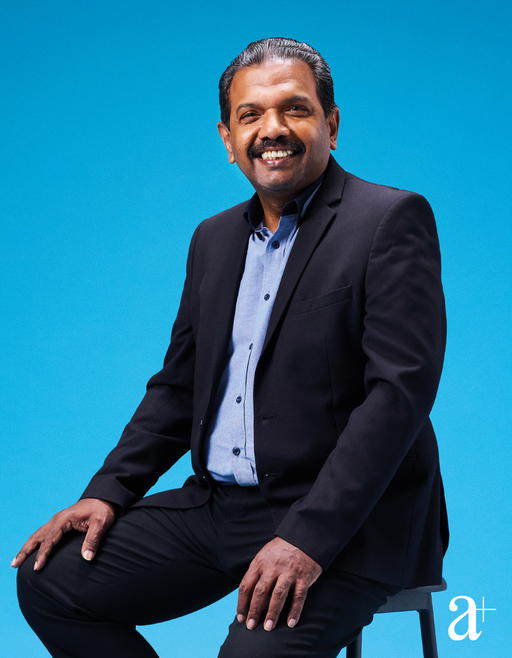
As a fintech co-founder in South-east Asia’s dynamic business environment, I’ve witnessed first-hand the transformative power of technology in reshaping finance. Our journey at StraitsX has been one of relentless innovation, unwavering determination, and a belief in the potential of digital assets to democratise finance.
My journey into the world of digital assets and stablecoins began with a moment of personal frustration. As a young software engineer in Silicon Valley, I struggled to find a quick and secure way to receive payments for shipping Amazon Kindle Fire units to Singapore. This experience ignited my passion for solving real-world problems in cross-border payments, ultimately leading to the founding of StraitsX, previously known as Xfers.
When we started this venture, the concept of digital assets was still in its infancy in South-east Asia. Traditional banking systems were deeply entrenched, leaving millions unbanked or underbanked. Unlike the Eurozone, South-east Asia also lacks an interconnected payment currency and network, thus creating a costly and inefficient payment system.
We saw an opportunity to create a financial ecosystem that could reach even the most remote villages and empower individuals left behind by conventional financial institutions. Driven by a pragmatic approach to technology, we focused on developing practical applications that would make a tangible difference in people’s lives.
This philosophy led us to pioneer stablecoins in South-east Asia, viewing them as a bridge between the benefits of blockchain technology and the stability needed for everyday financial transactions.
One of our proudest achievements has been our involvement in Project Orchid and the development of Purpose-Bound Money (PBM). In collaboration with the Monetary Authority of Singapore, this initiative allowed us to take the concept of programmable money from theory to practice.
From digital vouchers being given out at the Singapore FinTech Festival to plans to enable Chinese tourists to make seamless payments with their Alipay app, our innovations are making a real-world impact. Through this experience, we learnt that creating real value for people is more important than technological innovation in the digital assets and payment landscape.
We recognise that for digital assets to truly drive financial inclusion, it’s not just about having the best technology. It is also about cultivating an ecosystem tailored to the needs of Southeast Asian consumers and businesses by working closely with likeminded companies, financial institutions, regulators, and policymakers. With the rapid evolution of digital payments and assets, traditional financial institutions are increasingly adopting blockchain technology.
The adoption of this technology requires a delicate balance between regulation and innovation. As industry leaders, we must actively participate in developing regulatory frameworks that protect against risks while enabling ground-breaking innovation.
Taking this balanced approach is critical to unlocking the full potential of blockchain technology and digital assets, integrating them responsibly into the global financial ecosystem, and ensuring everyone has access to digital financial services.
Being a fintech entrepreneur has taught me to avoid falling in love with our own solutions. It’s a trap many entrepreneurs fall into. As software developers and engineers, we pour our hearts and souls into developing innovative products, so it’s natural to become attached to them. However, this can blind us to the real needs of our customers and the constantly changing business environment.
Our focus must remain steadfast on the pain points our customers and clients face. In fintech, these often stem from traditional and legacy financial systems that haven’t evolved along with digital technology.
Whether it’s the high costs of crossborder transactions, the complexity of legacy systems, or the lack of access to financial services for the unbanked and underbanked, these are the real problems we must address.
Often, we have had to shelve ideas we were personally excited about because they didn’t align with our customers’ needs. While it’s not always easy, it’s necessary. By maintaining a customer-centric approach, we can pivot and adapt our solutions as needed.
In the last decade since StraitsX was established, we have fostered this culture throughout our entire organisation to allow our teams to create products that truly resonate with our users. In this way, we stay ahead of the rapidly changing fintech landscape, anticipating the needs and challenges of our clients and customers.
Our success is not based solely on the innovative nature of our technology or the brilliance of our ideas. It’s based on our ability to understand and address real-world problems our customers face daily, which is the essence of fintech innovation. The key is not just creating new technologies, but using those technologies, such as blockchain and smart contracts, to create real change in the global financial ecosystem.
The journey has not been without its challenges. Navigating the regulatory landscape, addressing security concerns, and educating the public about new financial technologies have all been part of our growth process. These challenges have strengthened our resolve to create a more inclusive and efficient financial ecosystem. We have learned that in fintech, adaptability is not just an asset, it’s a necessity.
The landscape is constantly evolving with the rapid emergence of new technologies, shifting regulatory frameworks, changing market demands, and evolving consumer needs. To achieve sustained growth in this dynamic environment, agility and innovation are essential. Staying ahead requires more than just keeping up with trends; it demands a proactive approach, anticipating future developments and being ready to pivot as needed. This adaptability is crucial for navigating challenges and seizing opportunities as they arise.
Running a fintech company demands a unique blend of open-mindedness and forward-thinking. It’s not enough to merely react to changes; we must be at the forefront of innovation and actively shape the future of finance. As leaders in this sector, our goal is to build something that will endure for generations, influencing every decision from product development to talent acquisition. Staying focused on the horizon also means being ready to weather storms, celebrate victories, and learn from failures.
With an eye to the future, we are building not just for today’s market, but for tomorrow’s financial systems as well. Integrating digital assets with emerging technologies has enormous potential, and our vision extends far beyond merely facilitating transactions. We are developing the blockchain infrastructure to enable the next generation of financial products and services.
Just as Amazon Web Services (AWS) became synonymous with cloud technology, we aspire to be the foundation upon which innovative financial solutions are built in South-east Asia and beyond. Despite our growth, we remain dedicated to our core mission: harnessing digital assets to create a more inclusive, efficient, and empowering financial ecosystem for everyone.
While we face numerous challenges, we also see vast opportunities—and we are just getting started.