
Since launching in December 2024, Cotu (short for Centre Of The Universe), spanning 18,000 sq ft on 38th and 39th levels of CapitaGreen, has become the partygoer’s playground.
Its founding team, comprising Joshua Schwartz, Sarissa Rodriguez-Schwartz, Phillip Poon, Cedric Chong, Cher Ng, Mikey M S, and Sanji Van, hail from Singapore’s most established names in nightlife, such as Pangaea, Lulu’s Lounge, and Amber Lounge.
Sanji, who co-founded Barouv and Abriza rooftop bars before coming on board, also spearheads Cotu’s growth and development as Executive Director, requiring him to dig into his experience and network to build meaningful partnerships and collaborations.
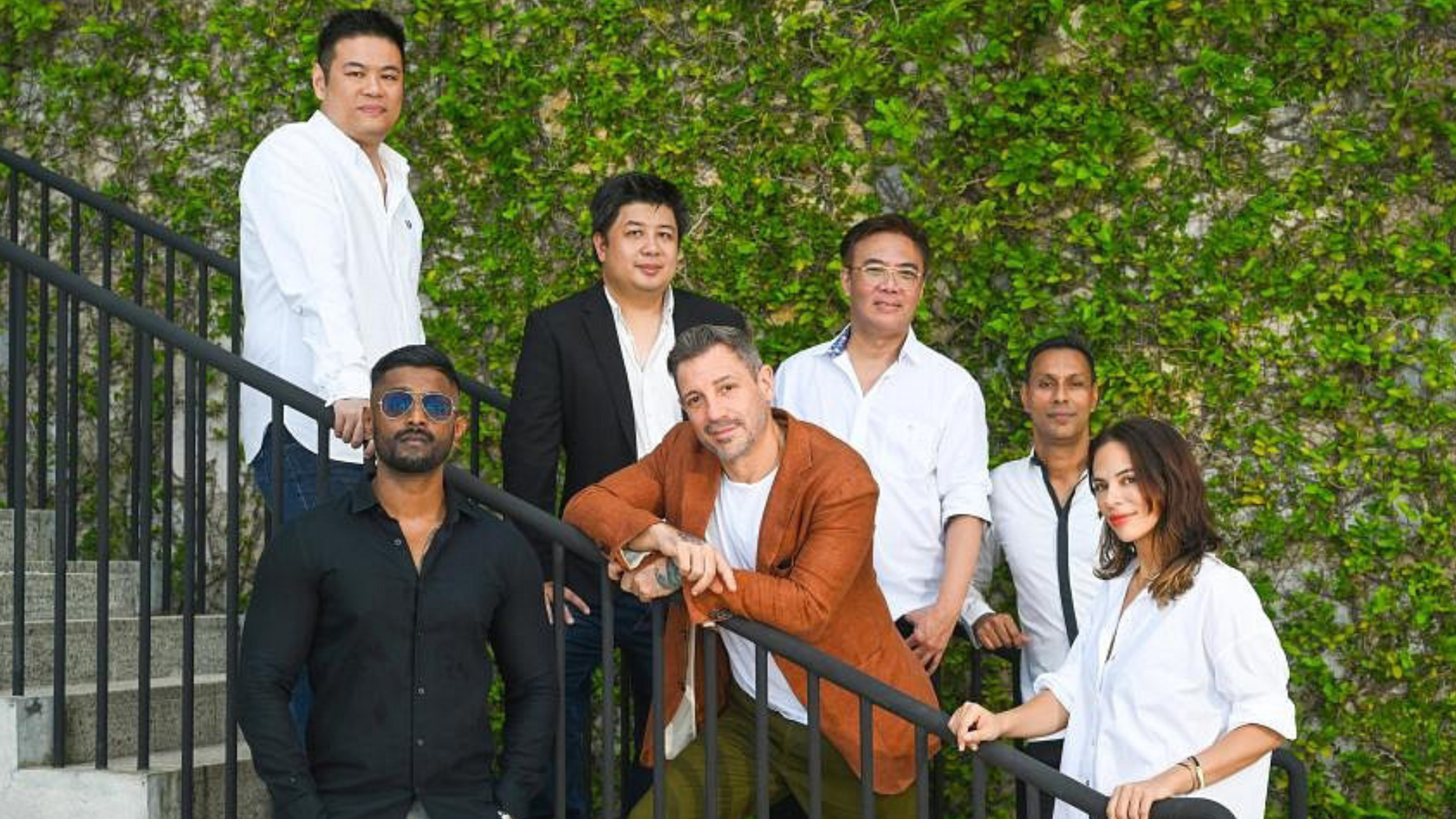
Cotu, which offers five concepts including Little Birdie, Enso, The Whisper Room, Dashi Go-Go Ultra Lounge, and Dashi Sky Pool, has a roster of clients and partners such as Disney, Cartier, Onitsuka Tiger, and BMW.
“Our venues are concept-first, but every decision is backed by data and guest behaviour insights,” he says. “We strive to align brand partners with the right venue DNA. For example, a high-energy consumer activation lands in Dashi Go-Go Ultra Lounge, while a luxury product launch, in The Whisper Room. Our experiences resonate because they offer more than passive entertainment; they’re immersive, Instagrammable, and emotionally relevant.
Dashi Go-Go Ultra Lounge, with its neo-Tokyo Bladerunner aesthetics and electrifying beats, he points out, was designed with “cultural agility” in mind. “We’ve hosted curated events, from Fuego Nights that blend Y2K nostalgia and hip-hop, to after hours music and mocktail sessions for sober-curious professionals.”
Sanji shares more about his strategy in redefining nightlife for Cotu.
What challenges have you had to overcome while trying to create nightlife experiences for the post-pandemic generation?
People expect more than just great music or cocktails. They’re looking for immersive, flexible, and emotionally charged experiences that feel curated for their moment. So we’ve had to reassess how we engage with clients and collaborators; many now want access to nightlife as a cultural platform, not just a venue. Brands, for example, aren’t just sponsoring events; they’re co-creating them. They seek a canvas for storytelling, connection, and engagement.
At Cotu, hence, we’re designing experiences that are agile; our events blend entertainment with storytelling, wellness with revelry, and intimacy with impact. A successful experience must be multi-layered: part entertainment, part narrative, and part social currency.
Additionally, the post-pandemic generation values personalisation and authenticity, so our venues reflect that shift in tone. We’ve worked with clients to develop custom cocktails, curated menus, and even reimagined entire spatial layouts to reflect messages, values or aesthetics.
Whether it’s a wellness-infused DJ brunch or a tech-enabled sensory installation, audiences expect purpose and personalisation baked into the night. We ensure that what guests remember isn’t just the event; it’s how seen and connected they felt through every element.
How have you evolved or refined the Cotu strategy?
Six months into our journey, we’ve learnt that adaptability is key. Initially, we launched with a strong brand vision and a diverse venue mix, but we’ve since fine-tuned how we structure partnerships, tailor events, and engage our corporate clientele.
We’re seeing a surge in demand for bespoke experiences—from private dining takeovers to themed corporate gatherings—which has led us to deepen our operational flexibility and cross-venue offerings.
Strategically, we’re focusing more on long-term value: turning one-off bookings into ongoing collaborations, and using data to inform which partnerships and activations drive both cultural capital and business growth.
Why is this data important for Cotu as a brand?
We collect qualitative and quantitative data across guest touchpoints—ticketing behaviour, feedback forms, content engagement, and repeat attendance. It helps us refine our programming, identify high-lifetime value guests, and better match brands to audience types. For instance, if we notice high engagement around themed sober nights, we may pitch that angle more strongly to wellness brands seeking experiential entry points.
What role does social media play in reaching out to your audiences?
Social media is our front line. It’s where we test narratives, activate brand stories, and build hype. We design experiences with social in mind—ensuring photogenic moments, behind-the-scenes content, and post-event engagement are all part of the ecosystem. We also collaborate heavily with creators and micro-influencers, who often serve as our cultural bridges to new communities.
But more than that, social media has evolved into the modern-day pager. Just like how people used to get a page and call back, today, a compelling reel or story “pages” someone—they get the alert, feel the pull, and make their way down to the venue. It’s instantaneous, emotional, and incredibly effective at driving footfall and community energy.
No mention of local nightlife these days is complete without Dashi Go-Go Ultra Lounge. What has the response been like?
Dashi Go-Go Ultra Lounge has become our high-energy, culturally rich playground; it’s a venue that speaks fluently to Gen Z but also appeals to young-at-heart corporates and creative communities. It’s not just about nightlife; it’s about the intersection of pop culture, fashion, and human connection. That makes it especially attractive for brand collaborations and content-driven events.
From a business standpoint, Dashi’s bold aesthetic and playful tone have opened doors to some exciting partnerships with consumer brands targeting that same audience. We’re shaping the brand as both an entertainment destination and a cultural touchpoint where the next wave of brand engagement happens.
What do you enjoy most about Dashi Go-Go?
What I love most about Dashi Go-Go is how it’s constantly transforming. No two nights ever feel the same. Here’s a spoiler: guests come in, not knowing exactly what to expect, but always leave surprised.
Finally, where is Singapore’s nightlife headed in the next 5 years?
We see a future where nightlife is hybrid, purpose-driven, and increasingly fluid; think wellness raves, art-meets-tech parties, and branded micro-festivals.
Singapore is becoming a regional hub for cultural experimentation, and we believe the next five years will see more cross-sector collaborations—between fashion, tech, food, and music. And Cotu aims to be at the heart of that shift.
Don’t just hear it from us; check out Dashi Go-Go for yourself. Bookings and requests here.