Les Imprimés, or “the prints,” presents the four icons in rhythmic, fabric-like patterns. This is the most graphic set in Signes & Symboles, where all four motifs jostle for attention across a single surface. It is also the smallest of the four sets, featuring only 16 pieces, but it includes two of the collection’s most important pieces: the Imprimé Lion necklace and the Imprimé Émeraude ring. Half the set consists of unique creations Chanel has no intention of replicating, making them truly precious works of art.
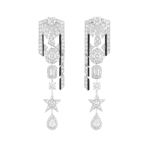
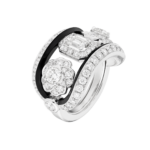
However, rarity isn’t the only draw. Translating a graphic language that looks simple on paper into something that must move, bend and sit precisely on the body is harder than it appears, and that difficulty shows most clearly in the necklaces.
Chanel explores the necklace form across several formats in Signes & Symboles, but the plastron and bandeau styles in Les Imprimés stand apart for what their proportions and angles do: hold a fixed geometric structure while carrying stones arranged to be read horizontally, vertically, and radiating outward. Balancing that structure against the shifting visual rhythm, while keeping the lines fluid enough to sit flush against the neckline, took considerable time to resolve.
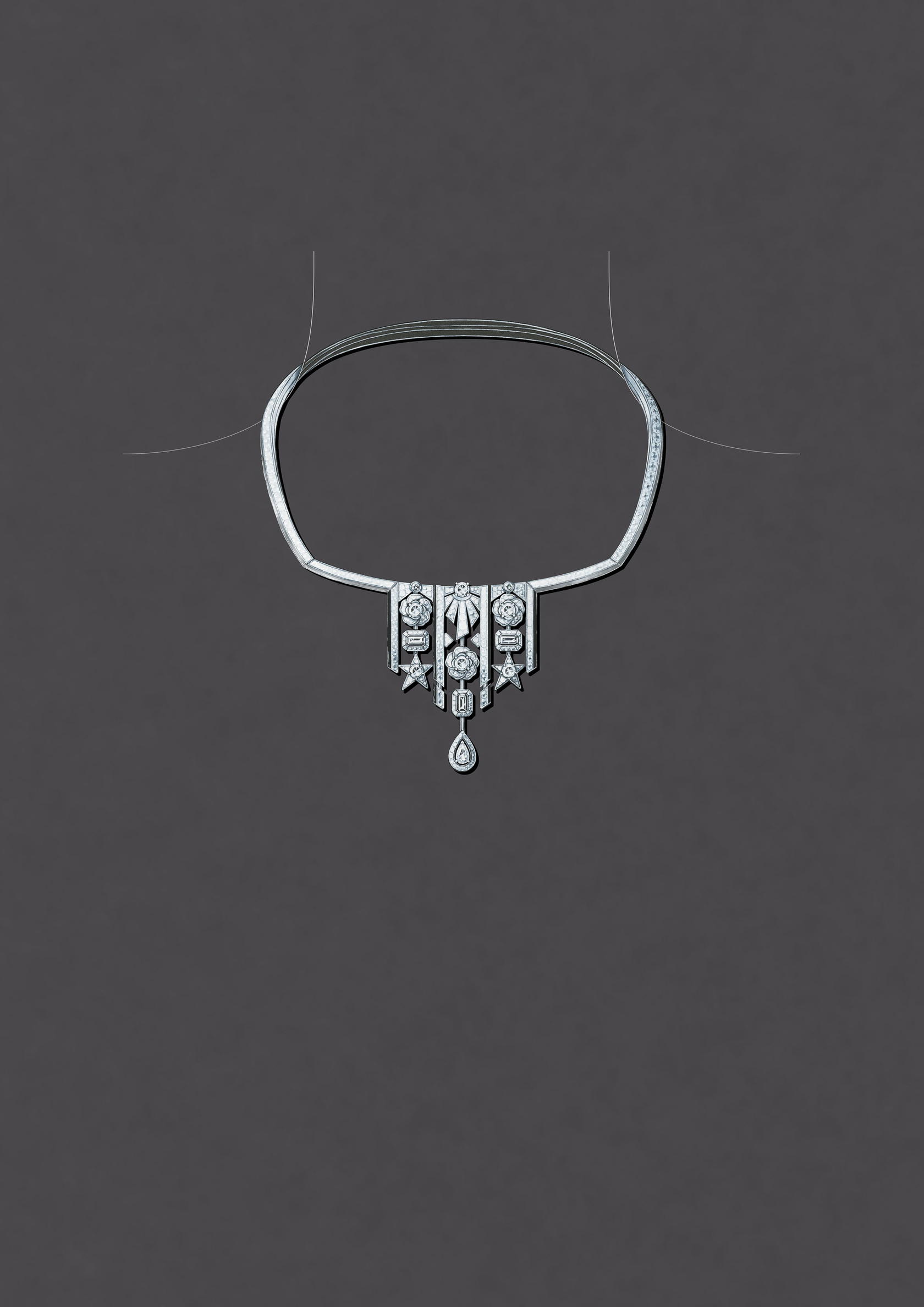
The Imprimé Noir & Blanc necklace shows the format at its most refined. Three closed rows of motifs are hand-set on fil-couteau mounts, thin as a blade’s edge, so the necklace follows the movement of the neck rather than sitting rigidly against it. At its centre, a 0.5-ct pear-shaped D VVS1 diamond sits in a plumard setting, held by prongs above and below the stone in the manner of a bed’s headboard and footboard. Black lacquer draws the sun, star and camellia in fine lines across white gold and diamond pavé, while a concealed clasp— modelled on the hidden closures developed for Coco Crush—disappears into the chain.
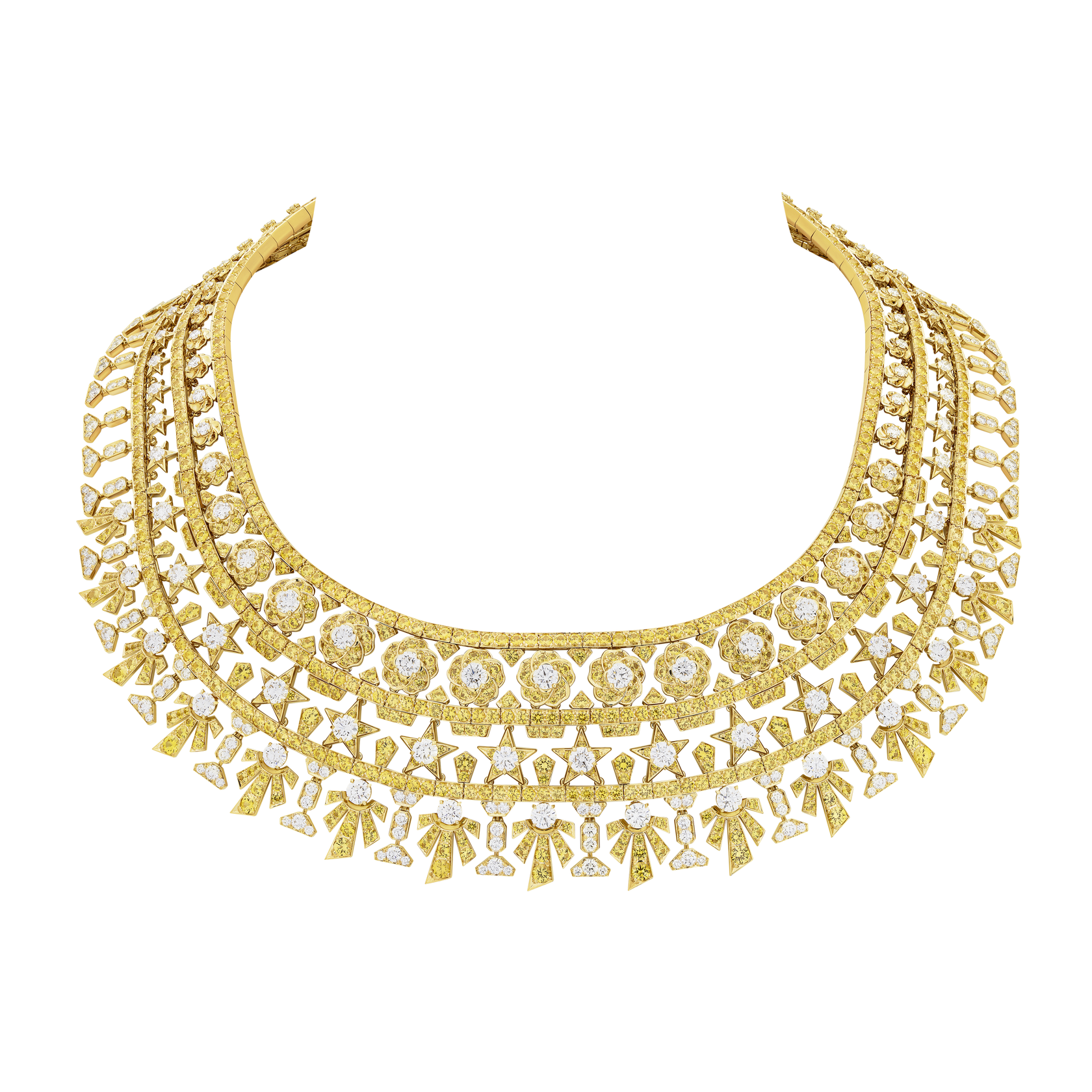
Photo: Chanel.
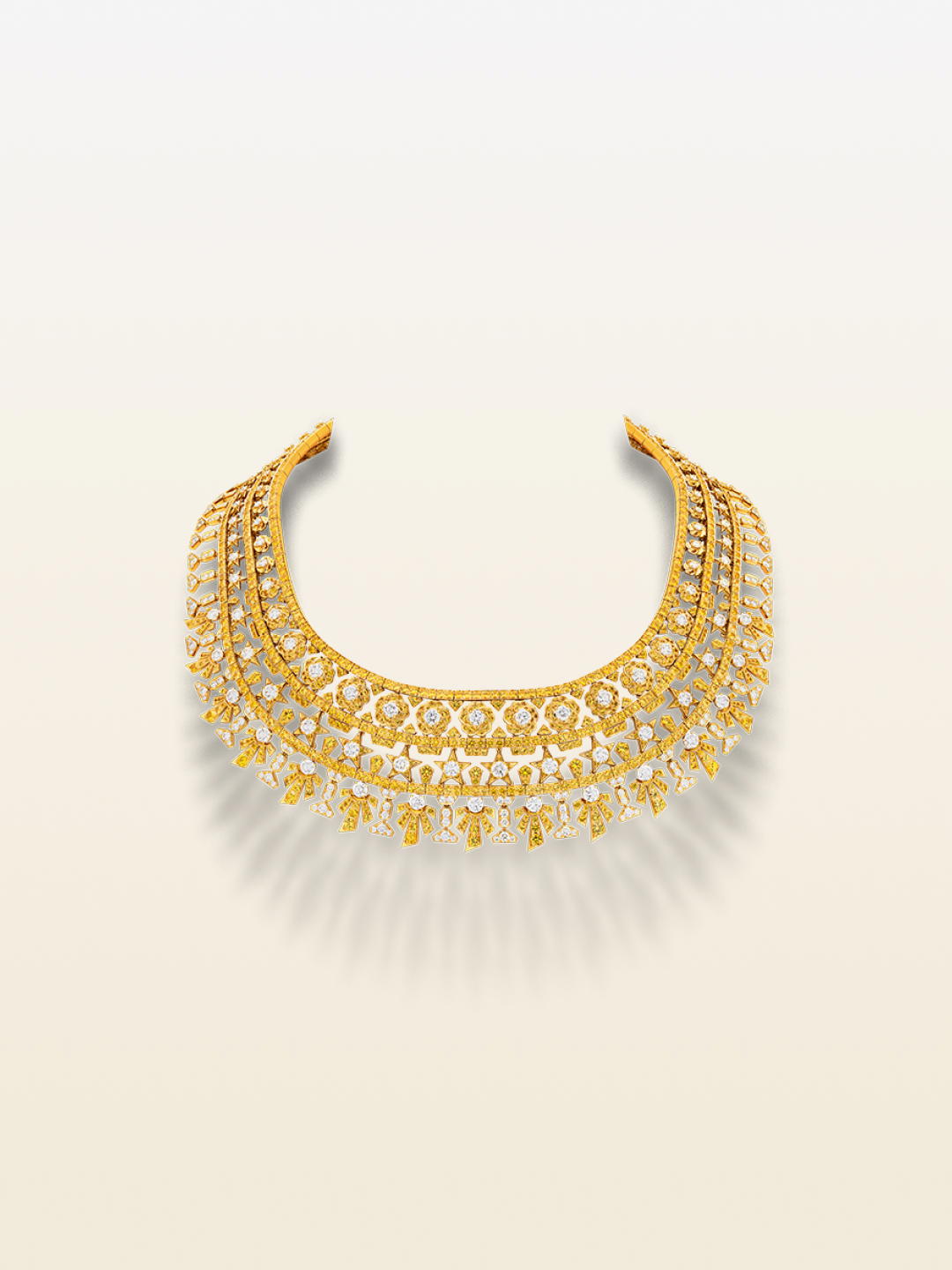
The Imprimé Plastron takes the same angular construction but presents it more sumptuously. Made in yellow gold with yellow sapphires and close to 13 ct of diamonds, it’s designed to be worn like a ruff. Two sharply defined angles set the square neckline, but a second geometry runs across the surface: the roundness of the camellia against the points of the stars and suns, with triangles, kites, trapezoids and emerald-cut shapes locking between the icons to form the piece’s architecture. From a distance, the effect looks almost effortless.
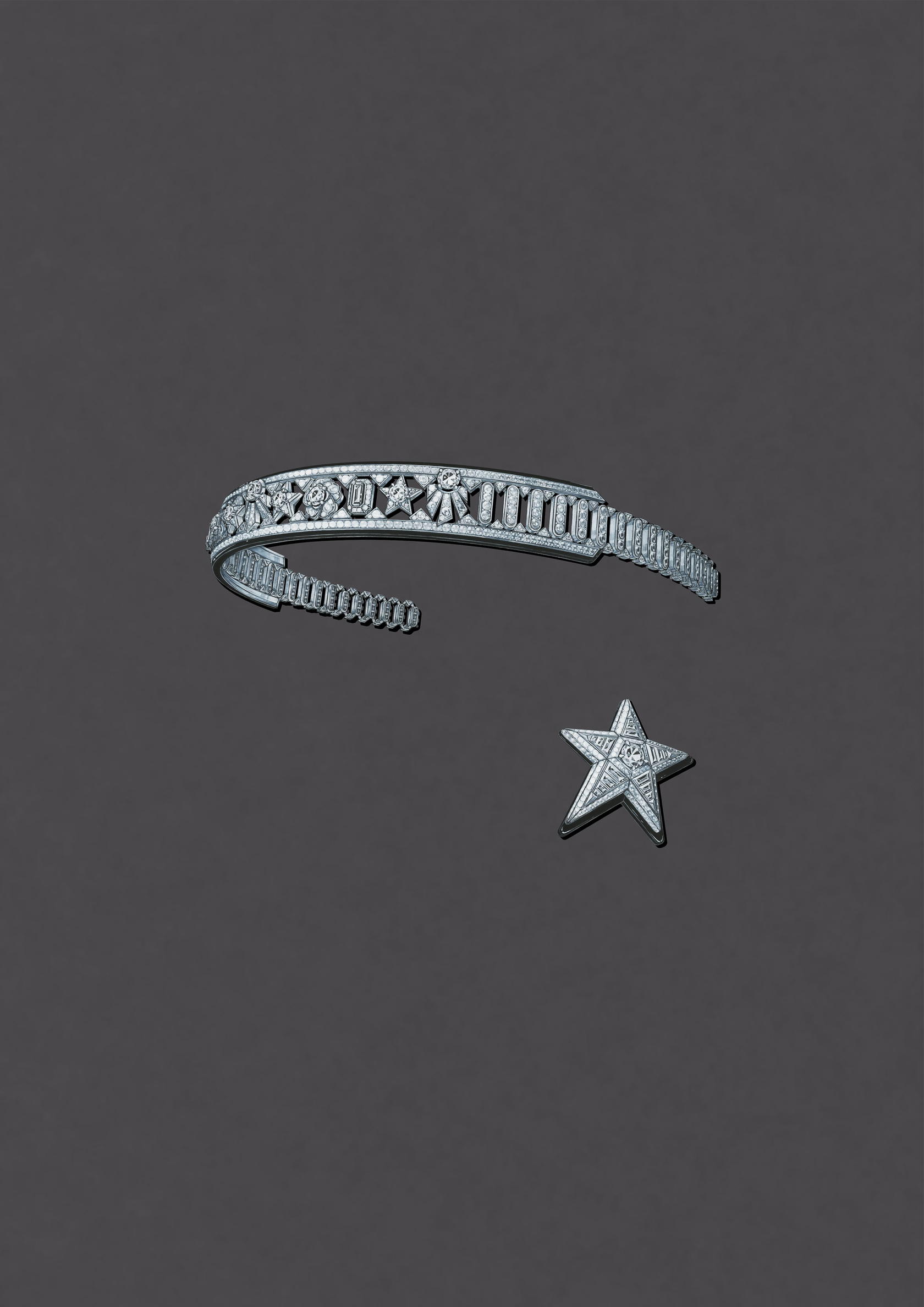
That same graphic language takes an unexpected turn in the Imprimé Contrasté head jewel, a transformable piece designed to be worn across the forehead. Its band-like format recalls the spirit of the Roaring Twenties and the way jewels were worn in Chanel’s 1932 Bijoux de Diamants collection. The sun, star and camellia appear as a black-and-white mesh across the surface, framed by two parallel lines of onyx.
The precision here runs deeper than it looks. The central star is removable, drawing on the Étoile brooch from Bijoux de Diamants. Round brilliant-cut diamonds sit at the centre of each icon, while the branches of the stars use 16 made-to-measure diamonds, each cut to the shape of its branch and some reduced to very small dimensions. Baguette-cut diamonds form the emerald-cut motifs; the onyx is made-to-measure, including a roof-shaped cut developed to interlock with the tips of the star.
This is the essence of Les Imprimés. Chanel takes symbols that are already part of its visual vocabulary and finds ways for the composition to move with the body. The result is jewellery that commands immediate attention, while rewarding a closer look at the lapidary work, gem setting, articulation and engineering beneath its bold graphic language.