
Even before they became staples of high jewellery, diamonds, rubies, sapphires, and emeralds were believed to have powers beyond their beauty, from protection and healing to strength and good fortune. Chanel’s Signes & Symboles, its 2026 high jewellery collection of 85 pieces, honours each gemstone with a masterpiece that links its ancient role as a talisman to the house’s own symbols.
The Roman author and military commander Pliny the Elder records that Emperor Nero used an emerald to watch gladiatorial contests, and that gem engravers looked to emeralds to rest their eyes when their work tired them. Whether the Nero story is true or not, the belief behind it was already centuries old—Theophrastus wrote more than 300 years earlier that emeralds soothed the eyes. In Vedic astrology, the emerald is connected with Mercury and is linked to intelligence and speech.
That long association with clarity and perception finds a more contemporary expression in Chanel’s treatment of the stone, where the emerald is the unmistakable focus of one exceptional jewel.
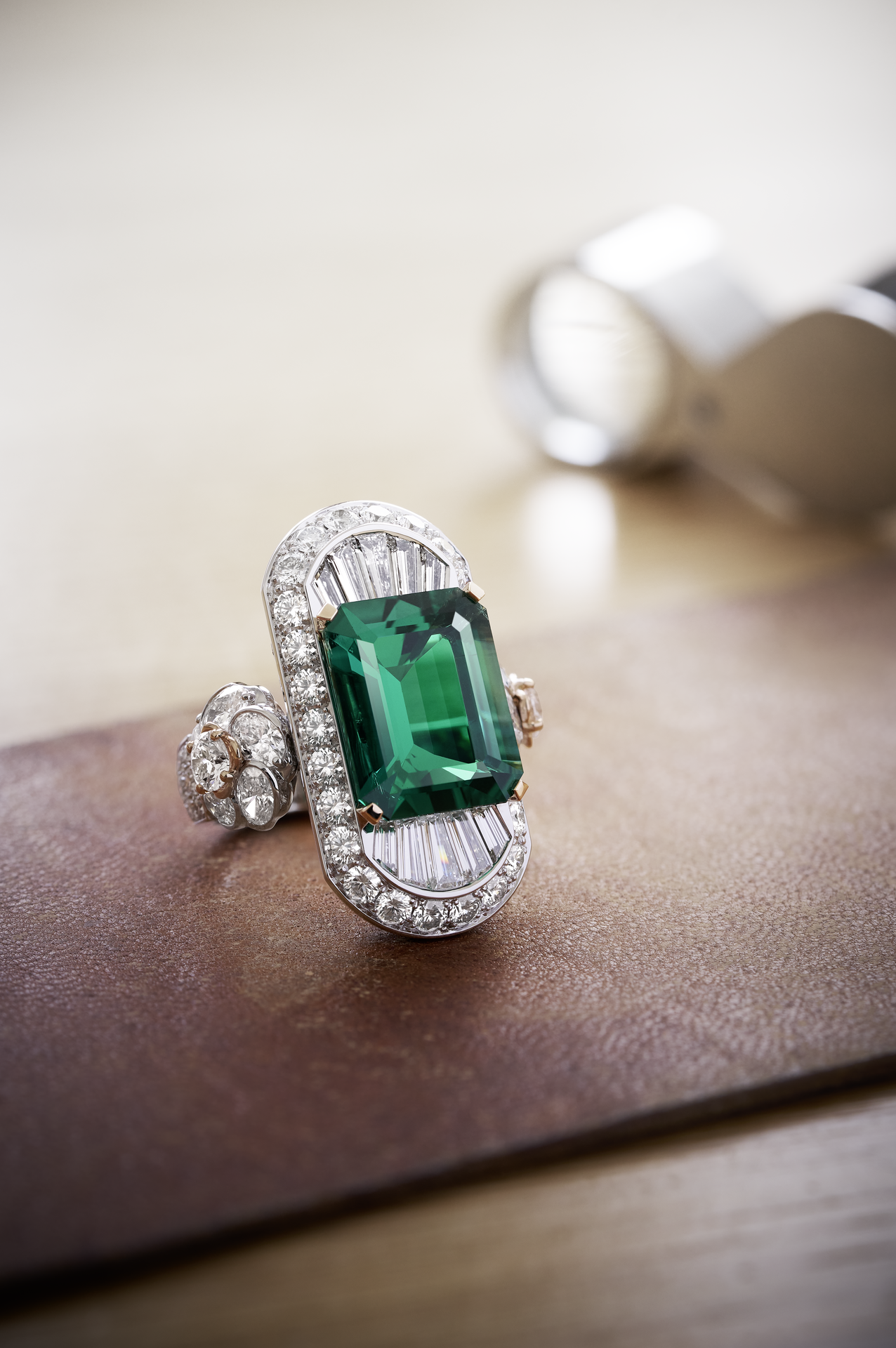
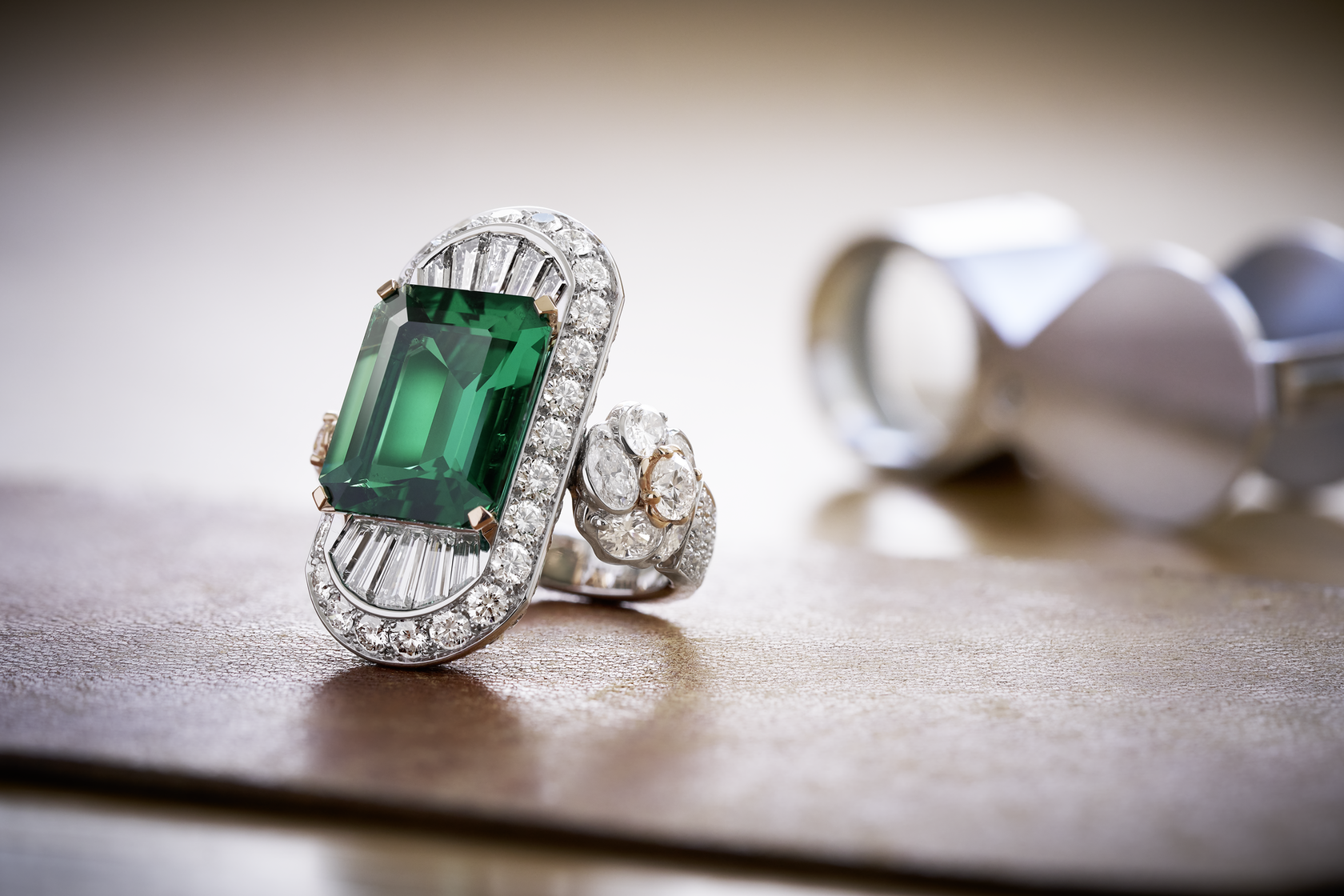
The Imprimé Émeraude ring features a 10.44 ct Colombian emerald in an octagonal cut. The elongated octagonal cut gives the stone a strong, architectural presence, and its intense green colour, blue tinge and fine crystallisation are enhanced by the intricate setting. The emerald sits in a deliberately contrasting design: the ring body is made of white gold and diamonds with rose gold accents, and two camellias sit on either side of the band. The ring’s elongated shape is similar to an amulet, directly incorporating the idea of a talisman into the jewel’s design. A particular technical difficulty was maintaining the emerald’s transparency while hiding its metal framework, so that the stone could stay the focal point of the piece.
In Burma, it was customary to wear rubies to gain protection in battle; warriors believed the stone made them invulnerable, and in some cases rubies were embedded under the skin before battle. The ruby was known as ratnaraj, or ‘king of gems’ in Sanskrit and in Vedic astrology it was linked to the sun. The old beliefs endowed the ruby with an aura that went beyond its physical beauty, so that it became a stone of power as well as one of adornment.
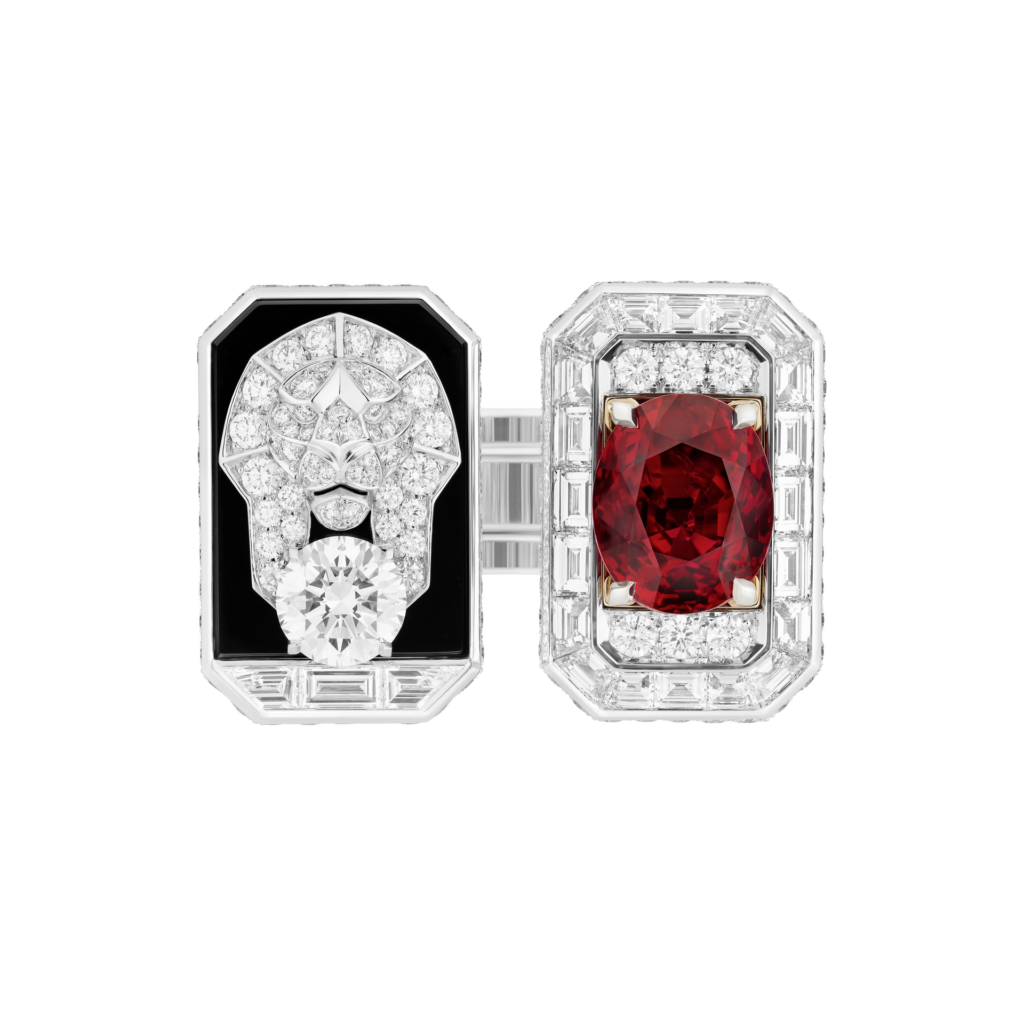
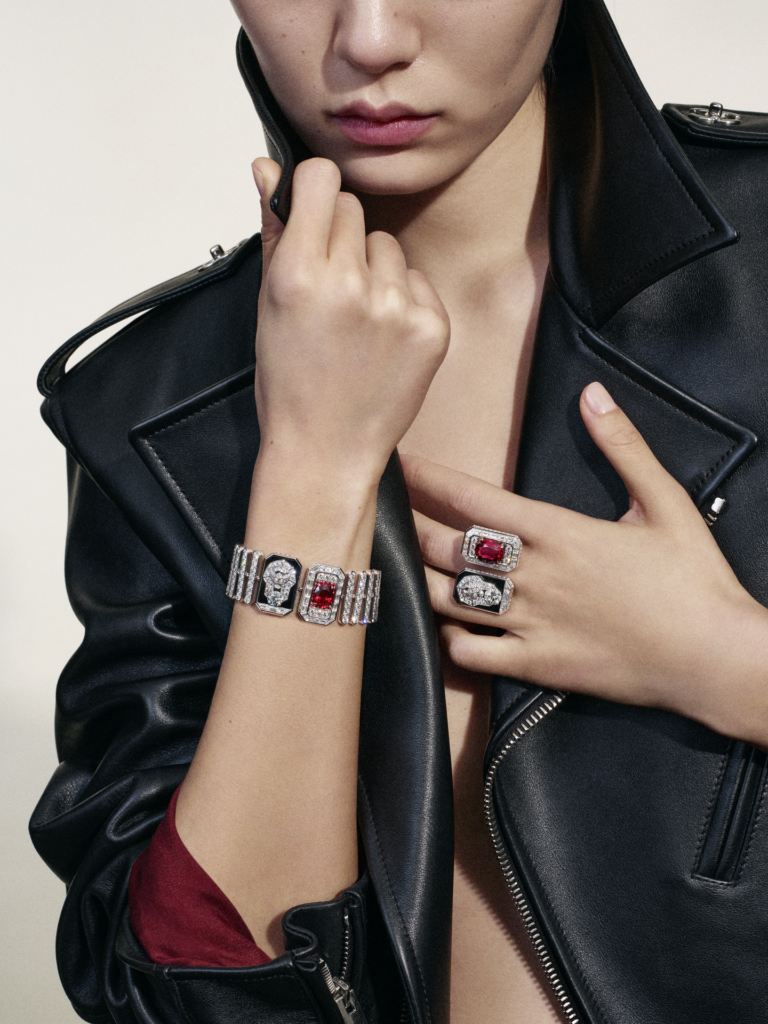
Chanel again adopts this idea in the Lion Millénaire ring, where a ruby of unusually great size, intense colour and clean crystallisation forms the centrepiece of a design. It features the collection’s most important ruby: an oval-cut 9.41-ct unheated stone from Mozambique, set in white gold, rose gold, platinum, diamonds, rubies and onyx. Rubies over 5ct are already rare on the open market, and rarer still past 8ct.
The ring takes a Toi et Moi format: one half carries the lion’s head in diamond bas-relief set against an onyx background, while the other side has the ruby, surrounded by baguette-cut diamonds in a setting that mirrors the one used in the Harmonie ring from the house’s 1932 Bijoux de Diamants collection. The two parts of the ring separate using the same transformable mechanism Chanel introduced in the 2023 Tweed Royal ring, where all components must fit together with absolute precision for the mechanism to function and the piece to appear as a single design. Since Gabrielle Chanel was a Leo and Leo is governed by the sun in Western astrology, the combination of the ruby and the lion has an extra symbolic meaning.
Imprime Lion Necklace
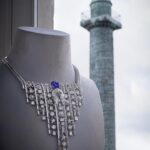
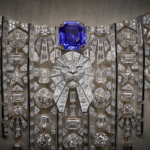
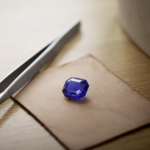
The sapphire was regarded as a stone of divine significance. The Book of Exodus places it in the pavement beneath God’s feet, and medieval bishops later wore sapphire rings as part of their office. Kings are said to have worn the stone for a different reason: belief that it guarded against envy and poison.
Chanel brings that history into the present by placing an exceptional sapphire at the heart of its key masterpiece, making the stone part of the symbolism. The 20.66-ct octagonal-cut Sri Lankan sapphire sits right above a diamond-paved lion’s head. It is set into a jewelled fabric which includes four of the house’s symbols: the camellia, the star, the sun and the lion.
The necklace, however, does not hold the collection’s largest sapphire; that title belongs to the Symbole Saphir ring, which has at its centre another unheated 25.45-ct Sri Lankan cabochon sapphire, its smooth, domed surface resembling the shape gemstones were usually cut in before faceting became common.
The diamond was granted a special kind of authority; the Greeks called it adamas, or the unconquerable, and in his description of the natural world, Pliny ranked it above all other possessions. In India, the diamond was linked to the vajra, Indra’s thunderbolt.
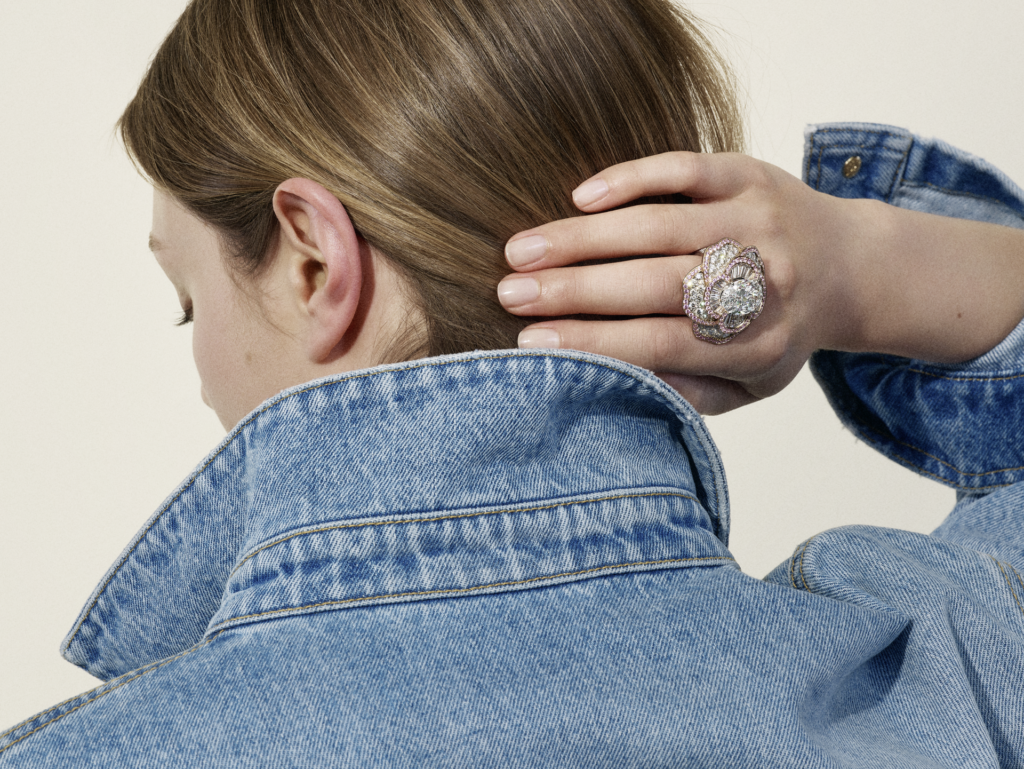
Those associations make the diamond a fitting centre for another of Chanel’s enduring symbols. The camellia, adopted and elevated by Gabrielle Chanel from fashion, is cherished by the house as a symbol of purity and longevity, creating a protective frame around the stone.
The collection features many diamonds, the most valuable of which is a 10.32-ct oval diamond of D-FL quality, set at the centre of the Symbole Camélia Rose ring and surrounded by pink sapphires. The camellia is formed as an openwork design in rose gold on the inner side of the ring, its petals arranged in two levels that curl in opposite directions around the central diamond: four of the upper petals are set in made-to-measure diamonds in a clockwise direction, and five of the lower petals are paved with diamonds in a counterclockwise direction. This arrangement was intended to draw the viewer’s attention inward through the flower to the central stone. The ring’s domed, full form was carefully considered for weight, ensuring it remains comfortable when worn on the finger.